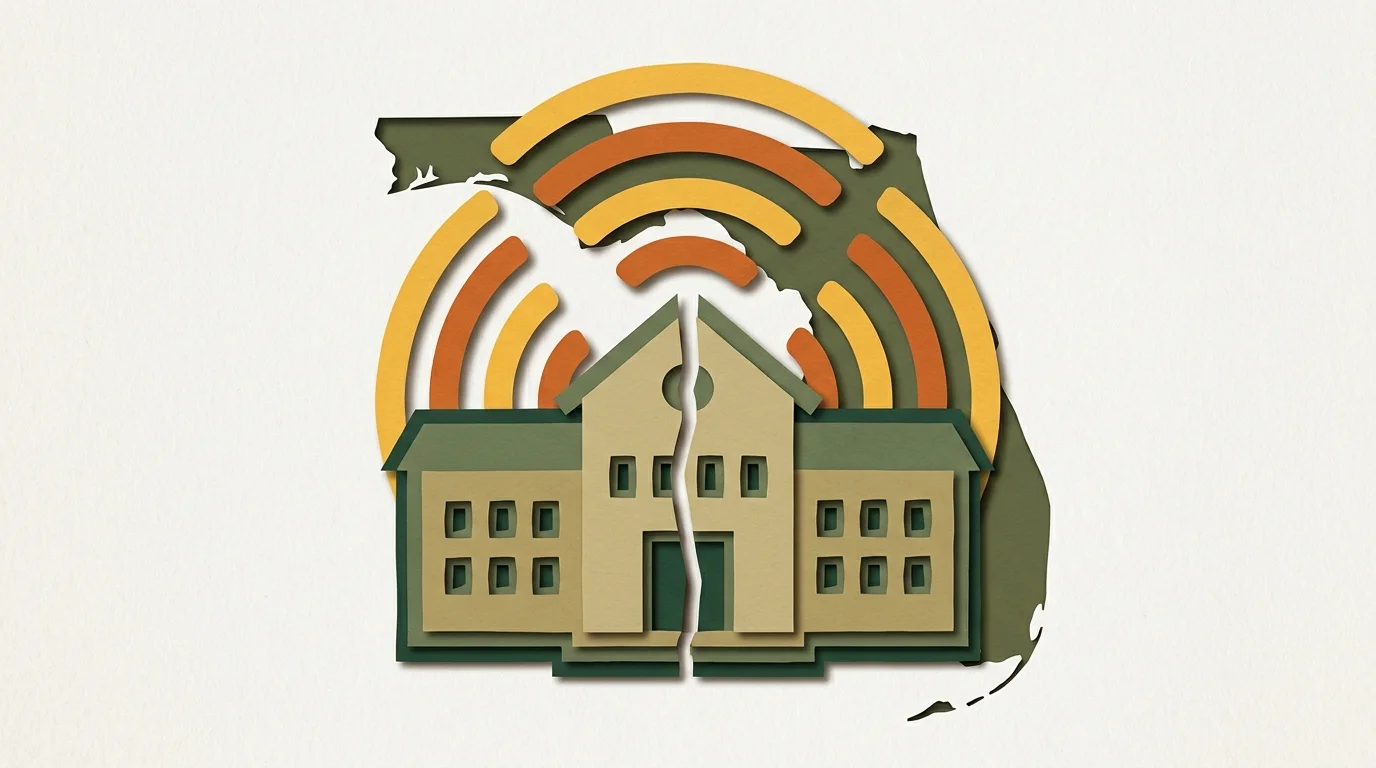
Schools and libraries somewhere in Florida are receiving $2.5 million in federal broadband funding this spring, part of a nearly 30-year-old program that has connected virtually every American classroom and public library to the internet. The money arrives as that same program faces its most serious legal threat since its creation.
The funding comes through E-Rate, the Federal Communications Commission's Schools and Libraries Program, which provides discounts of 20% to 90% on internet access and networking equipment. Institutions in the highest-poverty communities receive the steepest discounts. The program doesn't draw from general tax revenue; instead, it's funded through contributions that telecom carriers collect from customers as fees on phone bills.
Florida's size makes federal programs like E-Rate especially consequential here. The state operates one of the largest public school systems in the country, serving roughly 2.8 million K-12 students across 67 county-based school districts, plus 83 public library systems. Connectivity gaps are real and uneven: rural stretches of the Panhandle, north-central Florida, and agricultural communities in the south often lack the reliable broadband that urban corridors along the coasts take for granted. The state's flat tax structure leaves it with limited ability to fill those gaps independently.
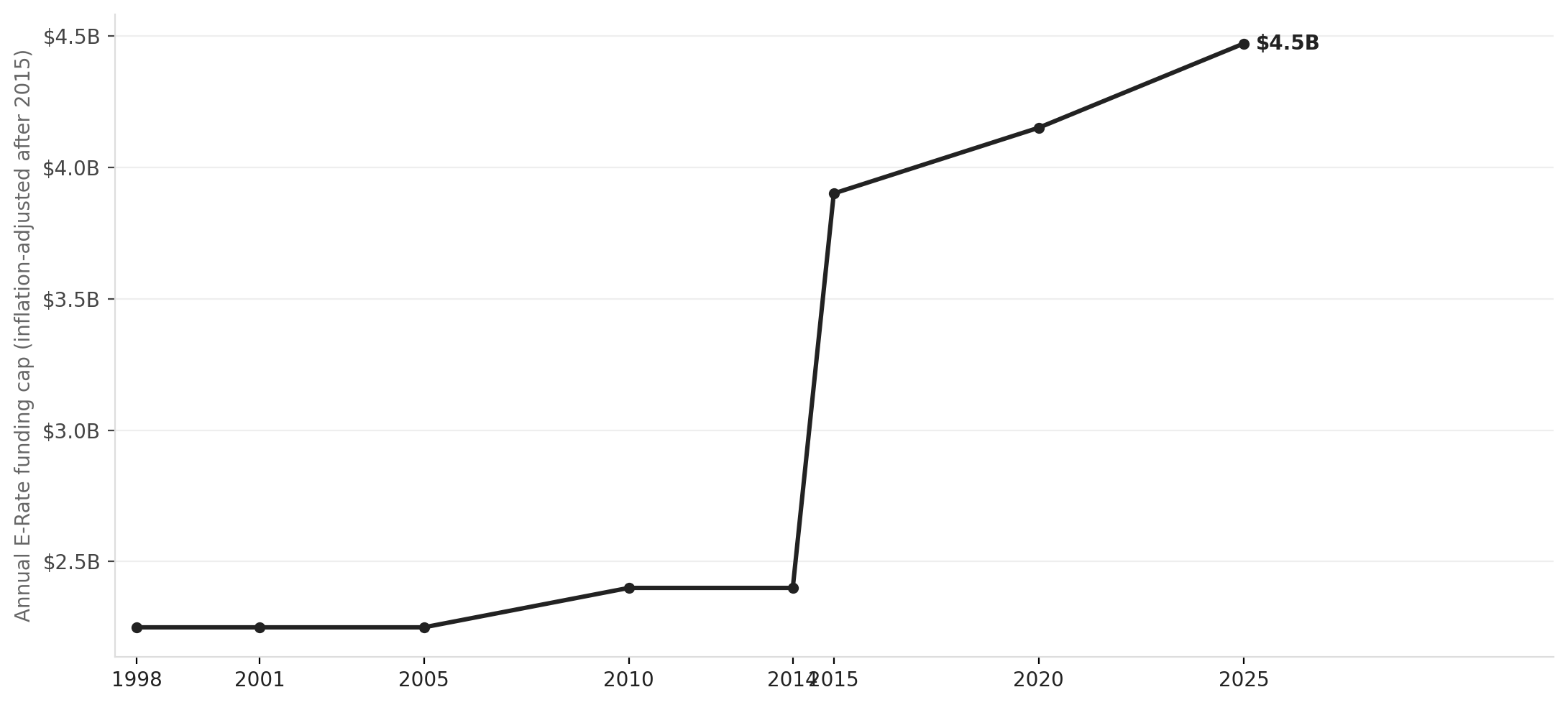
Source: NationGraph.
The specific Florida recipient of this award isn't identified in the public record, a gap that the FCC's administrator, the Universal Service Administrative Company, could clarify in its database.
The broader worry hanging over this disbursement is a Supreme Court case, Consumers' Research v. FCC, which challenges whether the entire USF funding mechanism is constitutional. The argument centers on whether Congress improperly handed fee-setting authority to a private company. The case was argued in late 2024, and a decision is expected this year. An unfavorable ruling could dismantle E-Rate along with other USF programs that support rural broadband and low-income phone service. Similar awards are flowing to other states in the meantime, including a $2.16 million commitment to Texas schools and libraries and $5.5 million to Wisconsin, all under the same legal cloud.
E-Rate has distributed more than $50 billion since Congress created it in 1996, and it is widely credited with bridging what was then a stark divide between well-connected and underserved schools. Whether that mission continues past this year depends, in part, on how the Supreme Court rules.