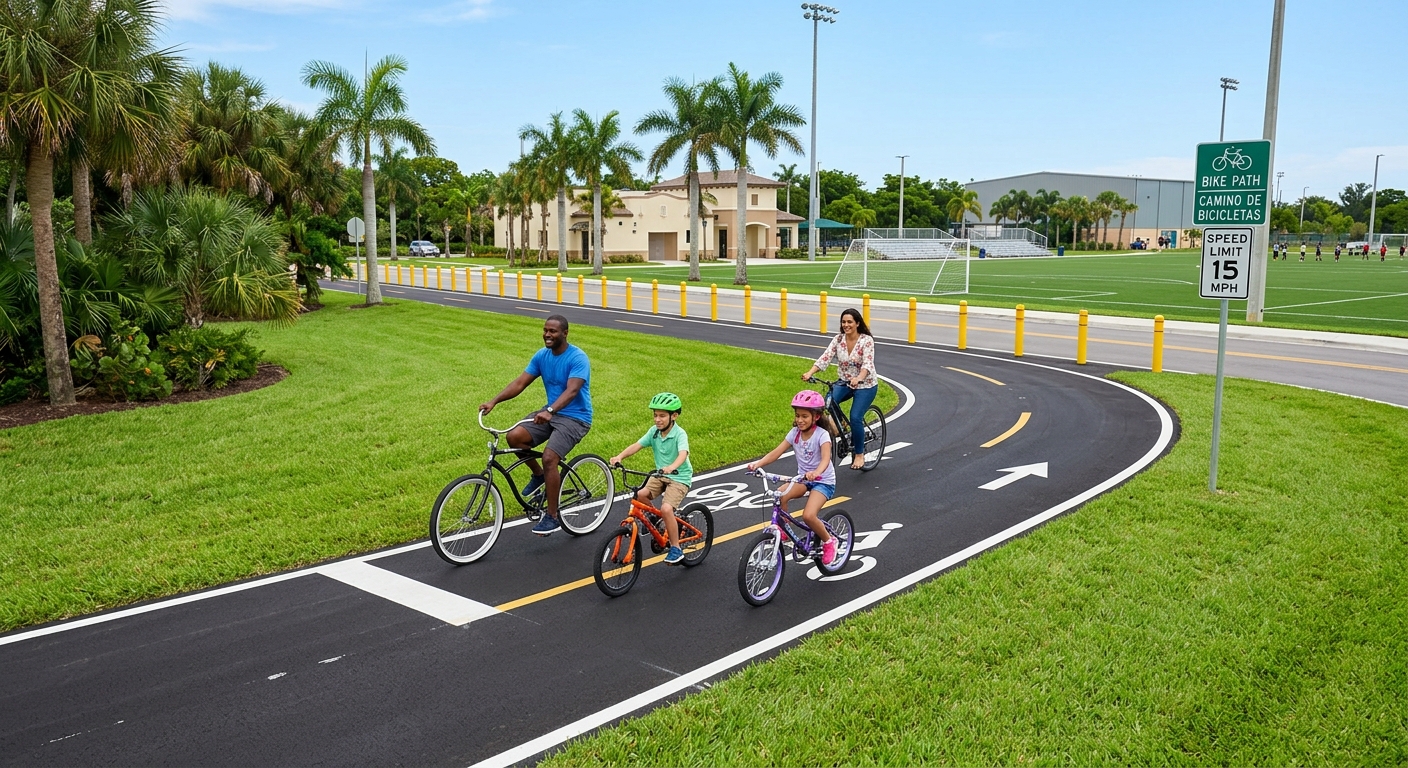
Sacramento County, California, is moving to address some of its most dangerous roads with a $1 million federal grant to develop a comprehensive, countywide traffic safety plan targeting the corridors where pedestrians and cyclists are most likely to be killed.
The funding, awarded through the U.S. Department of Transportation's Safe Streets and Roads for All program, goes to the Sacramento Transportation Authority, the countywide agency that manages the region's Measure A transportation sales tax. The STA's reach across multiple jurisdictions is key: road safety in the Sacramento region is currently fragmented among the city, the county, Caltrans, and smaller incorporated cities like Elk Grove, Rancho Cordova, and Folsom. A unified plan could create a shared framework across that patchwork.
The need is stark. Sacramento has consistently ranked among California's most dangerous metro areas for pedestrians and cyclists, with fatalities concentrated along wide, high-speed arterials in lower-income communities and communities of color, particularly in South Sacramento. Corridors like Stockton Boulevard, Florin Road, and stretches of Watt Avenue were built to move cars fast and now cut through neighborhoods where many residents walk and bike out of necessity. The region's large unsheltered homeless population is also disproportionately represented in pedestrian fatality statistics.
The problem reflects a national crisis. The U.S. recorded roughly 42,795 traffic deaths in 2022, with approximately 7,500 of those being pedestrians, the highest toll in over 40 years and a 77 percent increase from 2010. The proliferation of larger vehicles, post-pandemic speeding, and road designs that prioritize vehicle throughput over safety have all contributed. Sacramento adopted a Vision Zero initiative around 2018-2019 with the goal of eliminating traffic deaths, but fatalities have remained stubbornly high.
This $1 million grant is for planning, not construction. The resulting Comprehensive Safety Action Plan is designed to position the region to compete for larger SS4A implementation grants that fund actual infrastructure changes: road diets, protected bike lanes, reduced speed limits, and better-lit crosswalks. Similar planning grants have helped other cities build their case for construction dollars, as [Corpus Christi did when it developed its first road safety plan](articles/corpus-christi-taps-federal-funds-to-build-its-first-road-safety-plan) using the same program.
The SS4A program has been enormously oversubscribed since its creation under the 2021 Bipartisan Infrastructure Law, with applications far exceeding available funding each round. Some uncertainty surrounds the program's future under the current federal administration, which has signaled interest in redirecting infrastructure dollars toward highway projects. Whether Sacramento can translate this planning grant into construction funding, and whether local political will exists to implement changes that slow traffic, remains the open question.