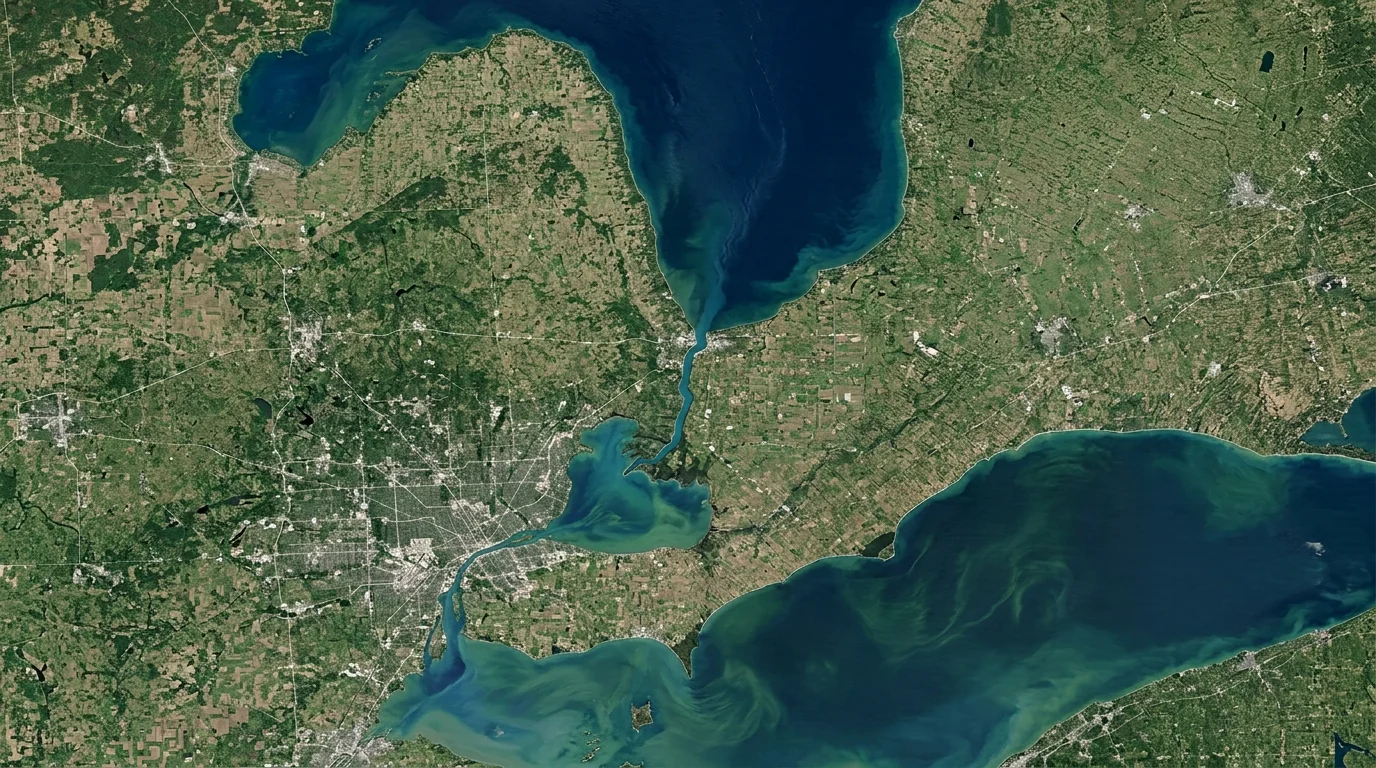
The waterway connecting Lake Huron to Lake Erie supplies drinking water to millions of people across southeast Michigan and northwest Ohio, and the early-warning system protecting that supply is getting an overhaul.
A regional procurement posted through Michigan's inter-governmental purchasing network is seeking a contractor to modernize the Huron-to-Erie real-time drinking water monitoring network, which tracks water quality along the St. Clair River, Lake St. Clair, and the Detroit River. The corridor serves communities including Detroit, Toledo, Windsor in Ontario, and roughly 127 municipalities that draw from Great Lakes Water Authority infrastructure.
The project is described as an update to an existing network, meaning sensors and data systems already in place are being replaced or expanded rather than built from scratch. The original network was part of a broader wave of monitoring investments that followed the August 2014 Toledo water crisis, when a harmful algal bloom in western Lake Erie sent microcystin toxin into the city's water supply, triggering a do-not-drink order for nearly 500,000 residents. That three-day crisis made clear that Great Lakes communities lacked the real-time interconnected tools needed to catch contamination events before they reached tap water.
A decade later, the threat hasn't receded. Warmer lake temperatures and agricultural runoff have made harmful algal blooms in Lake Erie more frequent and harder to predict. NOAA projected above-average bloom severity for the western lake in 2025. Scientists say climate change is intensifying the problem, which means the window between detecting a bloom and protecting a water intake is getting shorter, not longer.
The region has drawn on federal funding for monitoring investments, including the Great Lakes Restoration Initiative, which has received bipartisan congressional support and got a significant boost from the 2021 Bipartisan Infrastructure Law. PFAS contamination from industrial and military sites has added further urgency to expanding what these systems can detect.
The specific agency leading this procurement isn't identified in the posted materials, though the Michigan platform used suggests a county, regional authority, or multi-jurisdictional entity. The Great Lakes Water Authority, formed in 2016 after Detroit's bankruptcy restructuring, is one of the largest water utilities in the country and has been a central player in corridor monitoring efforts.
With contractor selection still ahead, the timeline for completing the upgrade has not been publicly announced.