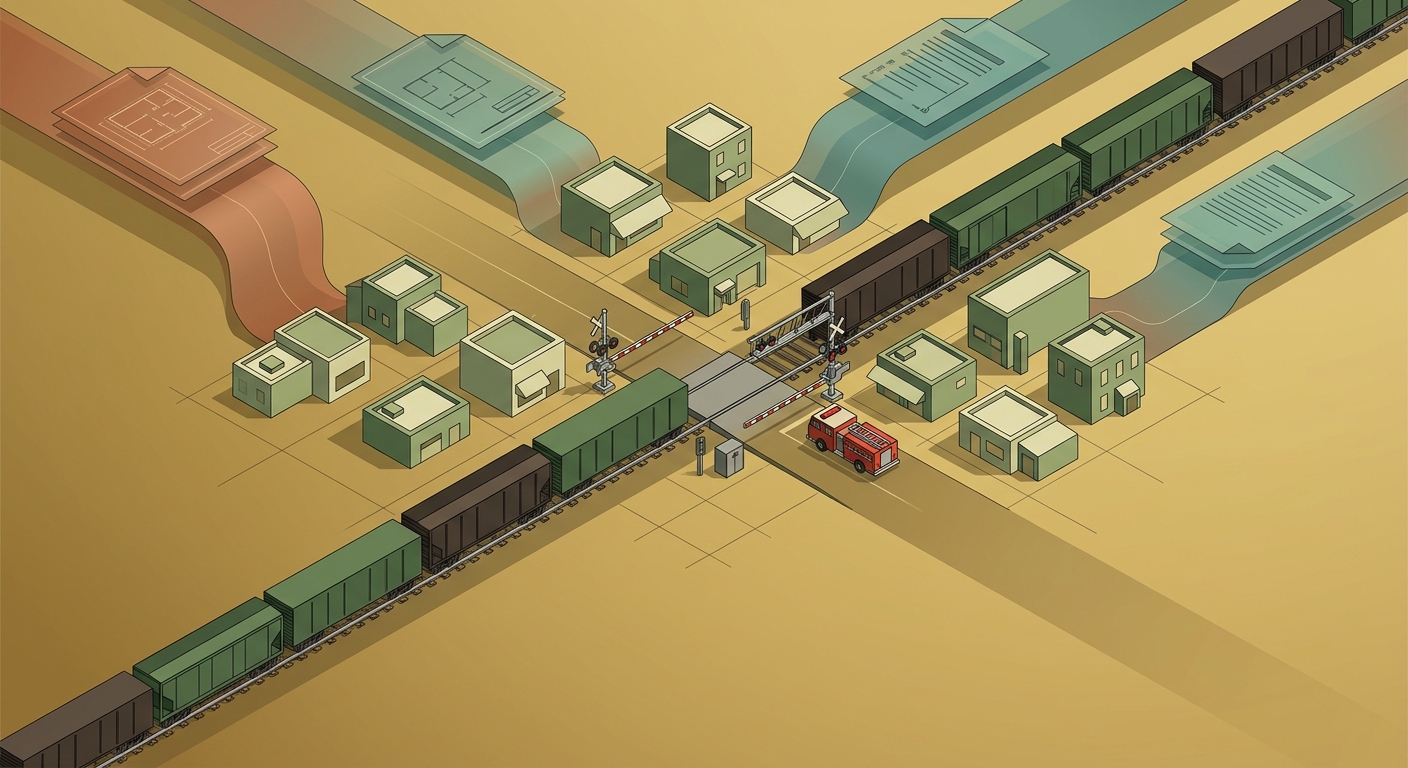
Across North Carolina, trains frequently block road crossings for extended periods, sometimes preventing emergency vehicles from reaching neighborhoods in time. A new $3 million federal grant to NC State University aims to fix a root cause: many of the communities hit hardest by these blockages don't have the technical know-how to access the billions of dollars now available to address them.
The grant, awarded through the U.S. Department of Transportation's Railroad Crossing Elimination Program, funds a statewide railroad crossing safety training program run by NC State's Institute for Transportation Research and Education, which has long served as a research and training partner for the North Carolina Department of Transportation. Rather than eliminating a specific crossing, this investment builds the workforce and institutional knowledge needed to pursue those larger projects.
North Carolina has over 3,200 miles of freight rail track and thousands of at-grade crossings, many in small towns that grew up around rail lines more than a century ago. As freight trains have grown dramatically longer in recent years, some now stretching two to three miles, blockages have become more frequent and more dangerous. Communities along the Norfolk Southern and CSX corridors, including towns like Hamlet and Selma, have seen fire trucks and ambulances stranded on the wrong side of a stopped train.
The program focuses particularly on underserved communities, many of which were historically divided by railroad lines through discriminatory land-use decisions and today face the sharpest consequences of blocked crossings. Smaller jurisdictions in these areas often lack engineers or planners with the expertise to design an elimination project or navigate the federal grant process, which can involve complex safety assessments, environmental reviews, and coordination with private railroads.
The RCE Program was created by the 2021 Bipartisan Infrastructure Law, which set aside $3 billion over five years specifically for grade crossing improvements. Individual construction grants have ranged from modest planning awards to projects exceeding $100 million, and USDOT awarded more than $570 million in a single 2024 round alone. NC State's training program is a bet that getting more communities ready to compete for those dollars will have a multiplying effect on safety across the state.
No timeline has been announced yet for when the first training programs will launch or how many communities are expected to participate.