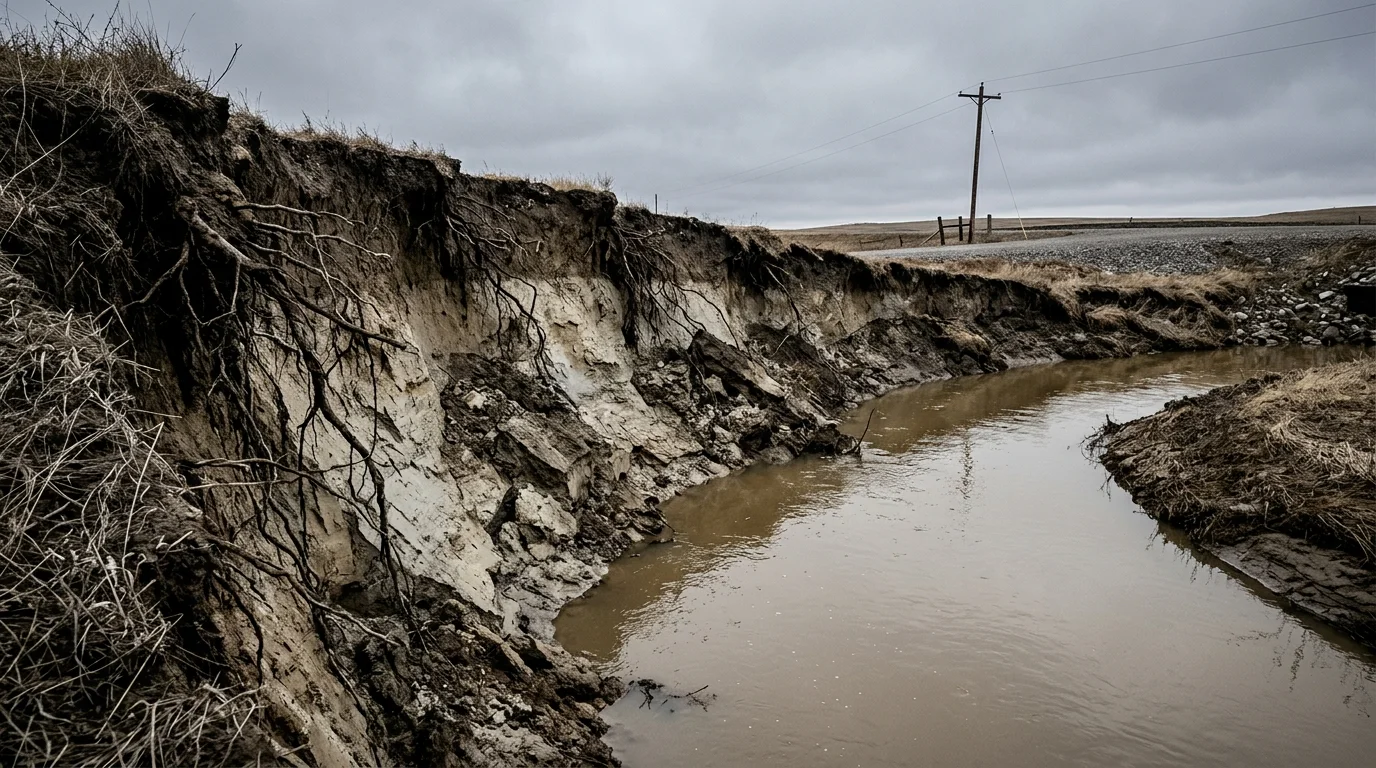
Florida has issued nine wildfire-related procurement solicitations in the last 30 days, against a 12-month monthly average of roughly 0.9. That nearly 10-fold spike is not a single county catching up on paperwork. It is two separate layers of government, state and municipal, simultaneously discovering they did not have adequate contracts in place when 2026's drought turned a managed seasonal risk into the worst wildfire emergency the state had seen in a quarter century.
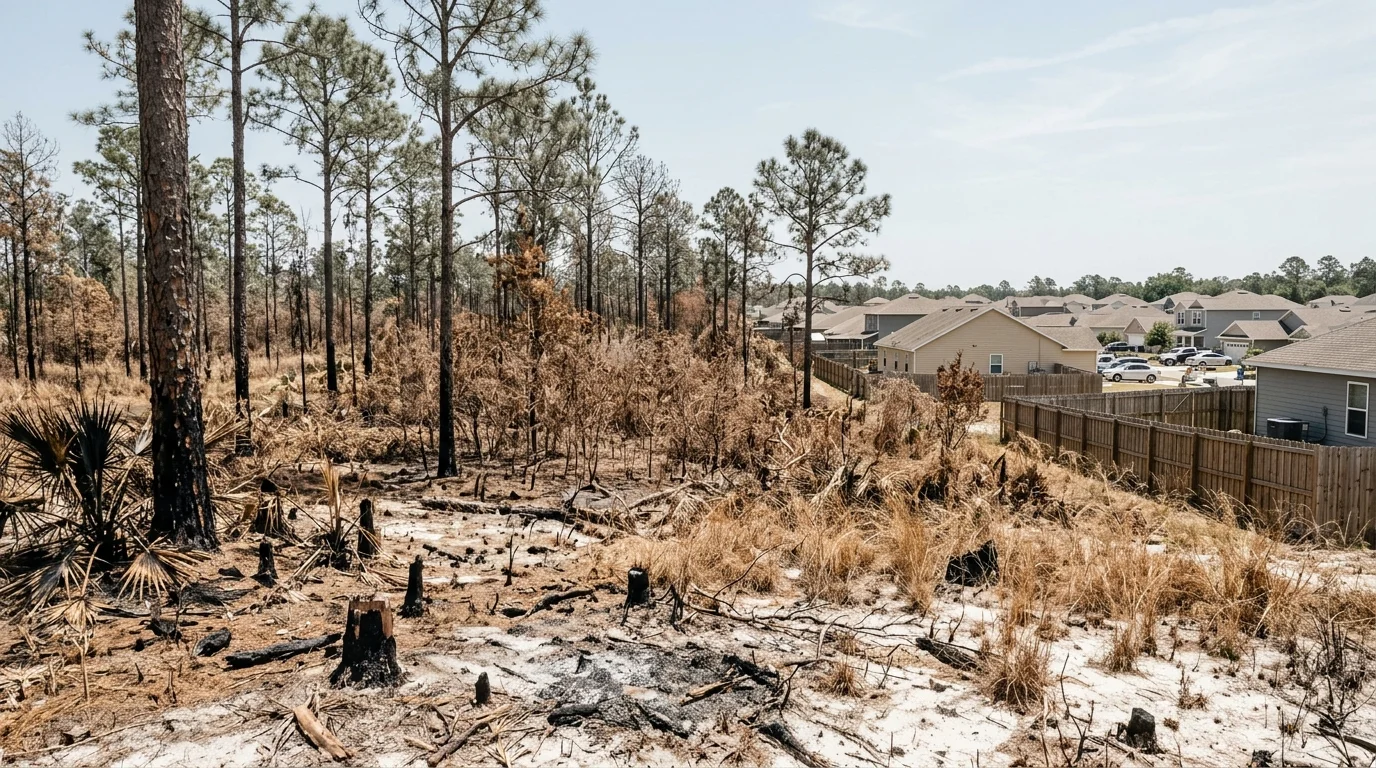
The story of how Florida got here starts with Governor DeSantis's Executive Order 26-33, signed February 9, 2026, declaring a statewide emergency and citing approximately 120 active wildfires burning across critically dry soils. By mid-February, 34 of Florida's 67 counties had active burn bans. Flagler County, where rapid coastal development has pushed subdivisions directly into historically fire-adapted scrub and pine flatwoods, declared its own local emergency after a 170-acre fire in South Flagler County. By the time the season closed, the state had recorded more than 2,000 ignitions and 100,000 acres burned, against drought conditions so severe that 99% of Florida was classified as drought-affected and 85% met the threshold for severe drought or worse.
The procurement spike now arriving reflects two distinct responses that should not be read as a single program. The Florida Forest Service, operating under the Florida Department of Agriculture and Consumer Services, has rebid its statewide Wildfire Mitigation Services term agreement, a state-appropriation-funded contract covering landscape-scale mowing, mulching, chopping, vegetation grinding, and tree removal across all 67 counties. The fact that this is a rebid matters: it means the prior contract vehicle was either inadequate or expired without enough vendor coverage to meet crisis-year demand. That gap, surfaced under fire last spring, is now being closed on the front edge of the next dry season.
Source: NationGraph.
Separately, Palm Coast has issued three solicitations for underbrush mowing services on vacant lots where hazardous vegetation sits within 30 feet of developed structures. These are locally funded, code-enforcement contracts, not state forestry operations, and they target a specific problem the 2026 season made visible: suburban lots left to grow into fuel loads directly adjacent to homes. The two procurement streams share a trigger in the emergency declarations, but they operate through different legal mechanisms, different funding sources, and target entirely different actors. Collapsing them into a single government response would miss the structural point.
Underpinning the state forestry side is a federal grant portfolio that has quietly grown through the crisis. USDA Cooperative Forestry Assistance grants to FDACS now total roughly $10.7 million across three active awards, including a $4 million award that began in September 2026 and runs through 2031. A separate USDA State and Private Forestry Hazardous Fuel Reduction grant of $430,000 is active through 2030. These federal grants fund the Florida Forest Service's underlying operating capacity; they are distinct instruments from the procurement contracts now hitting the market, but they establish the financial floor the state is building its expanded contract structure on.
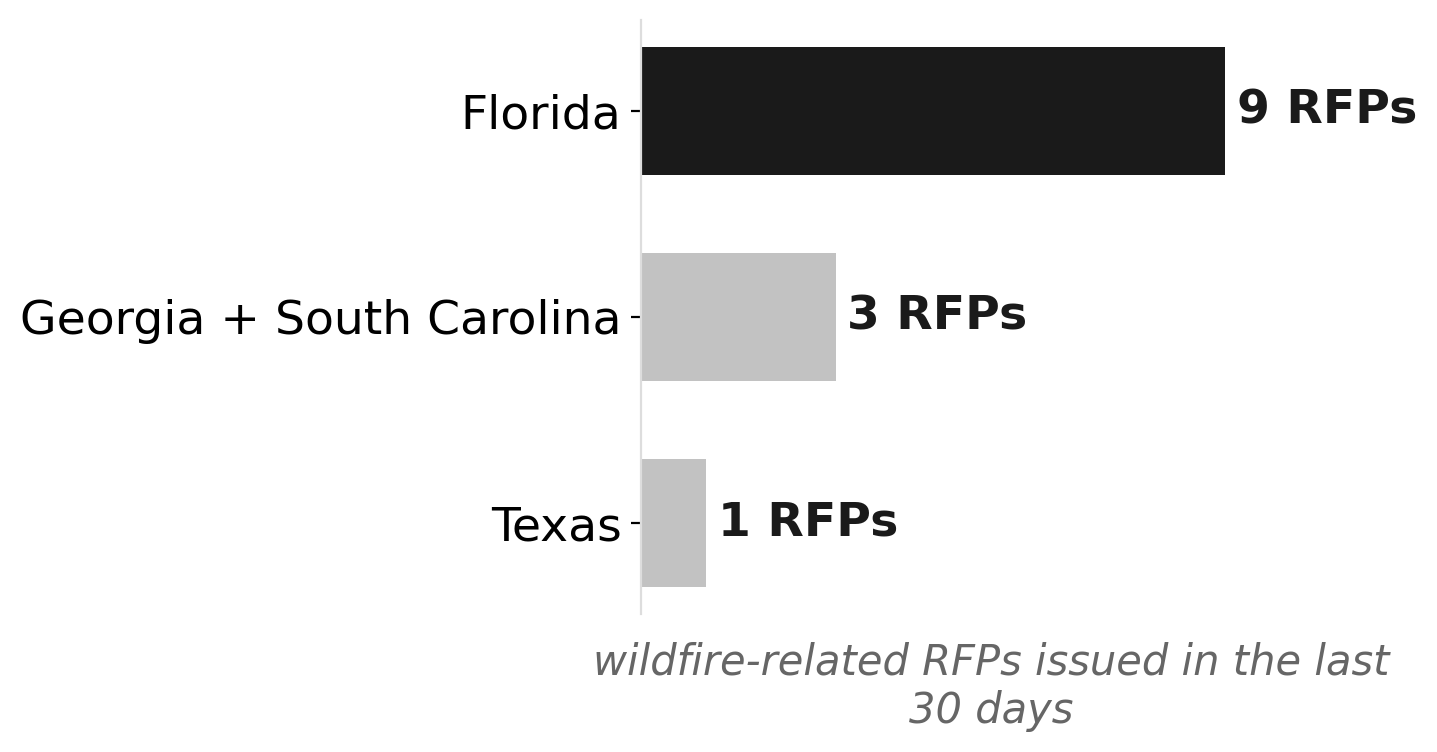
Florida's position among its southern peers is striking. In the same 30-day window, Georgia and South Carolina combined issued three wildfire-related solicitations. Texas issued one. Florida's nine reflect something more than post-crisis activity: they reflect an institutional recognition that the state's existing procurement infrastructure was not sized for what actually happened. California leads all states with 70 wildfire RFPs in the same period, but California operates on a year-round western fire paradigm with dedicated institutional machinery. Florida is arriving at that level of seriousness from a different starting point, one where hurricane preparedness has long been the dominant emergency-management industry and wildfire was treated as a seasonal nuisance with a manageable vendor roster.
The timing sharpens the urgency. Florida's dry season runs October through May, with peak wildfire risk in April and June. The procurement wave now underway is landing at the opening of the next elevated-risk window, not after it. That is a meaningful change from last year's posture, when the contracts that mattered most did not exist in usable form when fires started spreading.
What changes for a resident in Palm Coast or Flagler County is more concrete than a contract rebid: the city's new solicitation gives it a standing vendor relationship to enforce code against vacant-lot vegetation before the next ignition, rather than scrambling for capacity after one. For the state as a whole, the Florida Forest Service's rebid will determine whether a broader network of contractors can be mobilized quickly enough when dry conditions return. That contract award, originally due in late October 2026, is the clearest single signal of whether Florida is institutionalizing its response or simply reacting to last year's headlines.
The next thing to watch is the award itself: who wins the statewide term agreement, at what ceiling, and whether the vendor pool is deep enough to cover simultaneous multi-county activations. If it isn't, the gap that opened in February 2026 will still be there when the soils dry out again.