Three drainage structures buried beneath Interstate 295 in Portland, Maine are getting rehabilitated before they fail, as the state moves to shore up aging infrastructure on the highway corridor that serves as the economic spine of northern New England.
The culverts, all clustered along a short stretch of I-295 near Exit 7 and US Route 1, are roughly 50 to 60 years old, built when the highway was first constructed in the 1960s and early 1970s. That puts them at or beyond the end of their typical design life. Maine's brutal freeze-thaw cycles, decades of road salt exposure, and increasingly intense storms have been working on these structures ever since.
The stakes of inaction are real. I-295 carries an estimated 70,000 to 90,000 vehicles per day through Greater Portland, and a culvert failure beneath a highway of that traffic volume would be catastrophic. Deteriorated culverts have triggered washouts on Maine roads during storm events before, and the state has seen roughly 15% more precipitation since 1895, with intense rainfall events becoming more frequent.
Source: NationGraph.
Maine DOT is grouping all three projects into a single contract, a standard efficiency move that reduces the cost of mobilizing a construction crew and limits the total window of disruption on a stretch of highway that cuts through one of Portland's most densely developed commercial corridors. Coordinating construction in that zone is a significant logistical challenge regardless.
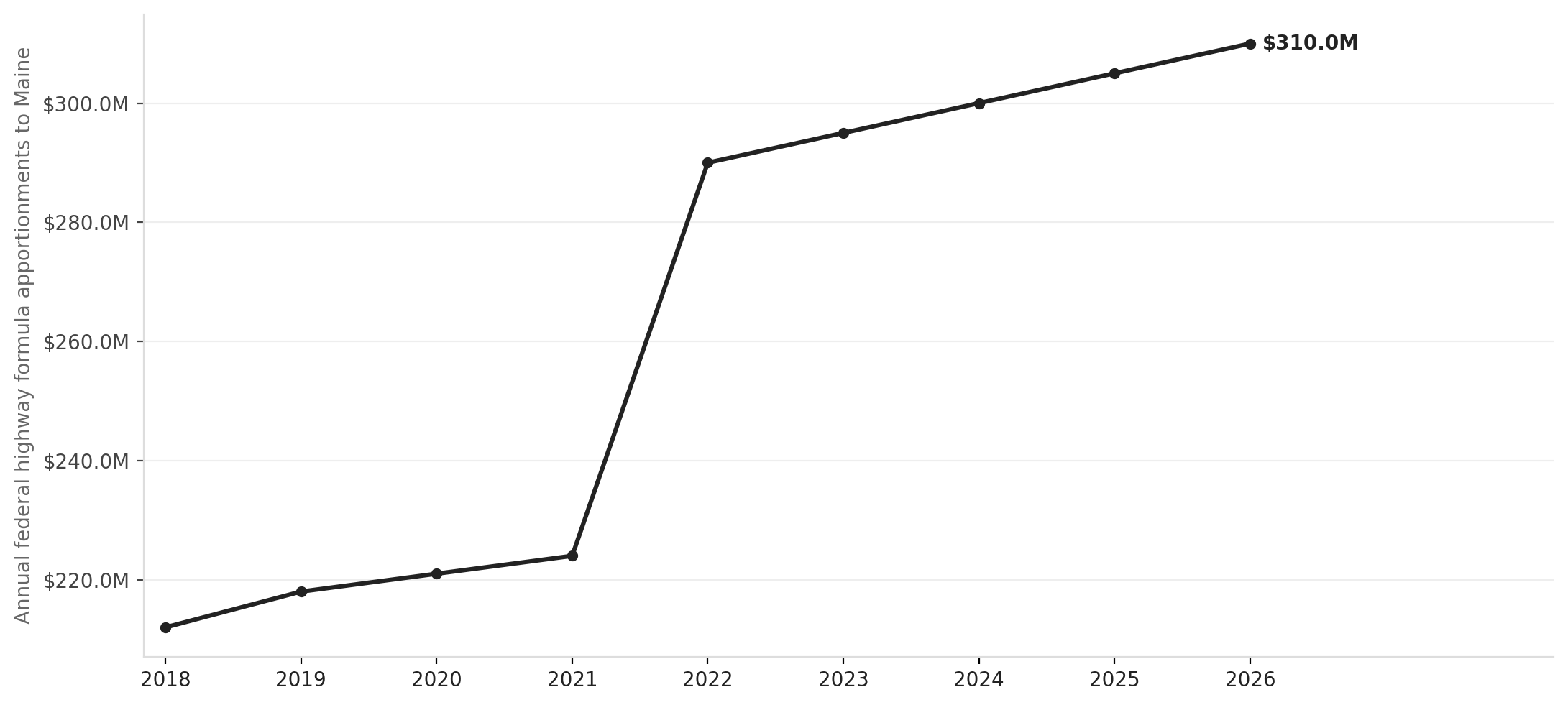
The work is part of a broader acceleration in Maine's infrastructure spending since the federal Bipartisan Infrastructure Law passed in 2021. Maine is receiving roughly $1.3 billion in federal highway funds over five years under the law, a substantial increase over prior levels, with more than $100 million specifically directed at bridge and culvert work.
Maine DOT has posted the project to its bid portal. With Maine's construction season running from roughly May through November, contractors awarded this work will face pressure to move quickly.