On Guam, where temperatures hover around 80 to 86 degrees year-round and electricity costs three to four times the mainland average, federal energy assistance looks nothing like it does in the continental United States. There is no heating season. The program designed to help low-income households keep the lights on and stay warm in Minnesota or Vermont is, on this Pacific island, mostly about keeping air conditioners running and power bills from overwhelming a family's budget.
The federal government has awarded Guam $730,751 in Low Income Home Energy Assistance Program (LIHEAP) funding for fiscal year 2026, which began October 1. The grant, administered by the Department of Health and Human Services, will help low-income households on the island cover electricity and cooling costs.
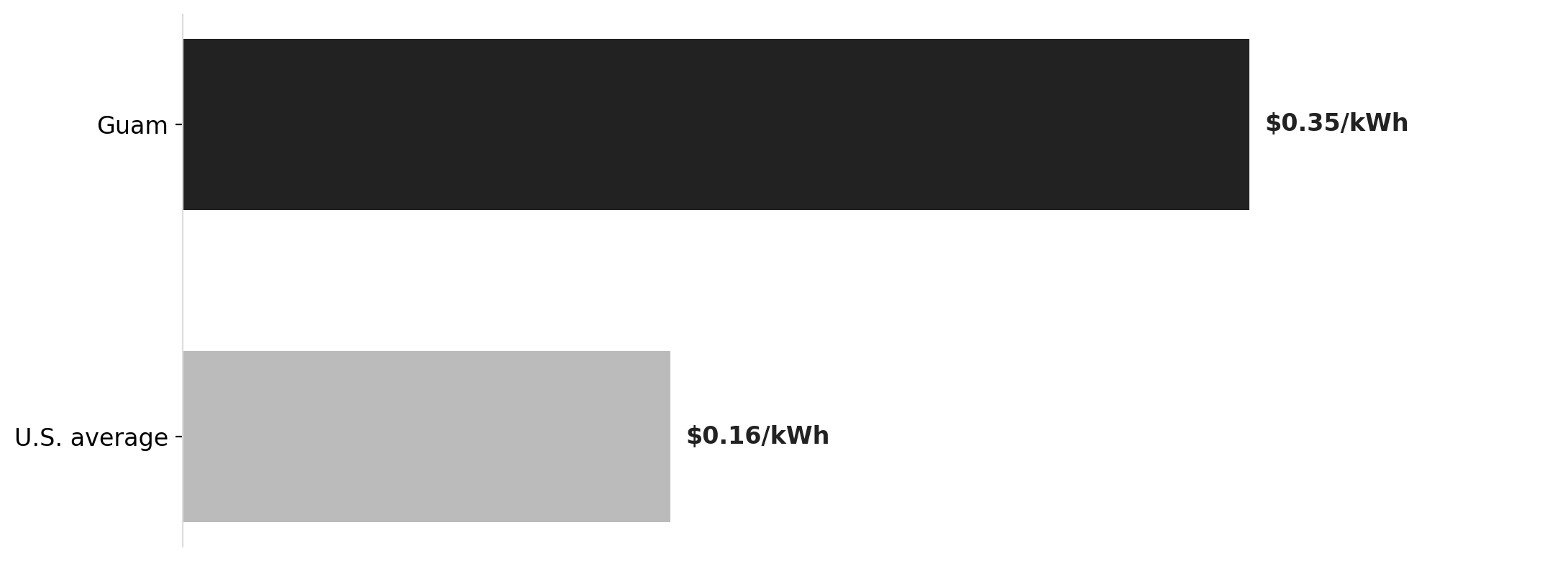
Approximate residential electricity rates. Source: NationGraph research (EIA national average; Guam Power Authority).
The stakes are high. Guam's Guam Power Authority has historically charged $0.25 to $0.35 or more per kilowatt-hour, compared to a U.S. average of roughly $0.12 to $0.16, because the island depends almost entirely on imported petroleum to generate power. Geographic isolation means fuel prices are both high and volatile. For families already stretched thin, that math is brutal: Guam's poverty rate has historically run around 22 to 25 percent, well above the national average, and the cost of living is elevated across the board due to the island's import dependence.
The need has grown more acute since May 2023, when Typhoon Mawar, the strongest typhoon to strike Guam in decades, knocked out power across most of the island for weeks and caused over $3 billion in damage. Recovery has been ongoing, and the island's aging power grid, already strained, faces additional pressure from a U.S. military buildup that is relocating roughly 5,000 Marines from Okinawa to Guam.
The $730,751 award is modest relative to the scale of energy burden on the island, and Guam has no voting representation in Congress to push for a larger share. Nationally, LIHEAP funding has faced turbulence: after a massive pandemic-era boost, regular appropriations returned to roughly $4 billion annually, and the Trump administration has proposed significant cuts to the program, creating uncertainty for territories and states alike. Illinois and other states have already begun grappling with what reduced federal support could mean for vulnerable households.
For Guam, the question of how the funds will be distributed to eligible households falls to local administrators. With federal budget negotiations continuing, whether next year's allocation holds at this level or shrinks remains an open question for the roughly 170,000 to 180,000 residents of the territory.