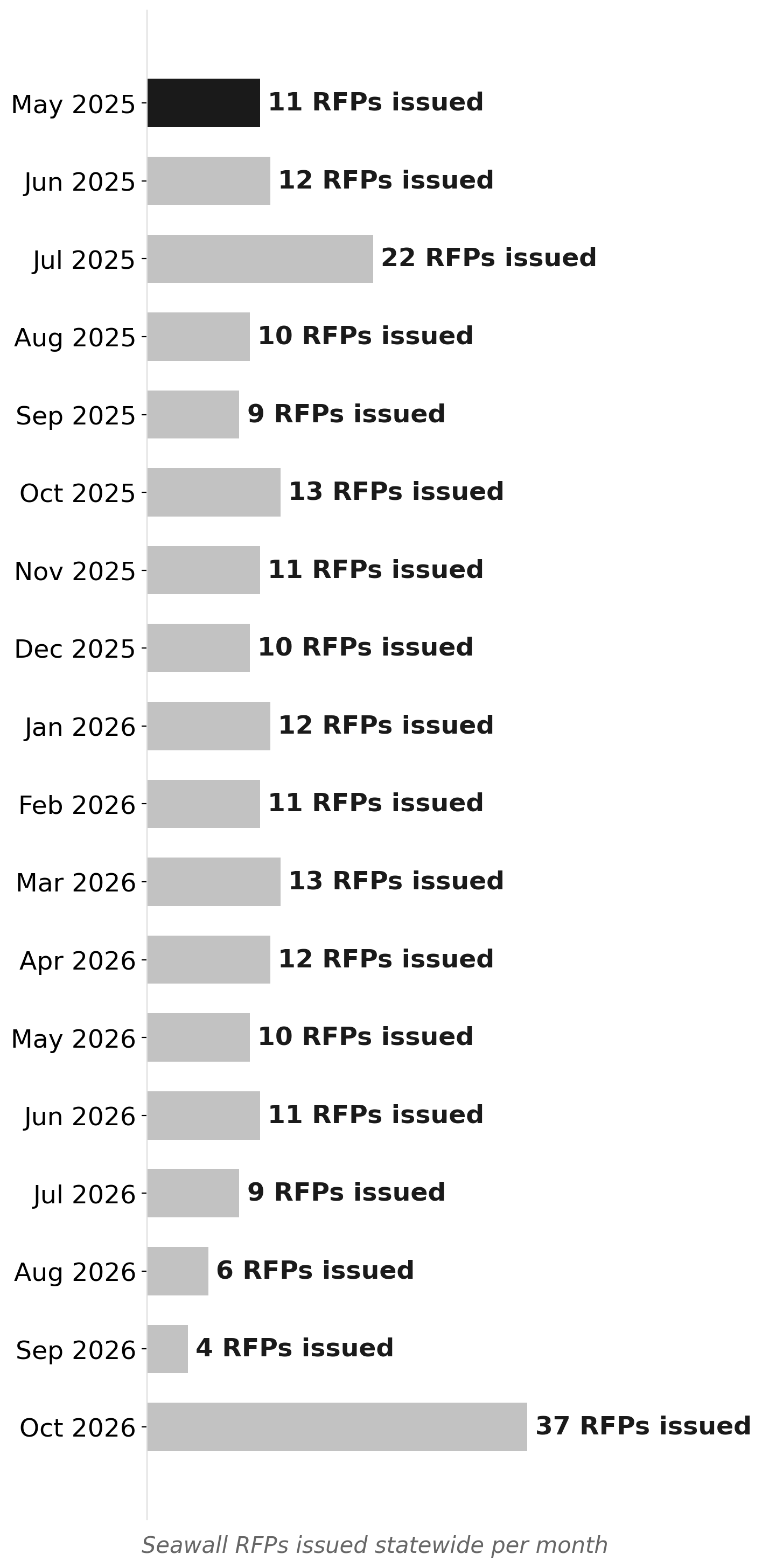
Florida municipalities issued 37 seawall and coastal hardening RFPs in October 2026, more than three times the trailing 12-month average of roughly 11.6 per month. That single-month burst is the largest in at least 18 months outside a minor July 2025 spike, and it is not random. It follows almost mechanically from the Florida Department of Environmental Protection's Resilient Florida Grant Program application portal, which closed September 1 for FY2027-28 awards. Municipalities spent the summer writing grant applications; October is when they start hiring engineers.
The timing exposes a structural feature of how Florida funds coastal protection. The Resilient Florida Program, established in 2021 and funded through state appropriations, now carries more than $2 billion in cumulative investment. The FY2026-27 state budget allocated $160 million for implementation grants and $35 million for planning, a combined $195 million in state trust funds. But eligible project requests for the same cycle totaled $738.7 million, a nearly five-to-one gap between demand and supply. That gap is what creates urgency: municipalities that do receive awards know their priority standing is reassessed each cycle, so early procurement is not bureaucratic enthusiasm, it is self-preservation.
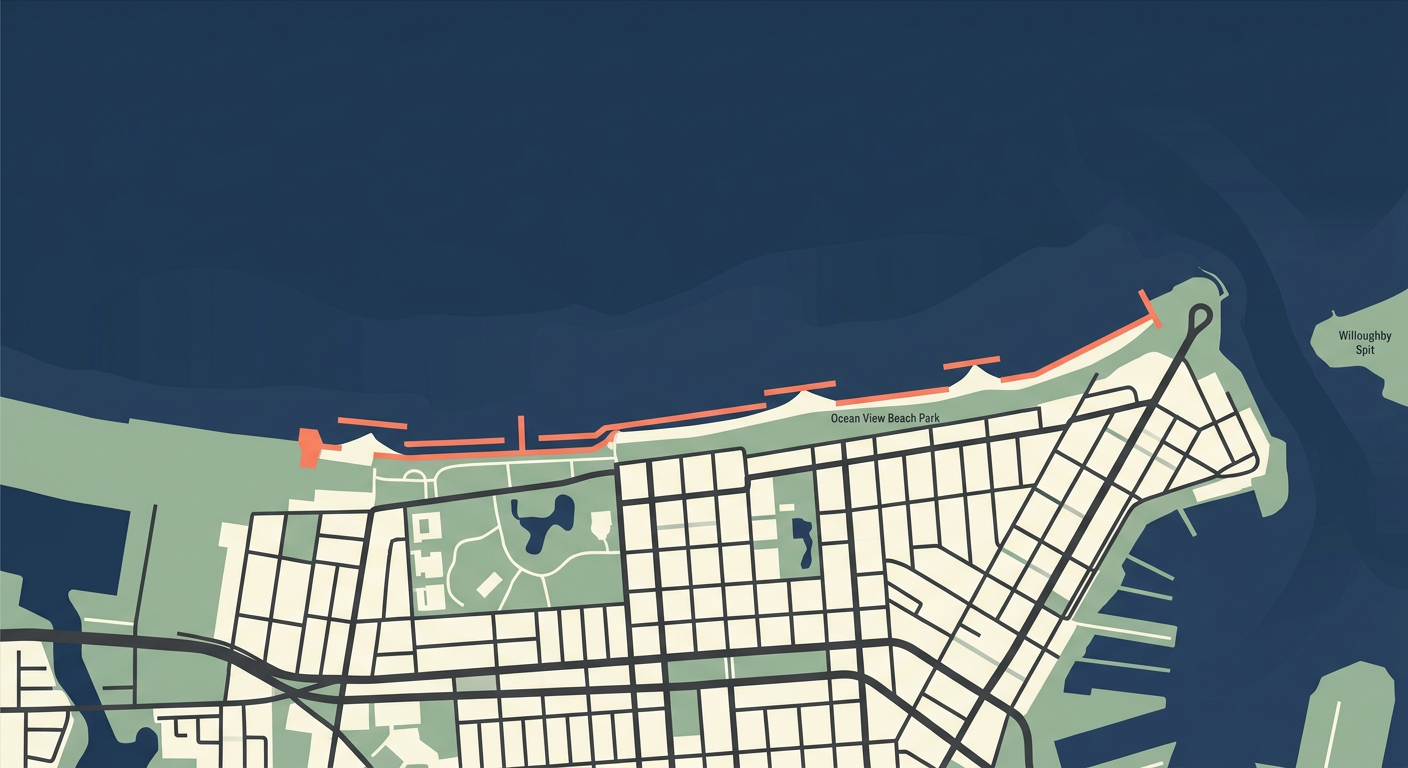
The geographic concentration of October's RFPs tracks almost exactly where storm damage has been worst. Broward County led with six RFPs, Pinellas and Charlotte each issued five, Palm Beach issued three, and Lee and Monroe each issued two. Hollywood, which absorbed significant surge during the 2024 storm season, issued four RFPs on its own. Charlotte County, which includes communities still rebuilding from Hurricane Ian and then again from Helene and Milton in 2024, filed three. The quiet summer that preceded this surge makes the mechanism visible: RFP volume fell to between four and nine per month during July through September 2026, the precise window when local engineering staff were focused on grant applications rather than procurement documents.
Source: NationGraph.
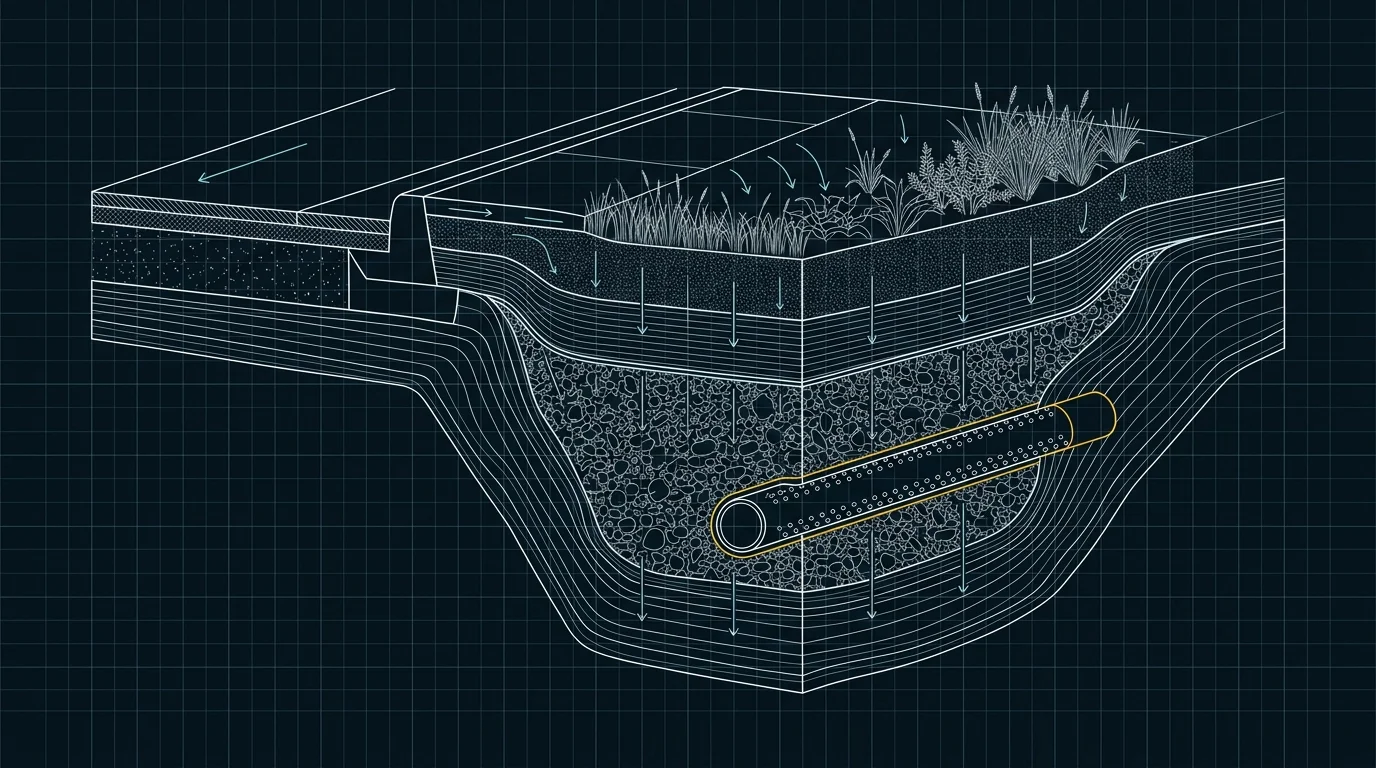
A second policy is widening what municipalities can actually build with those grants. SB 302, sponsored by Sen. Iliana Garcia and effective July 1, 2026, expanded the range of project types eligible under the Resilient Florida Program to include living shorelines, 3D-printed seawall structures, and hybrid green-gray designs. It also streamlined DEP permitting for replacement of coastal infrastructure that failed during storm events. SB 302 does not control the grant dollars, that is the program's annual appropriation, but it widens the menu of shovel-ready options available to municipalities that just received awards. The result is that October's procurement surge contains a broader range of project types than any previous cycle, as cities and counties move to procure designs for structures that were not eligible a year ago.
According to WUFT's August 2026 reporting on the program's distribution, 347 of Resilient Florida's implementation grants since 2021 have gone to coastal counties versus only 30 to inland ones, which helps explain why October's surge is so geographically concentrated. All 67 Florida counties have now completed DEP-mandated vulnerability assessments, meaning the full ranked pipeline of eligible projects is deeper than at any point since the program launched. That depth compounds the competitive pressure: more municipalities with more documented need are chasing the same fixed appropriation.
For residents in Broward, Pinellas, Charlotte, and Palm Beach counties, the near-term effect is a compression of project timelines. Engineering firms and coastal contractors in South Florida and the Gulf Coast are absorbing procurement requests at a rate that, sustained, would represent a year's worth of project launches in a single month. Permit applications, design contracts, and site assessments that might have spread across a full calendar year are being initiated simultaneously, because every awarded municipality is working against the same informal clock: demonstrate execution capacity before the next application cycle, or risk falling in the priority queue.
The next signal to watch is what DEP publishes on FY2027-28 award announcements, expected in early 2027. That release will show which of October's newly procured projects have secured funding and which are waiting for a future cycle, and it will likely trigger another procurement burst in the month that follows. The five-to-one demand gap is not closing, the FY2026-27 statewide resilience plan ranks $1.596 billion in total eligible project costs against roughly $300 million in state commitments over three years. Until that gap narrows, October will keep looking like this.