Minneapolis is moving to get ahead of its own transit investment, seeking private development partners to build housing and commercial space near the planned Metro Blue Line Extension stations before rising land values along the new rail corridor price out the communities the line is meant to serve.
The city's Community Planning and Economic Development department [posted the solicitation](javascript:submitAction_win0(document.win0,'SCP_COSP_WK_FL_DESCR$28')) this week, a sign that the long-troubled Blue Line Extension has advanced far enough in planning that the city is now focused on what gets built around the stations rather than just whether the line gets built at all.
The stakes are high in North Minneapolis, one of the city's most racially diverse and historically disinvested neighborhoods, where several stations are planned. Residents there have spent years demanding that transit investment produce tangible community benefits, jobs, affordable housing, locally owned businesses, rather than the kind of displacement that followed development along the existing Green Line on University Avenue, where rising rents pushed out longtime businesses and residents after light rail arrived.
The Blue Line Extension has been more than two decades in the making. Originally conceived to connect downtown Minneapolis to Brooklyn Park through North Minneapolis and the northwestern suburbs, the project endured repeated redesigns, cost overruns, and a near-collapse in 2020 when federal officials raised concerns and the Metropolitan Council was forced to restructure it. Federal funding commitments under the 2021 Bipartisan Infrastructure Law eventually put the project back on track.
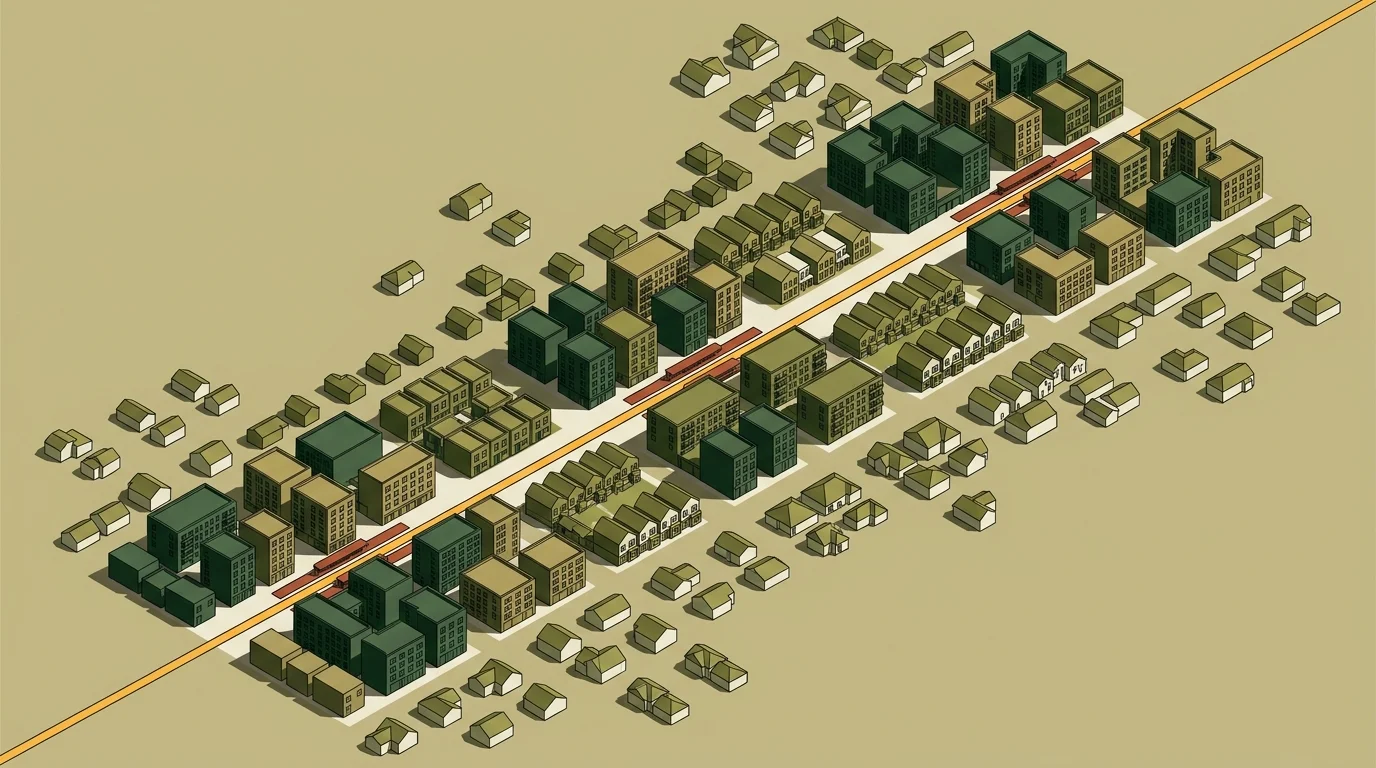
By seeking development partners now, the city is betting it can shape the market rather than react to it. The approach draws on lessons from both the Blue Line's history and Minneapolis's broader 2040 plan, which eliminated single-family-only zoning citywide and explicitly prioritized density near transit. The theory is straightforward: if the city and community-oriented developers can control what gets built near stations before construction begins, there's a better chance that new housing and retail actually serves existing residents.
What that looks like in practice, and whether community benefit agreements will be strong enough to matter, remains an open question as the city evaluates potential partners.