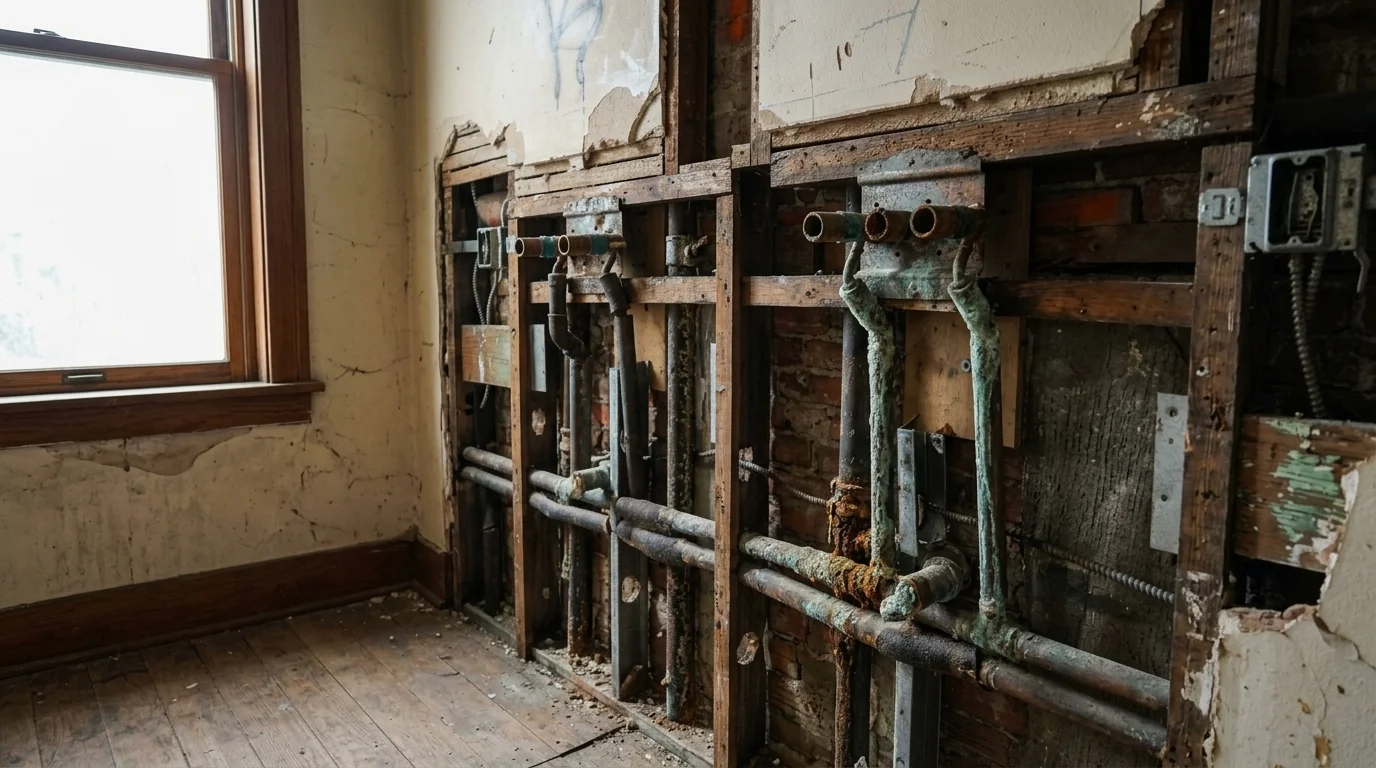
More than a decade after lead-contaminated water flowed from Flint, Mich., taps and poisoned thousands of residents, the city is still pulling out hazardous plumbing, now room by room, inside people's homes.
Flint has posted a bid for residential plumbing rehabilitation tied to its Lead-Based Paint Hazard Control program, a HUD-funded initiative targeting lead exposure pathways that remain inside homes even after the city replaces the water line at the street. The full solicitation is listed on the city's bid portal.
The work addresses a gap that critics have pointed to for years: swapping out the service line from the street to the curb, which Flint has spent nearly a decade doing under a 2017 court settlement, is only part of the solution. Old fixtures, lead solder and corroded interior pipes inside homes can keep leaching lead into tap water long after the city's work outside is done. Much of Flint's housing stock predates 1950.
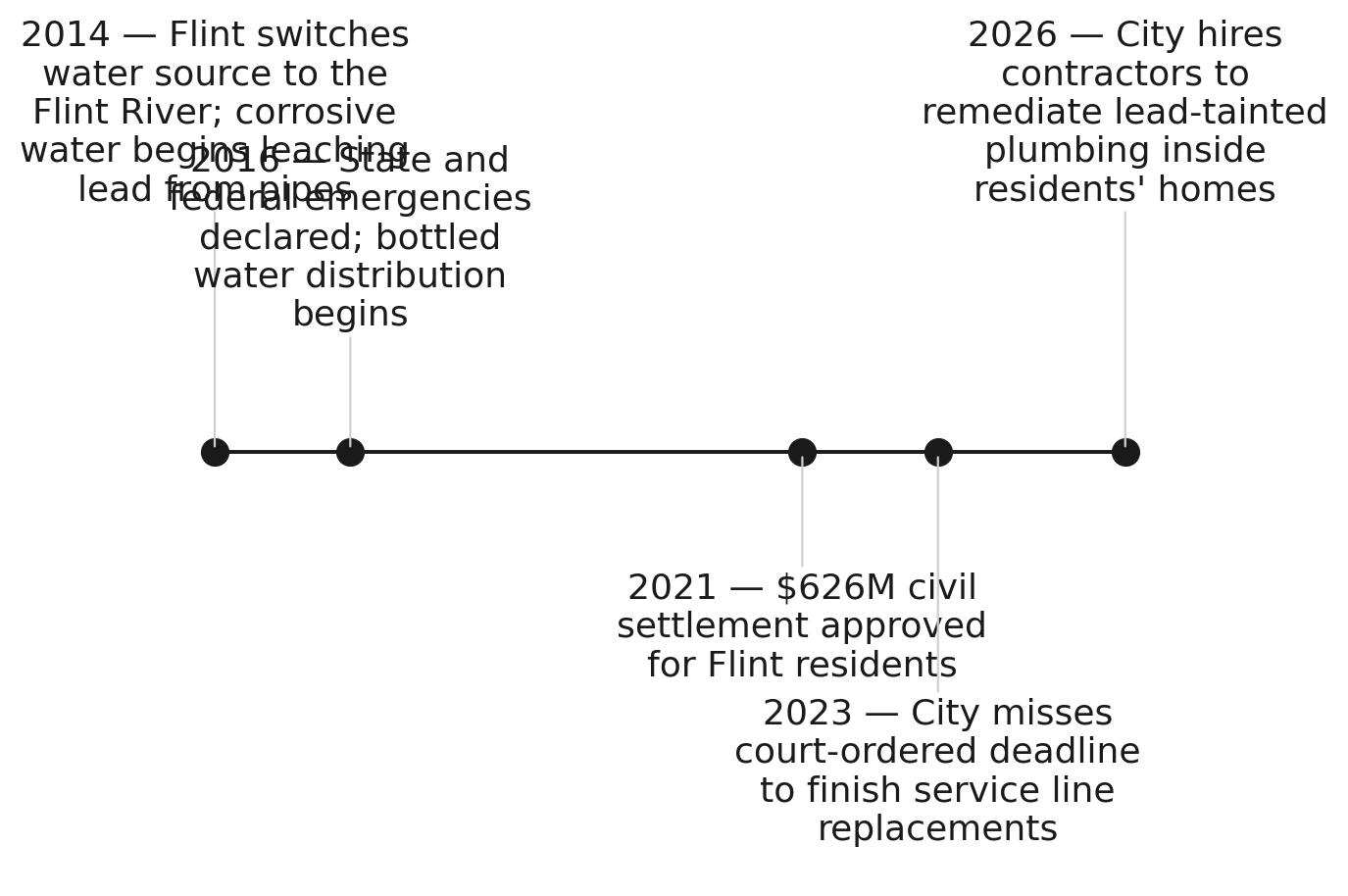
Source: NationGraph.
Flint's lead crisis began in April 2014, when state-appointed emergency managers switched the city's water source to the Flint River without required corrosion control treatment. Untreated water stripped protective scale from aging lead pipes, contaminating the tap water of roughly 100,000 residents. The crisis was exposed in late 2015, a federal emergency was declared in January 2016, and a landmark settlement the following year required the city to replace every lead and galvanized service line, a project that has repeatedly missed deadlines amid contractor problems, incomplete pipe records and difficulty accessing properties. Federal judges extended deadlines and held the city in contempt as recently as 2024 and 2025.
Flint remains one of the poorest cities of its size in the country, with roughly 80,000 residents and a poverty rate near 35%, and depends heavily on federal and state grants to fund infrastructure repairs. Distrust of contractors runs deep: residents have complained for years about missed appointments, damaged yards and incomplete restoration work after service line digs.
The contract value, timeline and number of homes to be covered were not disclosed in the posting summary. Those details, along with how the work will be coordinated with ongoing service line replacement, will determine how much further Flint can actually close the gap on a crisis that has proved far more stubborn than officials once promised.