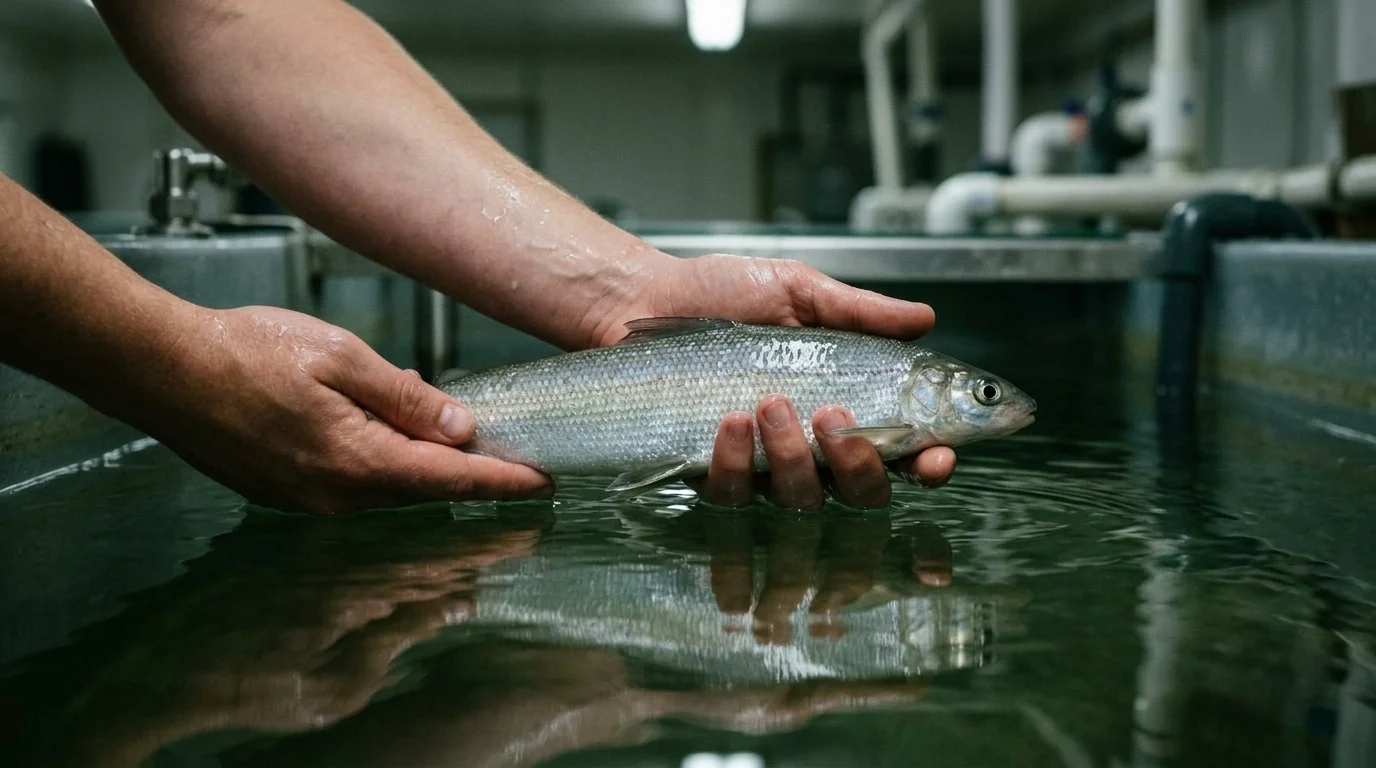
Canada's rarest freshwater fish may soon exist more reliably in a tank than in the wild. The federal government is contracting out a captive-breeding and holding program for the Atlantic whitefish, a species found nowhere on Earth except three interconnected lakes in Lunenburg County, Nova Scotia, and one that biologists have been warning for years is running out of time.
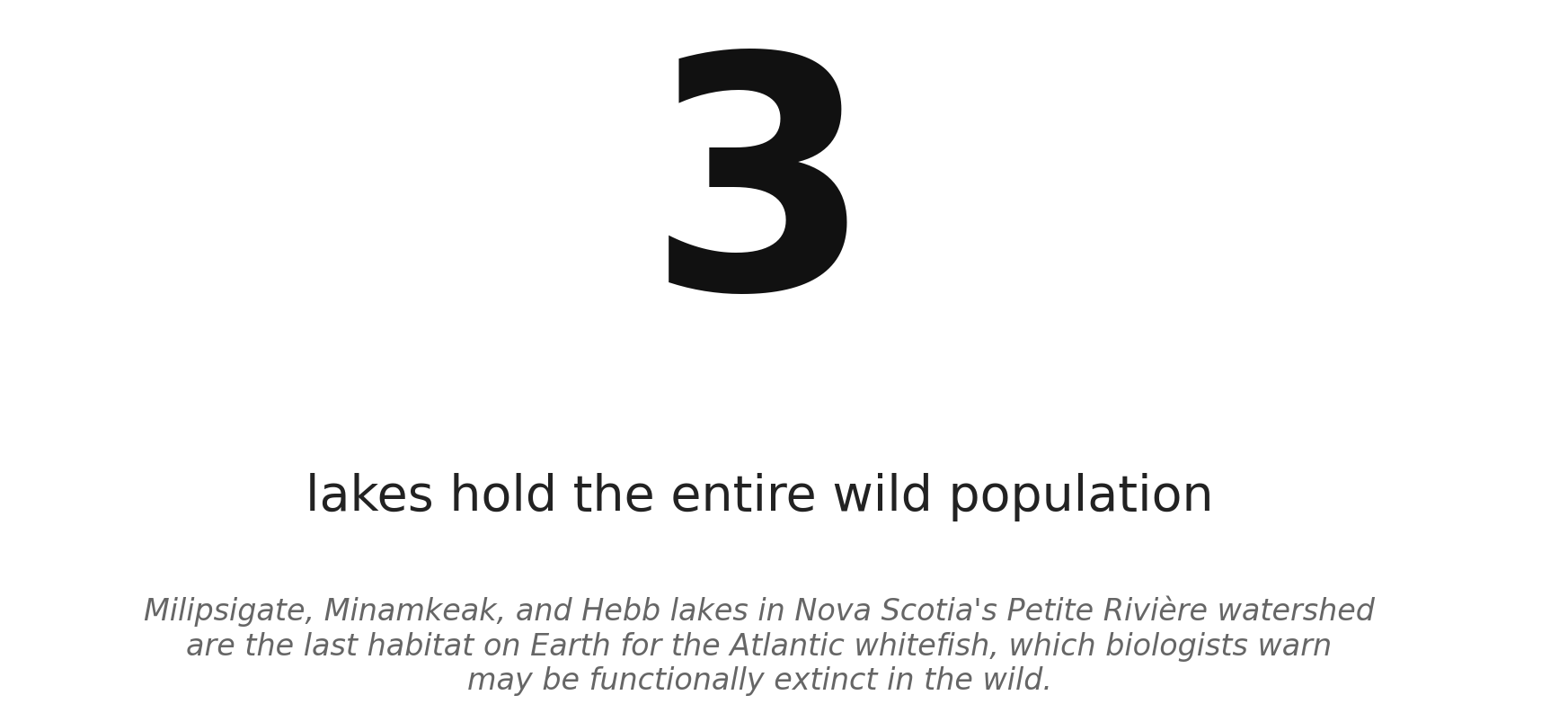
The Atlantic whitefish (Coregonus huntsmani) has been listed as Endangered under Canada's Species at Risk Act since 2003. Its entire wild population occupies Milipsigate, Minamkeak, and Hebb lakes in the Petite Rivière watershed. A second population in the Tusket River system was wiped out by the 1980s, lost to acid rain and hydroelectric dams that cut off the fish's historic migration routes to the sea.
What's pushing the Petite Rivière population toward the edge now is invasive smallmouth bass and chain pickerel, which have colonized the lakes and devour juvenile whitefish before they can reach maturity. By the early 2020s, DFO scientists conducting population surveys were struggling to find juveniles at all, a demographic warning sign that extinction in the wild could arrive within years. Coldbrook Biodiversity Facility in Nova Scotia and Dalhousie University's Aquatron have kept small captive groups alive, but those were research-scale holdings. The program now being sought is a full conservation aquaculture effort, an ark designed to keep the species alive while its home lakes remain hostile.
Source: NationGraph.
The move mirrors last-resort breeding programs deployed for other critically imperiled species, from the vaquita porpoise to Sacramento River Chinook salmon. Fisheries and Oceans Canada (DFO), which carries federal responsibility for the species under SARA, has faced criticism over the pace of its response to the whitefish's decline, particularly its handling of invasive predator control in the Petite Rivière lakes, where bass and pickerel are prized by local anglers and eradication efforts have met resistance.
The captive-breeding contract is posted on the federal CanadaBuys procurement portal. The agency field in the record is blank, but jurisdiction over the Atlantic whitefish falls squarely with DFO's Maritimes Region. The contract will likely go to a specialized aquaculture operator in Atlantic Canada, a narrow field of potential bidders.
The longer-term question is whether the wild population can ever recover. Without meaningful control of invasive predators in the Petite Rivière lakes, a captive ark preserves the species genetically but doesn't solve the problem that made it necessary.