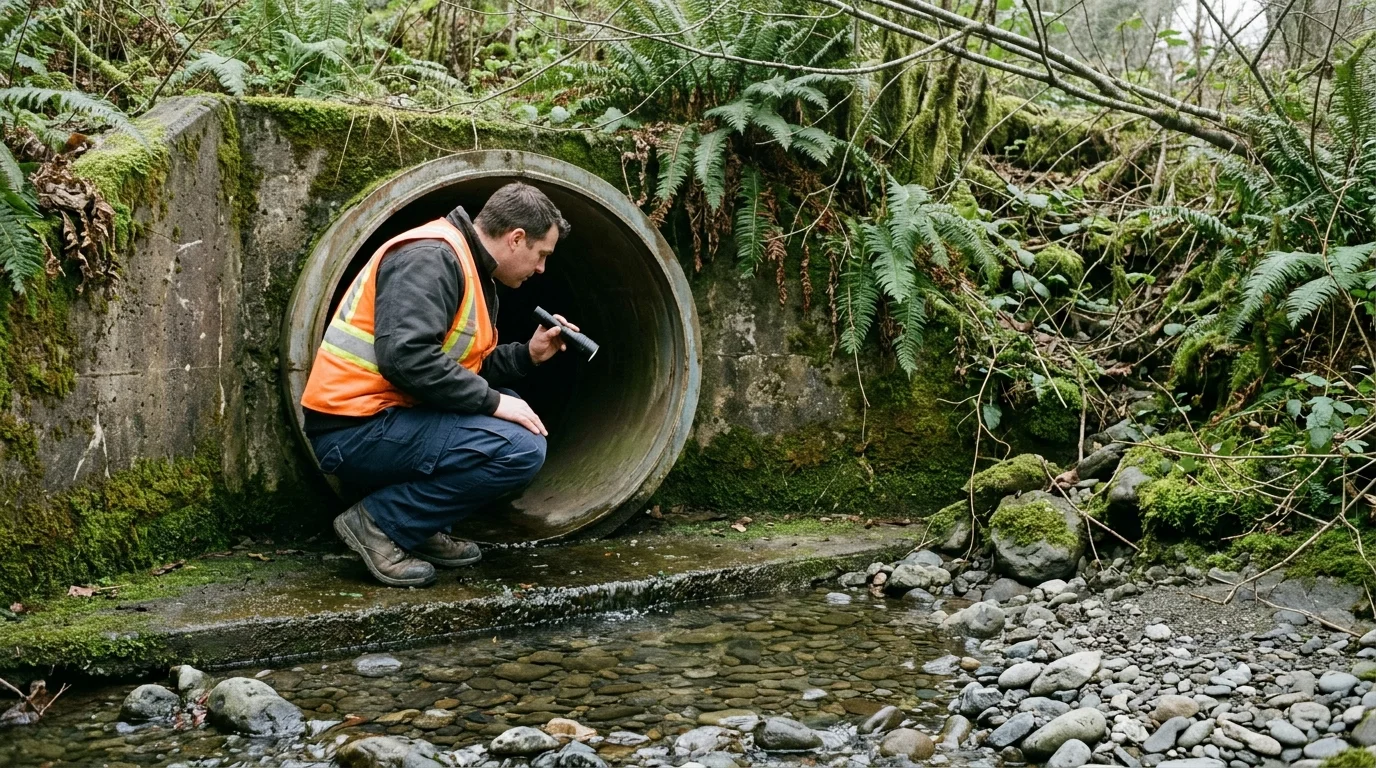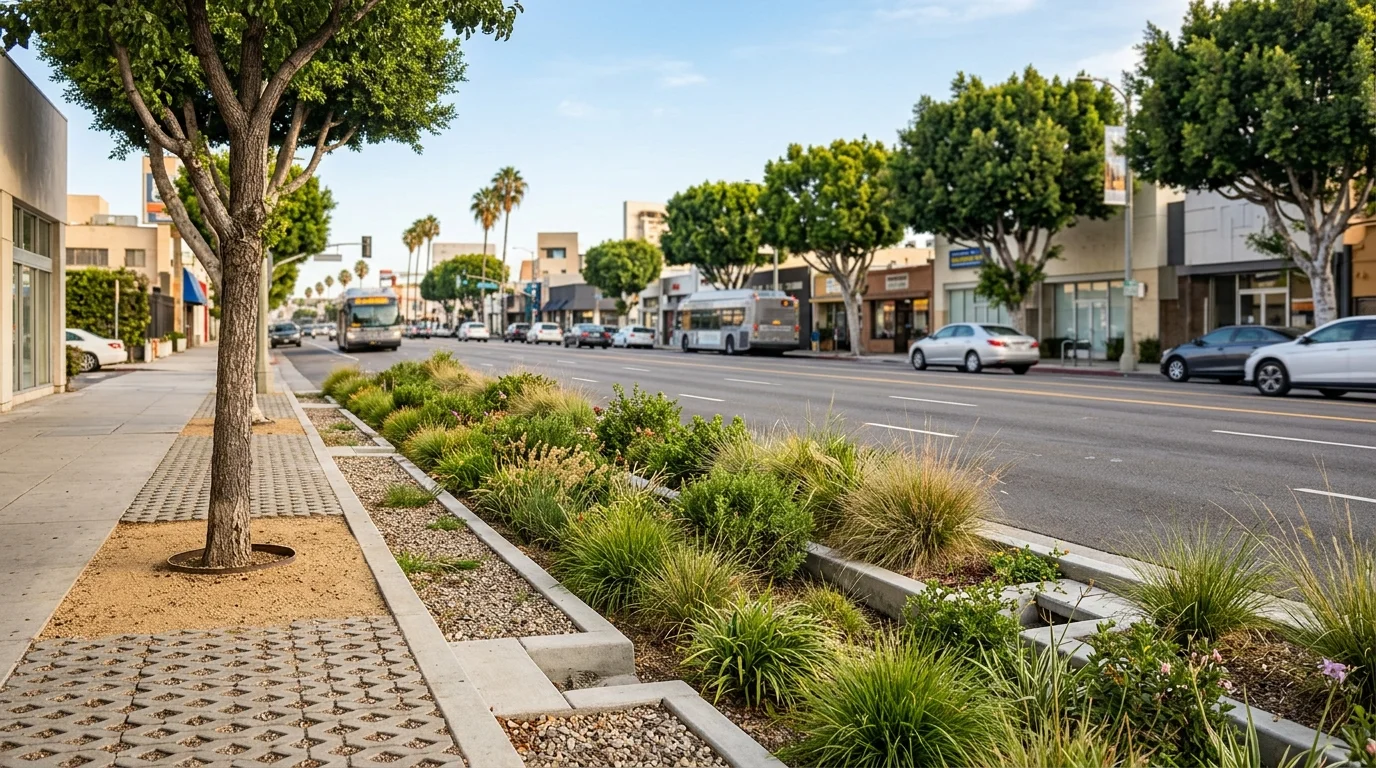
Los Angeles is moving to transform La Cienega Boulevard, one of the city's busiest north-south corridors, into what city planners call a "green street": a roadway retrofitted to absorb and filter stormwater rather than flush it untreated into Santa Monica Bay.
The Bureau of Engineering has opened bidding on the project through the city's procurement portal. The specific construction budget and timeline have not been disclosed in available records, but the work falls under a category of infrastructure LA has been building steadily since 2015: bioswales, permeable pavement, tree wells, and underground infiltration systems embedded in existing street rights-of-way.
The stakes behind a project like this are substantial. Southern California is in the middle of a long-term aridification trend, and Los Angeles has historically imported roughly 85% of its water from distant rivers and snowpack. Mayor Karen Bass and the Department of Water and Power have set a target of sourcing 70% of the city's water locally by 2035, and capturing urban runoff is central to getting there. Measure W, the parcel tax voters approved in 2018, raises roughly $280 million annually specifically for projects like La Cienega, with the goal of collecting enough stormwater to supply hundreds of thousands of households.

Source: NationGraph.
Pollution is the other driver. LA County operates under a federal permit from the Regional Water Quality Control Board that requires dramatic reductions in the oil, heavy metals, trash, and bacteria that street runoff carries into coastal waters. Urban streets are the single largest source of ocean pollution in Southern California, and a major arterial like La Cienega, running through Mid-City and into the Baldwin Hills, contributes significantly to that load.
The corridor also carries environmental justice weight. The stretch of La Cienega through Mid-City and South LA passes through predominantly Black and Latino neighborhoods that sit near the Inglewood Oil Field and have historically received less green infrastructure investment than wealthier parts of the city. Watchdog groups have criticized the Measure W rollout for concentrating early projects in other parts of the county, making the La Cienega project a signal, if it delivers, that the program is broadening its reach.
The city is managing this work amid significant fiscal strain. The January 2025 Palisades and Eaton fires stretched municipal resources and redirected political attention toward climate resilience, pressures that the Bureau of Engineering is navigating across a large portfolio of deferred and active projects.
Bidding is currently open. Once a contractor is selected and a construction schedule is set, the timeline for when La Cienega residents and commuters will see work begin should become clearer.