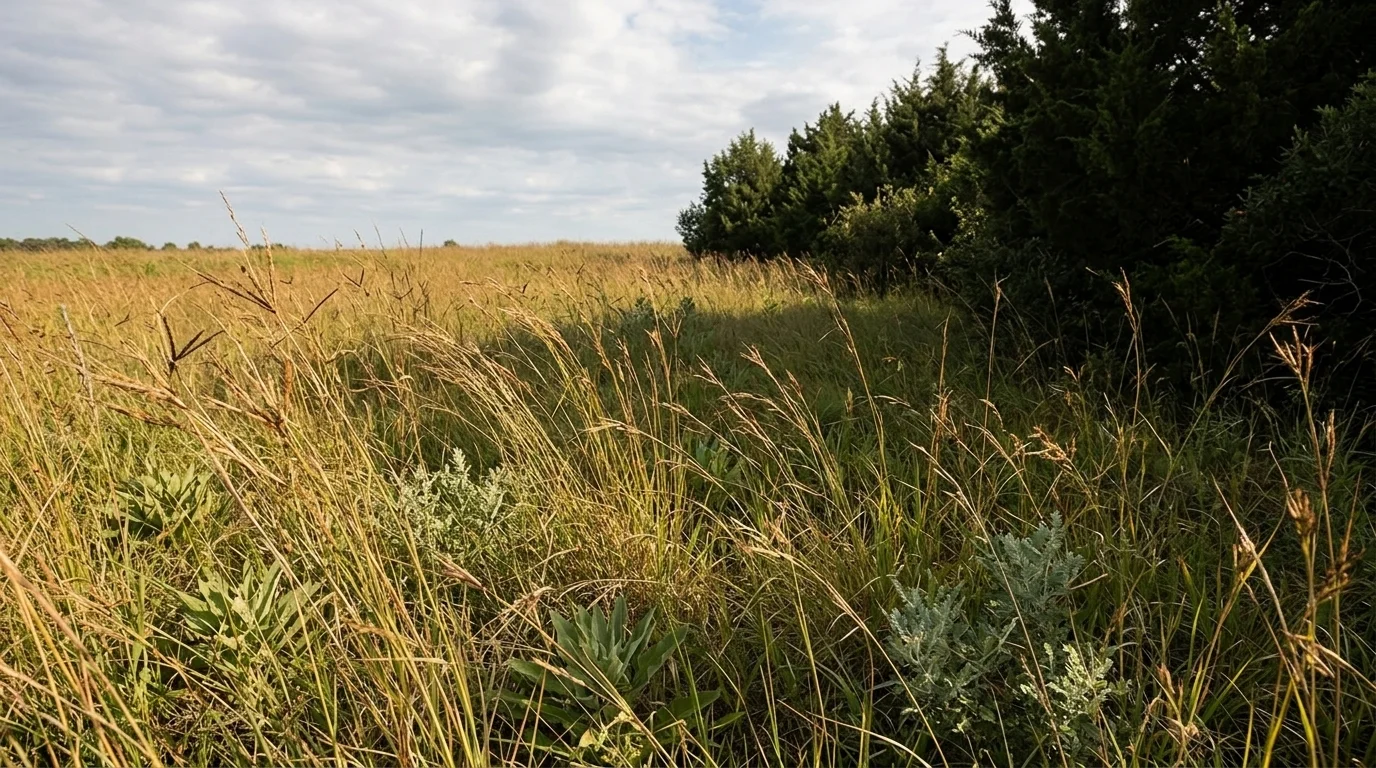
In Humboldt County, Iowa, a small patch of ground that has never seen a plow is quietly disappearing under a canopy of cedar, mulberry and shrubs. The Iowa DNR is now moving to stop it.
The agency is hiring contractors to clear up to 9 acres of trees and brush from remnant prairie on the East Fork Wildlife Management Area's Behounek Tract, a piece of original, never-broken native sod along the East Fork of the Des Moines River. The project is listed on Iowa's procurement portal and was posted Aug. 5, 2026.
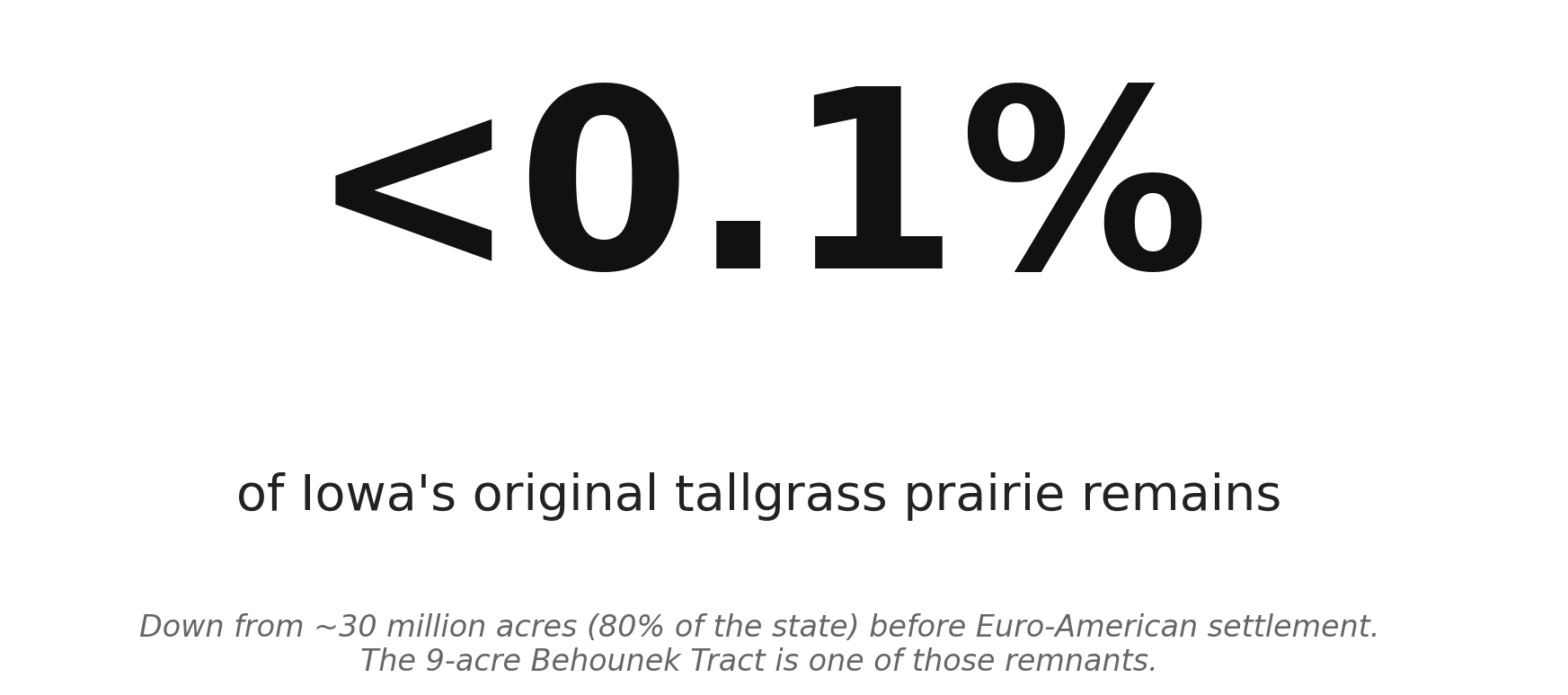
The stakes are hard to overstate. Before European settlement, roughly 30 million acres of tallgrass prairie covered Iowa. Today, less than one-tenth of 1% survives. What remains exists mostly on land too rocky, wet or steep to farm, and it holds plant communities that took 10,000 years to assemble. Compass plant, leadplant, rattlesnake master, prairie dropseed: these species cannot simply be reseeded once they're gone. A remnant like the Behounek Tract is irreplaceable in a way that even a well-intentioned prairie reconstruction is not.
Source: NationGraph.
The threat now is not the plow. It's the trees. When fire suppression began in the late 1800s and bison disappeared from the landscape, eastern red cedar, honey locust and shrubs like smooth sumac moved in. Without periodic burning or mechanical intervention, a remnant prairie can transition to low-quality woodland within a few decades, shading out the native grasses and wildflowers below. Mechanical clearing is typically the first step to resetting an encroached remnant before prescribed fire can take over as long-term management.
Humboldt County offers little margin for error. It's a small, agriculture-dominated county of about 9,500 people where corn and soybeans cover most of the landscape and public conservation land is scarce. The East Fork of the Des Moines River is one of the few landscape features that shielded prairie fragments from the plow, making each surviving patch on a WMA disproportionately valuable for wildlife.
That wildlife pressure is part of what's driving urgency. Iowa's ring-necked pheasant harvest collapsed from more than 1 million birds annually in the 1990s to a fraction of that today, amid grassland habitat loss as CRP acres declined and row-crop farming intensified. Restoring remnant prairie is one piece of the DNR's effort to reverse that trend.
Once contractors complete the clearing, the tract would be primed for prescribed fire management, the tool land managers consider essential for keeping woody encroachment from returning.