Federal flood-control grants flowing into Arizona have hit $45.8 million in the past 90 days, a 9,550% increase over the $475,000 committed in the same window last year. Nearly every dollar traces back to a single disaster and a single workaround: the September 2025 monsoon that killed three people in Gila County, and a USDA emergency program that does not require a presidential disaster declaration to activate.
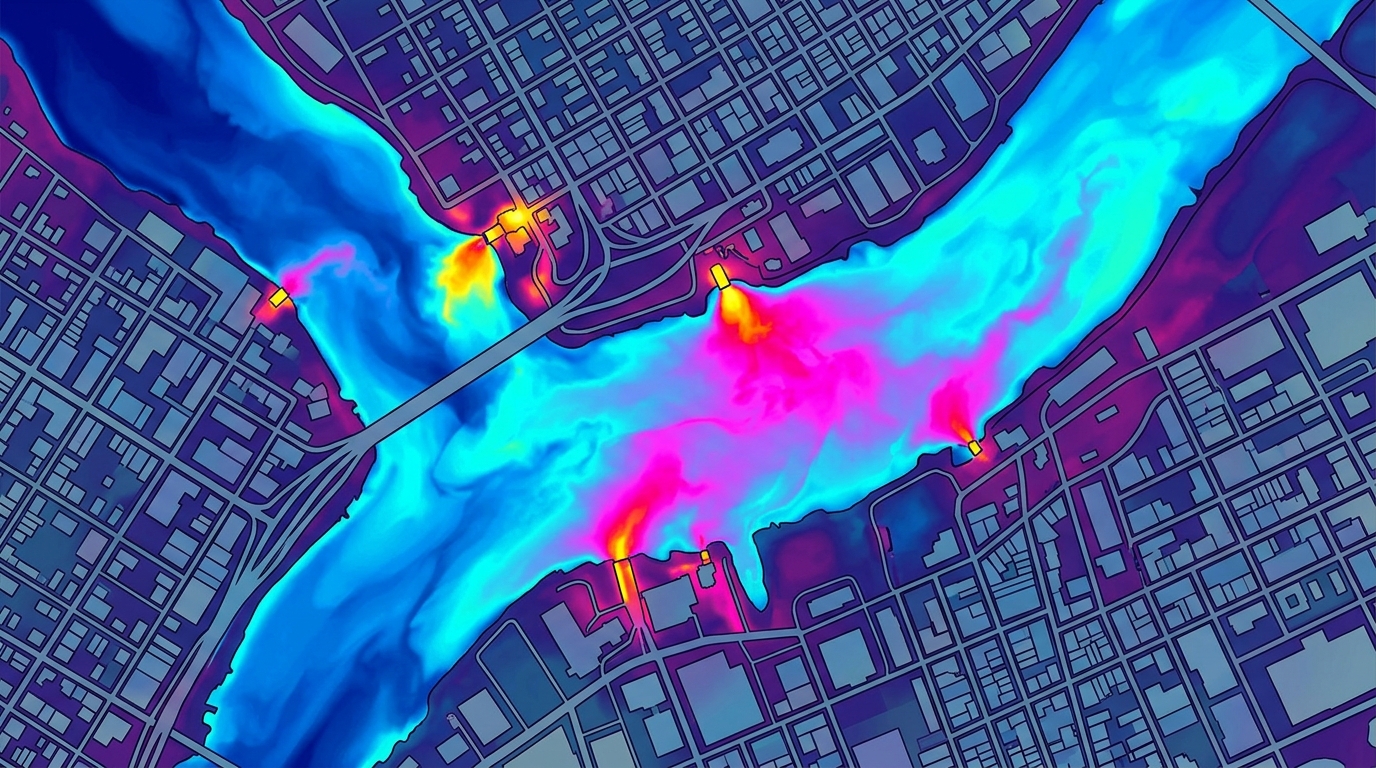
The two grants at the center of the surge are a $19.3 million USDA award to the City of Globe in March 2026 and a $26.5 million award to Gila County in April 2026, both drawn from the agency's Emergency Watershed Protection Program. Together they account for 57% of Arizona's entire active federal flood-grant portfolio of $80.4 million across 30 grants, a concentration that reflects how narrowly this money is targeted. The work they fund is urgent and physical: sediment removal from Pinal Creek, streambank stabilization, and floodwall protection in and around Globe and Miami, with the 2026 monsoon season arriving in June.
The reason these communities needed a workaround at all is that FEMA said no. On December 20, 2025, the agency denied Arizona's request for a major-disaster declaration covering the September 25–27 flooding, citing insufficient severity despite a preliminary damage estimate that was later revised upward to more than $100 million. Gov. Katie Hobbs appealed on January 16, 2026. As of late May 2026, FEMA has not ruled on that appeal, placing Arizona in the company of Colorado, New Mexico, Maryland, and Wisconsin, states that have faced similar denials under the current administration's disaster-declaration posture.
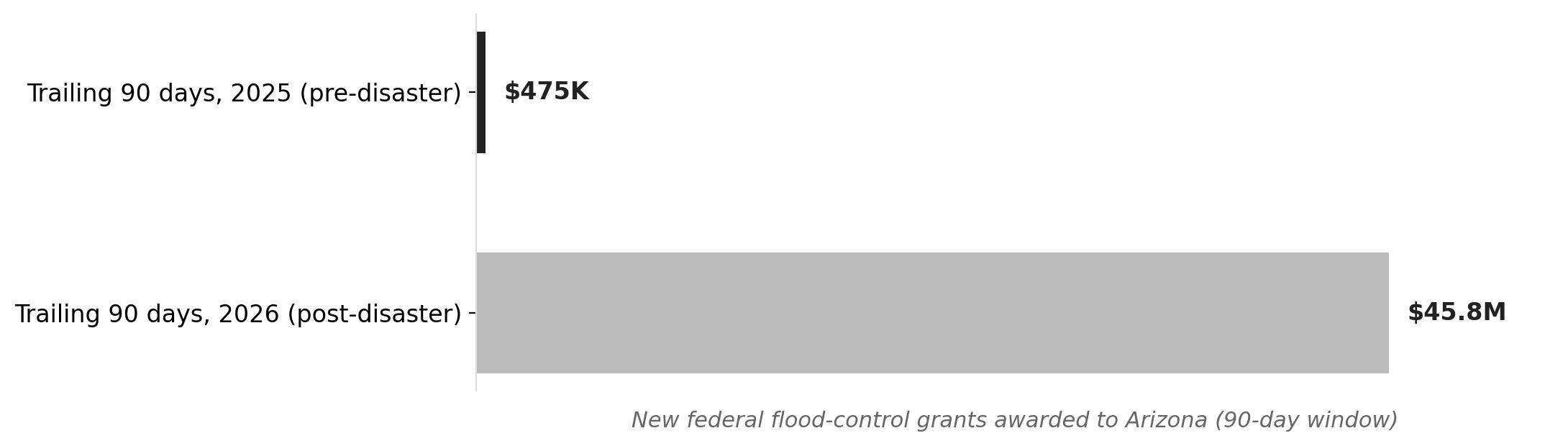
Source: NationGraph.
Rep. Eli Crane brought FEMA's Associate Administrator for Response and Recovery, Gregg Phillips, to Globe in February 2026 to press the case in person. The delegation's argument was straightforward: the preliminary damage estimate had been too low, the revised figure crossed the threshold, and communities were already months into recovery with no federal backstop. The appeal remains pending.
Into that gap stepped the USDA's Emergency Watershed Protection Program, a mechanism that explicitly requires no disaster declaration by any level of government to trigger. For Globe and Gila County, it was the only federal tool available. The program does, however, cap federal cost-sharing at 75%, which means Globe must cover roughly $5.5 million in local match, a figure that would drop to $2.1 million if FEMA ultimately approves the appeal. Gila County, which has the smallest share of privately owned land of any Arizona county (about 3%), cannot raise that kind of money through property taxes alone. In April 2026, the county approved up to $18 million in bonds to keep recovery work moving while it waits for decisions from both FEMA and the Arizona Legislature, where Republican Rep. Walt Blackman has been lobbying for $25 million in state aid.
The math is tight and the timeline is tighter. Monsoon season typically begins in earnest in late June. The sediment deposited by last September's flooding, compounded by wildfire burn scars that accelerated runoff across federal lands, sits in Pinal Creek's channel, raising flood risk for the next significant rainfall event. The EWP grants were designed precisely for this scenario: a rapid-response tool to reduce imminent hazard before conditions repeat. Whether the construction contracts can be awarded and work begun before the monsoon window opens is the operational question Globe's engineers and contractors are now racing to answer.
For residents of Globe, Miami, and Claypool, the $45.8 million figure represents something more complicated than a federal rescue. The money is real, crews will remove sediment, reinforce banks, and build floodwall protection. But the unresolved FEMA appeal means the local cost-share burden remains elevated, the bond debt Gila County has taken on may not be fully reimbursed, and the broader infrastructure recovery that a major-disaster declaration would have unlocked, housing assistance, public assistance for roads and bridges, hazard mitigation planning funds, has not arrived.
The next signal to watch is FEMA's ruling on the appeal. If it comes before construction contracts are finalized, Globe's match obligation drops by more than $3 million. If it comes after, or not at all, the county absorbs the difference. Either way, the sediment removal starts. The 2026 monsoon does not wait for Washington.