South Carolina's most consequential cybersecurity investment isn't a state agency or a research university. It's a community college in Greenville betting $50 to $55 million that the factory floor is the next frontier of cyberattack, and that the workers defending it will train at a technical college, not a four-year institution.
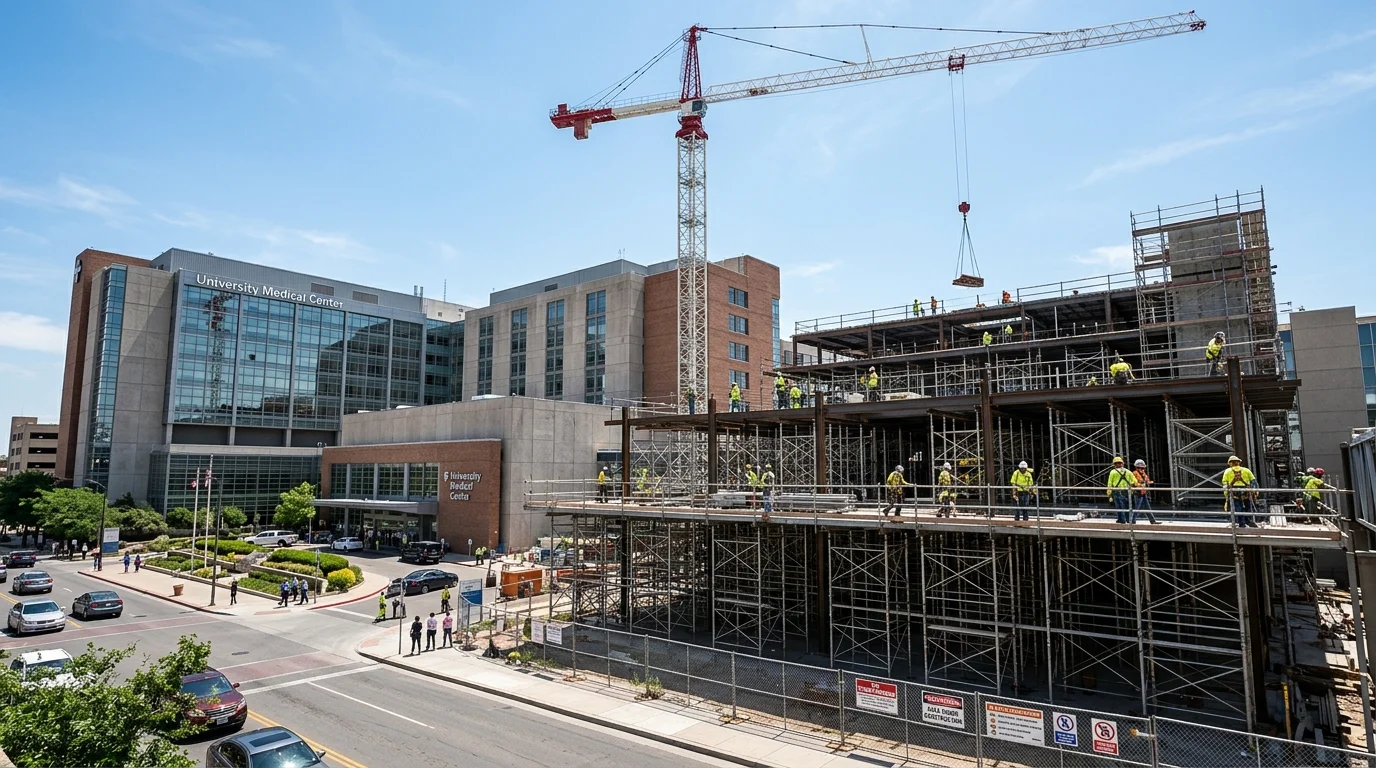
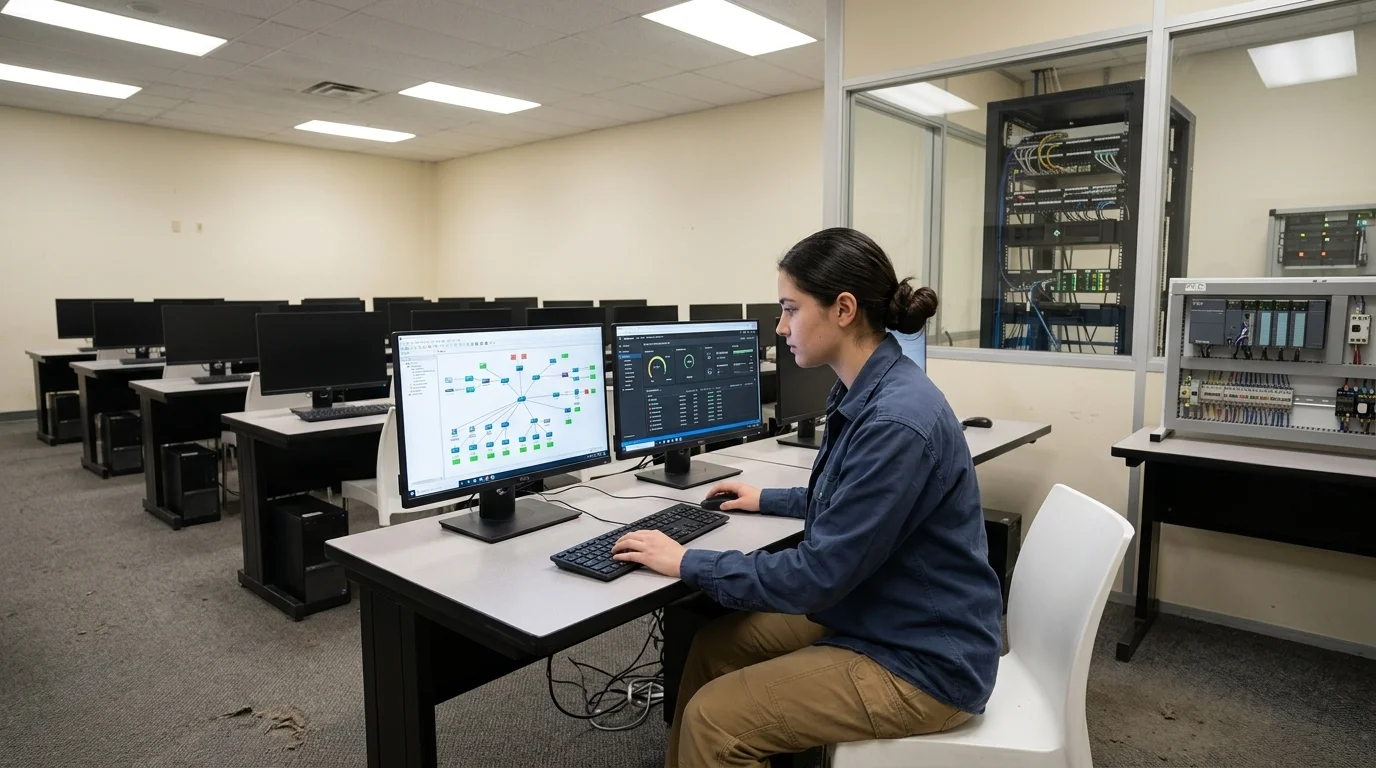
Greenville Technical College filed a construction-manager-at-risk solicitation for its Center for Applied AI and Cyber Resiliency in July 2026, with a project cost pegged at $50-55 million and a footprint of 59,315 square feet. The SC legislature's FY2025-26 state budget provided $16 million toward the project, a partial appropriation, since the college had originally sought $30 million in state capital funds. GTC is proceeding anyway, actively procuring architectural and construction services as listed on the South Carolina Business Opportunities portal. The center will house 18 specialized labs and a student-led Security Operations Center.
The timing is not incidental. The Upstate South Carolina corridor anchored by BMW's US headquarters plant, Michelin's North American operations, and Lockheed Martin facilities is running short of people who can protect factory-floor networks. According to SCBiz, the region's cybersecurity workforce meets only 83 percent of employer demand, leaving 547 positions unfilled as of October 2026. Those aren't abstract knowledge-economy jobs, they are operational technology and industrial control system roles, the kind created when manufacturers push deeper into Industry 4.0 automation and find that every connected robot arm is a potential entry point.
Source: NationGraph.
That demand is why Greenville Tech launched its AI-for-Cybersecurity Systems concentration in Fall 2026, before the building that will eventually house it exists. The college is producing graduates on the theory that the workforce gap is urgent enough that classroom space, not curriculum, is the binding constraint.
A separate thread runs through Charleston. The Citadel holds a $2.4 million federal grant from the Department of Defense's Cyber Service Academy program, covering the period from August 2025 through August 2030. The grant funds scholarships for the AY 2026-27 student cohort and establishes a new Cognitive Domain Assessment Lab on campus. The DoD Cyber Service Academy is a scholarship-for-service program: students receive tuition and stipends in exchange for a post-graduation commitment to DoD civilian employment. It is a federal pipeline, distinct in every respect from the state capital appropriation funding Greenville Tech's construction, and it targets a different labor market: national-security and defense-sector roles rather than manufacturing floor positions. The two programs share a theme but not a mechanism, a budget line, or a target employer.
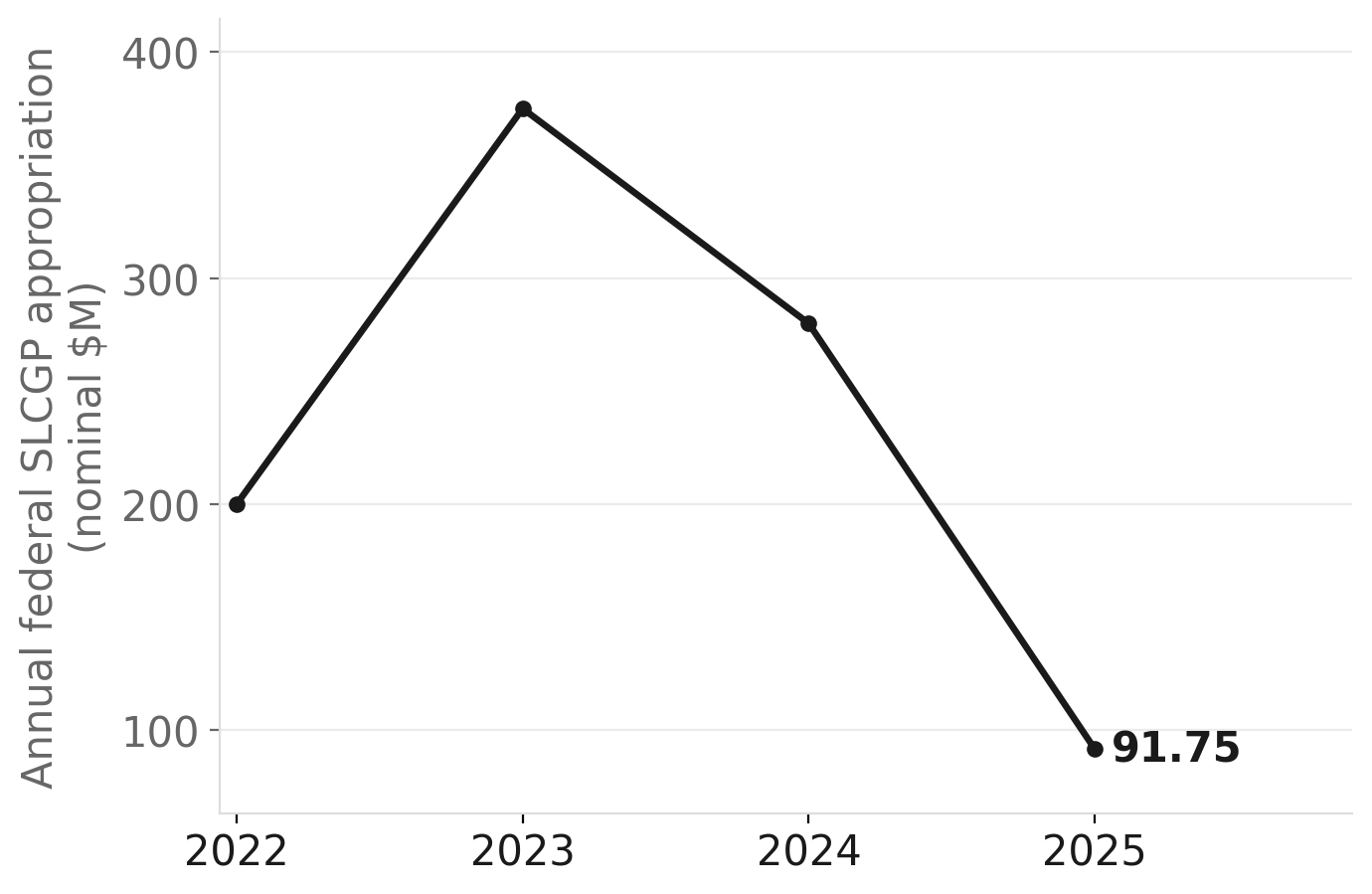
What links them is timing. A previously published NationGraph piece covered the third concurrent force: SC's State Law Enforcement Division holds $7.3 million in active CISA State and Local Cybersecurity Grant Program awards, funding cybersecurity planning and implementation for state and local governments statewide. That federal pipeline is already shrinking. The CISA SLCGP national appropriation dropped from $279.9 million in FY2024 to $91.75 million in FY2025, a cut of roughly two-thirds. Future pass-through dollars to county IT offices will be materially smaller.
That contraction is part of what makes the Greenville Tech capital project strategically significant. A one-time state appropriation for a physical building is a hedge against a recurring federal grant that is contracting. Once the center exists, its operating costs are a fraction of construction; the workforce it trains stays in the state economy regardless of what Washington does next with SLCGP allocations.
For residents in the Upstate, the practical signal is straightforward. A credential from Greenville Tech's cybersecurity programs, and eventually from its new center, will carry increasing weight with the region's largest employers. BMW, Michelin, and Lockheed Martin are not abstract stakeholders in this project; they are the end consumers of its graduates, and their OT/ICS security requirements will only intensify as automation deepens. As the National Association of Manufacturers has noted, community colleges are increasingly filling a workforce gap that four-year programs haven't moved quickly enough to address.
The next concrete milestone is construction. The CM-at-risk bid deadline has passed; contract award and a groundbreaking timeline will clarify whether the $16 million state appropriation is sufficient to begin work or whether the college must close the remaining gap through philanthropy, bonds, or a return to the legislature. The Citadel's Cognitive Domain Assessment Lab is scheduled to open during the AY 2026-27 academic year. Watch whether either institution announces employer partnerships or apprenticeship agreements alongside those physical openings, that would signal the workforce pipeline is becoming operational, not just planned.