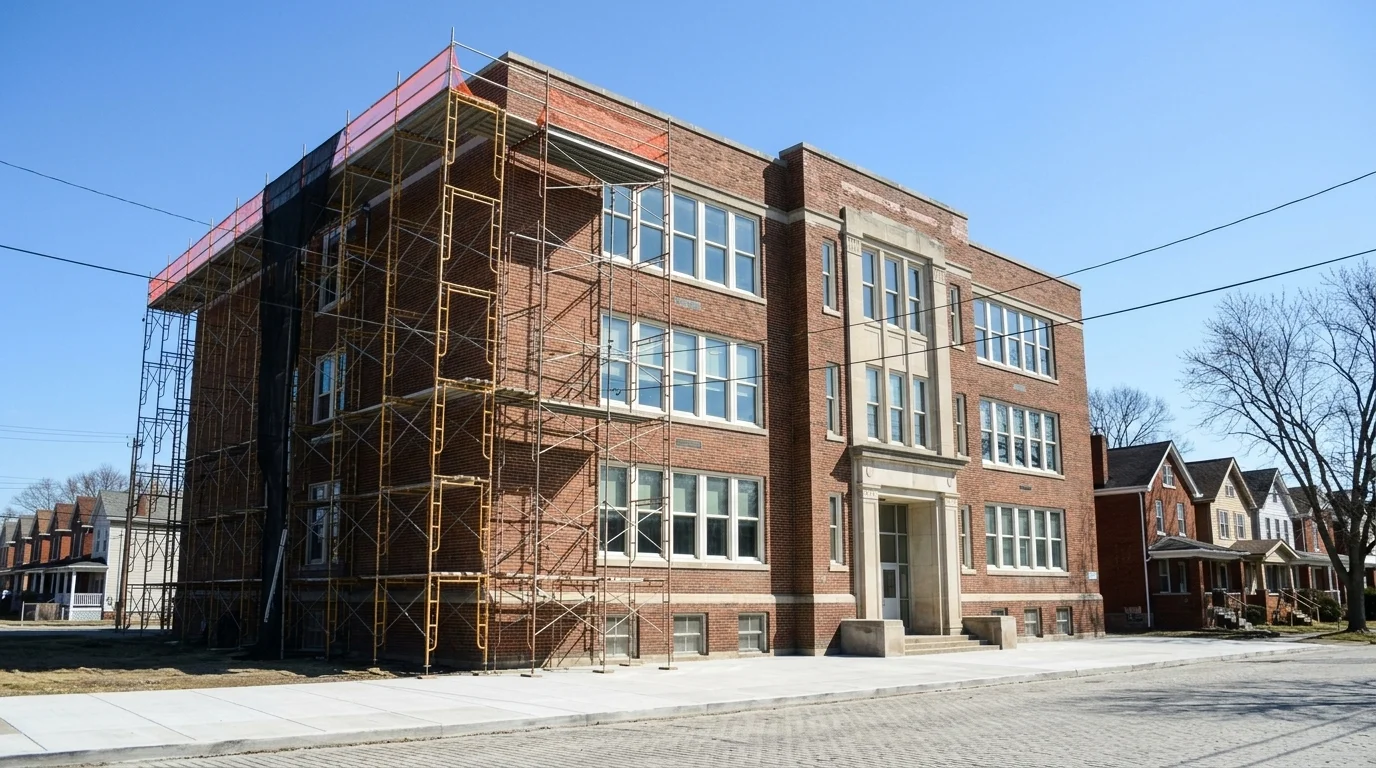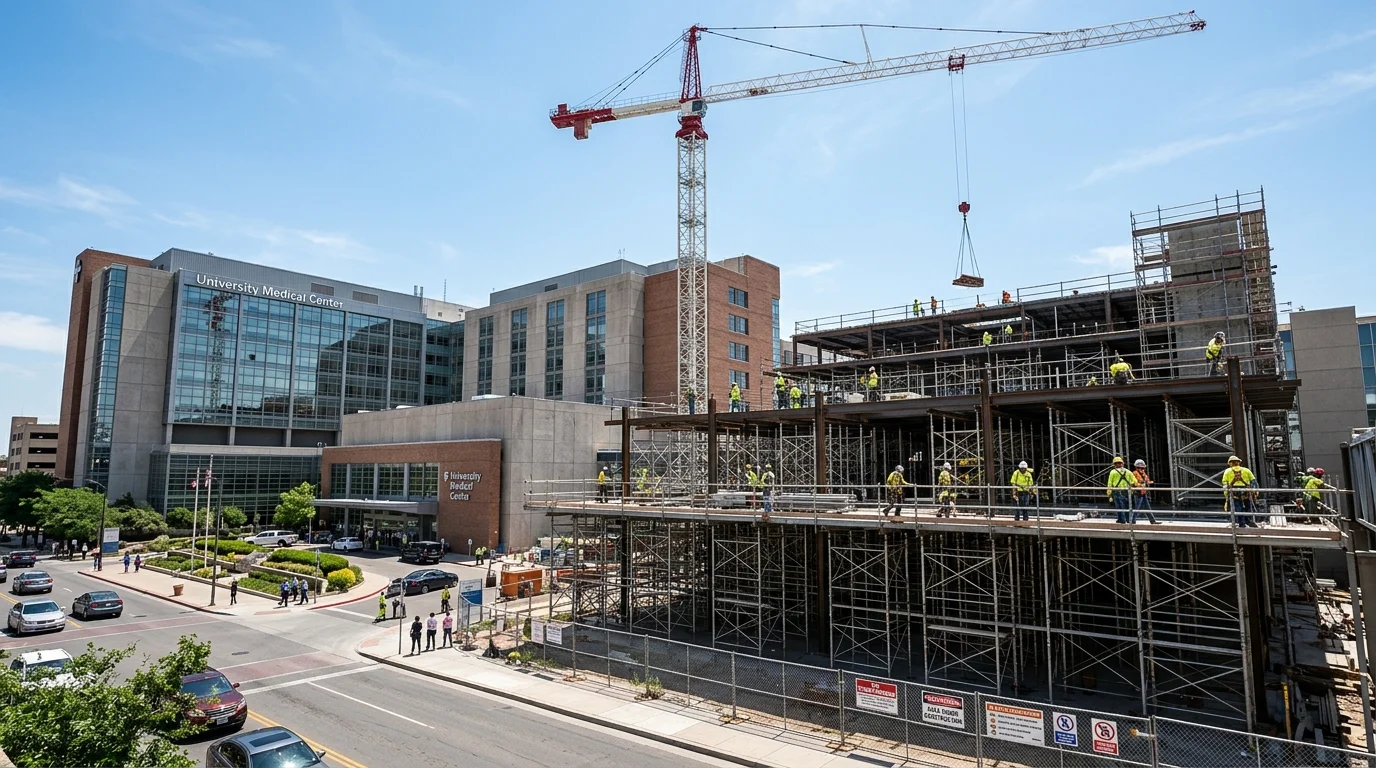
Somewhere in New York's State University system, a hospital is getting a major addition: a new annex housing an expanded emergency department, a burn unit, and surgical suites, with demolition of older facilities to make way for the new construction.
The State University Construction Fund, which manages capital projects across SUNY's 64 campuses, is hiring a construction manager to lead both the build-out and the teardown. The two-part scope, new construction paired with demolition, is a hallmark of the phased approach SUNY has used to keep hospitals running while replacing aging infrastructure, much of it built in the 1960s and 1970s.
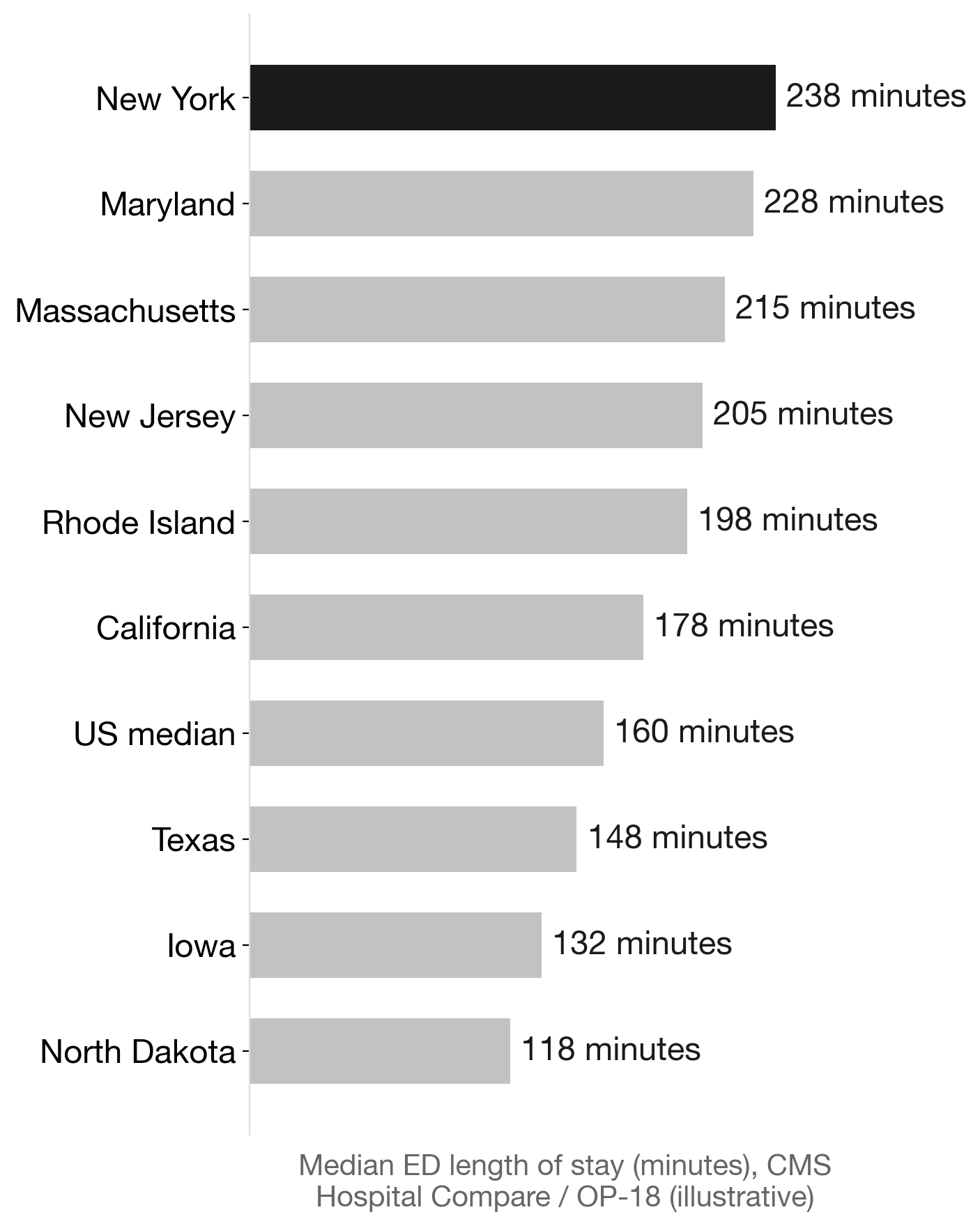
The campus isn't named in the solicitation, but the burn unit is a telling detail. New York has only a handful of certified burn centers, and among SUNY's three academic medical centers, Upstate University Hospital in Syracuse operates the Clark Burn Center, one of only two American Burn Association-verified burn centers in Upstate New York. The Clark center is the primary burn treatment facility for roughly 1.7 million people across central New York. Upstate is also the region's only Level 1 trauma center, and its emergency department has been documented as chronically over capacity. Stony Brook University Hospital on Long Island also has burn capabilities and cannot be ruled out.
Source: NationGraph.
Burn units are among the most expensive and specialized facilities in medicine. They require negative-pressure rooms, hydrotherapy suites, and intensive care infrastructure that few hospitals can justify financially. State-subsidized academic medical centers are the primary providers nationally, precisely because the units rarely turn a profit.
The project fits into a broader modernization push backed by billions in state healthcare capital funding under Governor Hochul's recent budgets, including a 2023 commitment of more than $1 billion targeted at transformation plans for SUNY Downstate in Brooklyn and Upstate in Syracuse. Construction management, the delivery method being used here, is typically reserved for large, complex projects where a specialized firm coordinates multiple contractors simultaneously rather than a single builder working from a finished design.
The procurement is being managed through SUCF's portal at sucf.suny.edu, where interested firms can register. Which campus gets the annex, and what exactly gets demolished to make room for it, should become clearer as the procurement moves forward.