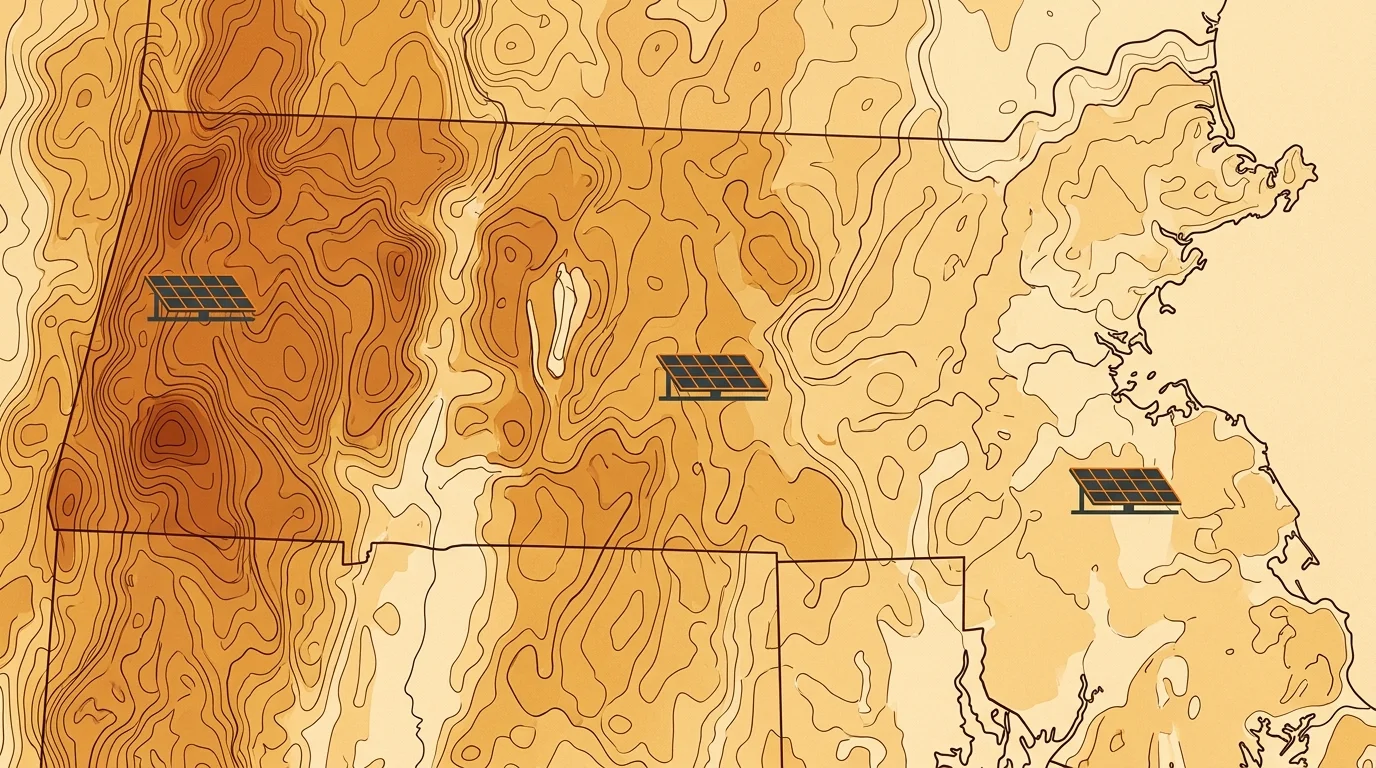
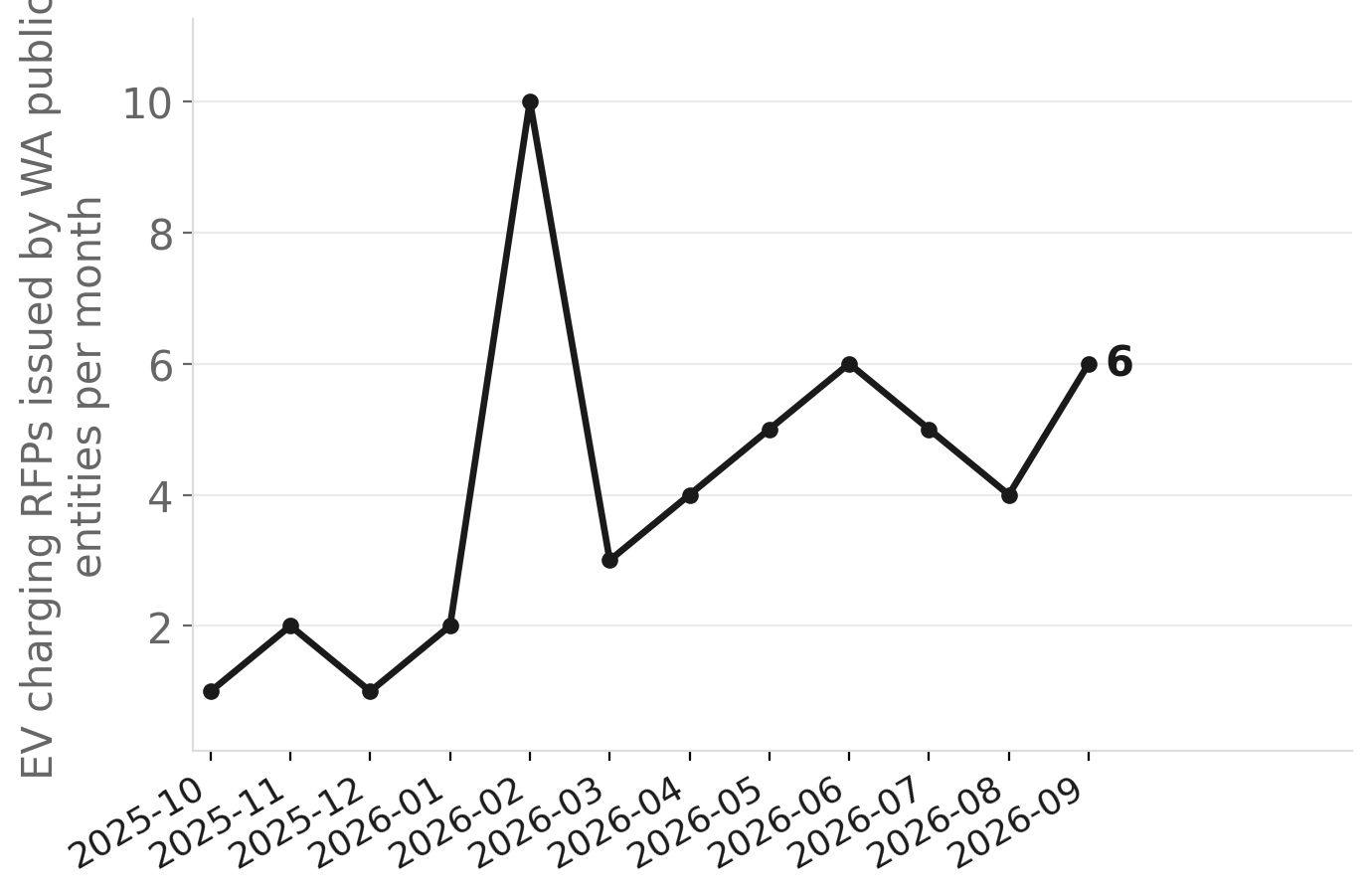
Washington state has issued six EV charging procurement notices in the last 30 days, more than double its 12-month monthly average of roughly 2.9 per month. That 106 percent jump is not a blip. It is the trailing edge of a wave that began the moment a federal judge ruled on January 26, 2026, that the U.S. Department of Transportation had illegally withheld nearly $1 billion in National Electric Vehicle Infrastructure funds from 20 states, with Washington's share totaling approximately $71 million.
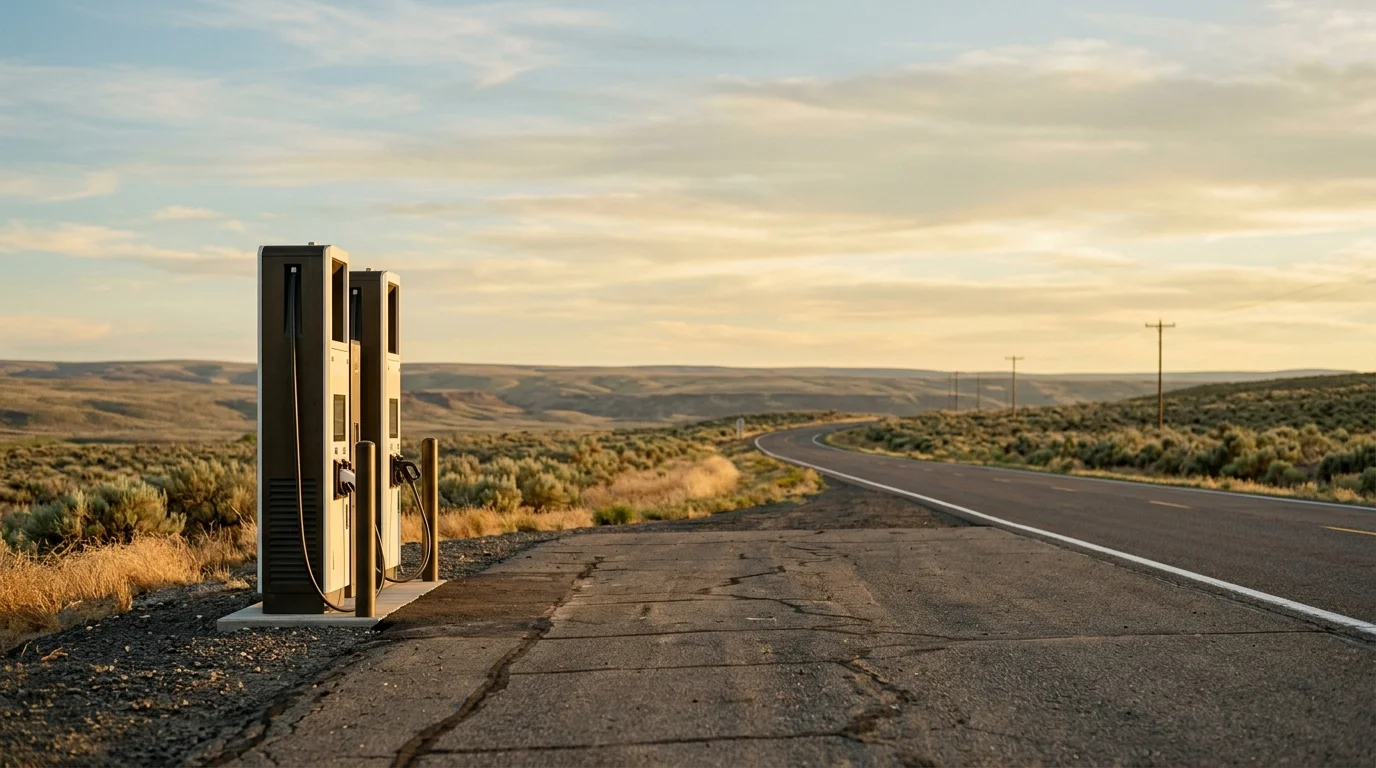
The ruling, the result of a lawsuit co-led by Washington Attorney General Nick Brown, broke open a multi-year logjam. According to the Washington State Attorney General's office, the Trump administration had paused NEVI awards in early 2025; Washington was among 16 states that sued. Three days after the final ruling, WSDOT announced $12.16 million in Round 1 NEVI awards to five companies, Electric Era, Energy Northwest, EVgo, EV Gateway, and Tesla, covering 14 highway sites and 96 fast-charging ports along corridors including I-90, US-97, US-195, and US-395. The monthly RFP count hit 10 in February 2026. It has not dropped below three since.
But the federal court ruling unlocked only one of two pipelines now running simultaneously. At nearly the same time, the Washington Department of Commerce awarded a separate $37.3 million in grants funded by the state's Climate Commitment Act, the cap-and-invest program that generates its own recurring revenue independent of federal appropriations. That June 2026 round reached 43 organizations across 104 projects, directing 74 percent of funds to overburdened communities and 20 percent to tribal communities, with 754 charging ports expected by late 2027.
Source: NationGraph.
These are distinct programs doing distinct work, and that distinction explains the geographic breadth of what Washington is now procuring. NEVI funds, flowing through WSDOT, are restricted to designated Alternative Fuel Corridors at an 80/20 federal-to-local cost share, highway infrastructure connecting cities. The Climate Commitment Act grants, administered by Commerce, go where private investment has not: tribal land, rural counties, apartment complexes, and community centers. The result is a procurement surge that spans King County suburbs and coastal Grays Harbor in the same reporting window. Cities including Kenmore, Issaquah, Selah, and Vancouver have issued notices. So has Central Kitsap School District, the Quinault Indian Nation, Energy Northwest, the Washington Department of Fish and Wildlife, and Clark Regional Wastewater District.
Governor Bob Ferguson's ZEVergreen initiative, launched in September 2025, provides the policy framework pushing agencies to move quickly. ZEVergreen is not a funding source, it is an umbrella program that sets expectations and creates political pressure to convert paper grants into signed contracts. Ferguson has been explicit about the state's posture: Washington "will continue to support this important infrastructure, regardless of the chaos at the federal level."
The procurement surge is not finished. WSDOT has already scoped Round 2 of its NEVI competition for I-5, I-405, I-82, I-182, and US Routes 12 and 395, meaning another wave of highway corridor awards is in preparation. Washington's total five-year NEVI allocation runs to $70.87 million through FY2026, and only Round 1 has been awarded. Commerce's Climate Commitment Act program has invested roughly $135 million across 618 projects since its 2022 launch and shows no sign of slowing.
For residents, the practical effect is that charging infrastructure is arriving in places it has not previously been: along Eastern Washington highway stretches, on tribal lands, and in multifamily buildings where residents have had no option but to charge at public stations. Whether that supply-side acceleration translates to sustained EV adoption is a separate question. Washington's EV sales tax exemption expired July 31, 2025, introducing consumer-side uncertainty at the same moment the infrastructure buildout is accelerating.
The next signal to watch is WSDOT's Round 2 NEVI award announcement, which will determine which corridors receive the bulk of the remaining federal allocation. Any delay, whether from a new legal challenge, a federal budget standoff, or WSDOT's own contracting timeline, would test whether the state's Climate Commitment Act pipeline can sustain the momentum on its own.