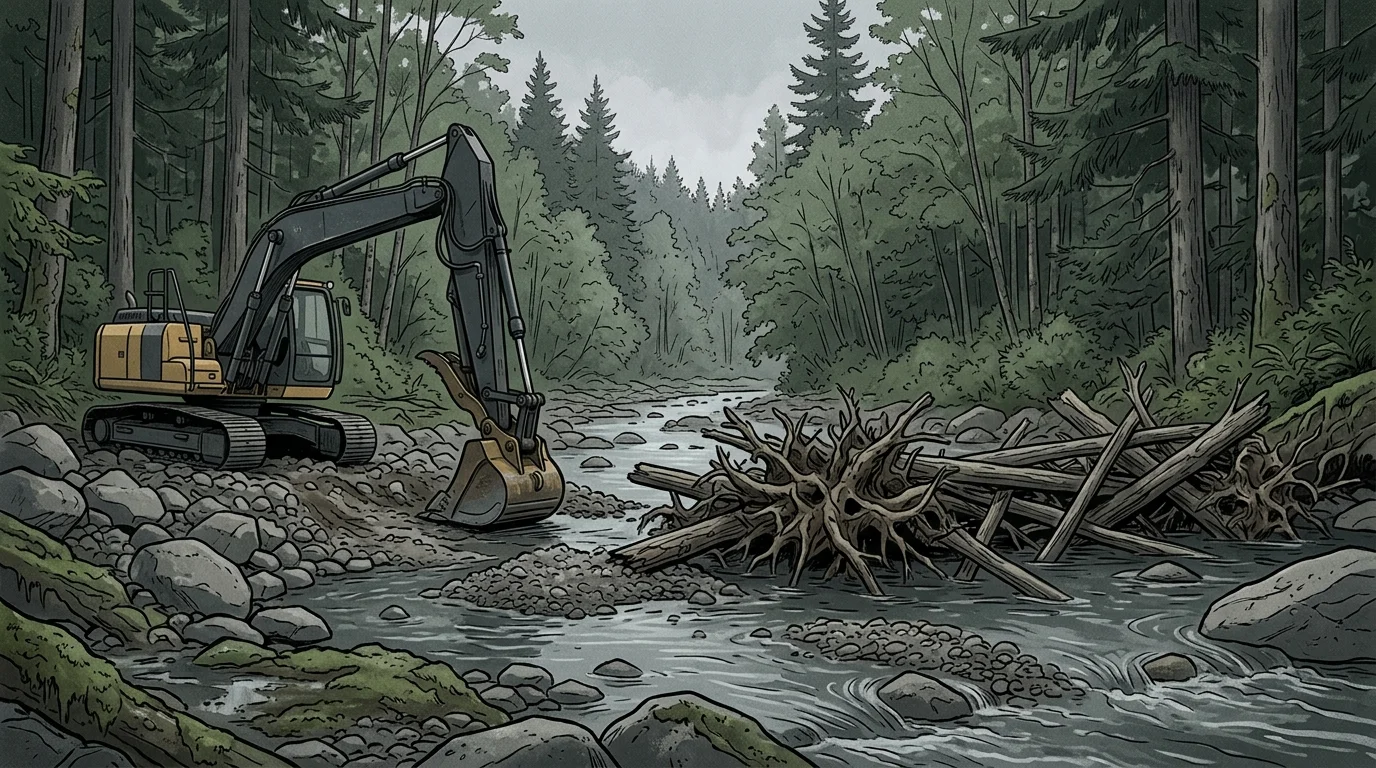
On a remote tributary of the Clearwater River on Washington's Olympic Peninsula, a salmon restoration crew is preparing to undo decades of damage left by the logging industry, tearing out earthen road berms, dropping engineered log structures from helicopters, and nudging a simplified, silted-up stream back toward something wild coho and steelhead can use.
Trout Unlimited, the national conservation nonprofit, is now seeking contractors for Hurst Creek Reach 3, the latest phase of a multi-year project on the creek, which feeds into the Queets River system, one of the most ecologically significant wild salmon watersheds in the contiguous United States.
The problem is a familiar one on the Olympic Peninsula's non-park lands. After World War II, timber companies and the Washington Department of Natural Resources built a dense web of haul roads across the region's river valleys, crossing streams with undersized culverts and piling earthen berms across floodplains. Those berms disconnected streams from the side channels and floodplain wetlands that salmon and steelhead depend on for rearing. The channels that remained became straight, fast and barren: no deep pools, no large wood, no habitat for juvenile fish.
Source: NationGraph.
The restoration approach on Hurst Creek reflects what has become the gold standard in Pacific Northwest salmon recovery over the past two decades. Workers will excavate and haul away an abandoned road fill berm, opening the floodplain. They'll also install rootwad logs, rock collars and engineered log jam structures designed to slow water, rebuild pools, and re-create the kind of complexity a functioning salmon stream needs. Some of those structures will be flown in by helicopter to minimize ground disturbance in areas too sensitive or steep for heavy equipment.
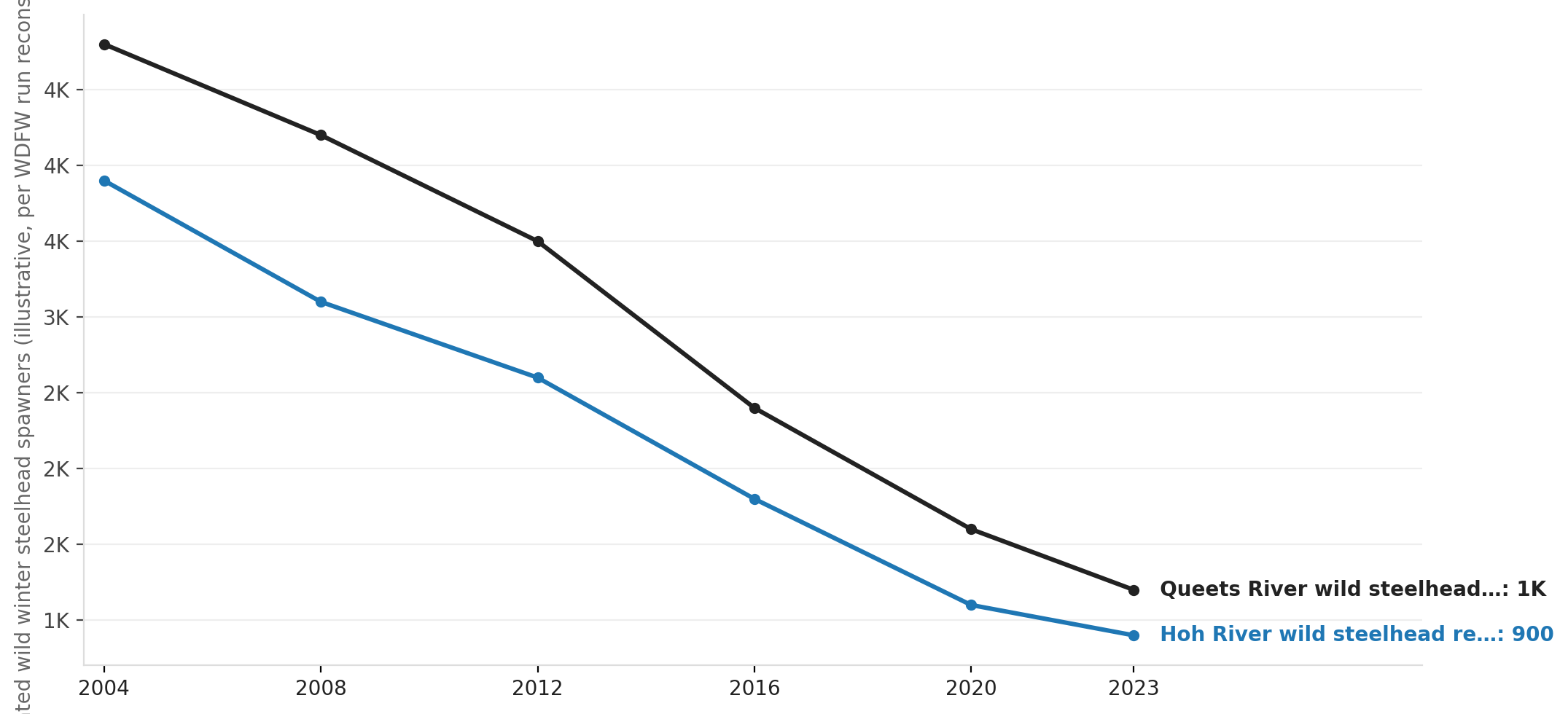
Wild salmon and steelhead runs on Peninsula rivers have been in crisis for years. Steelhead returns have crashed to record lows, prompting emergency fishing closures and intense debate in communities that have long depended on both timber and fishing. Restoration contracts like this one carry a dual significance in the region: ecological investment and economic activity in a place where natural-resource jobs have been disappearing for decades. Trout Unlimited has been executing this kind of work on the Peninsula in partnership with the Quinault Indian Nation, the Hoh Tribe, the state DNR and the U.S. Forest Service for more than a decade.
That Reach 3 is now being solicited implies at least two prior segments of Hurst Creek have been treated. How many more reaches remain in the full restoration plan has not been publicly specified. Project manager Sean Ludden is overseeing the work for Trout Unlimited's Olympic Peninsula program.