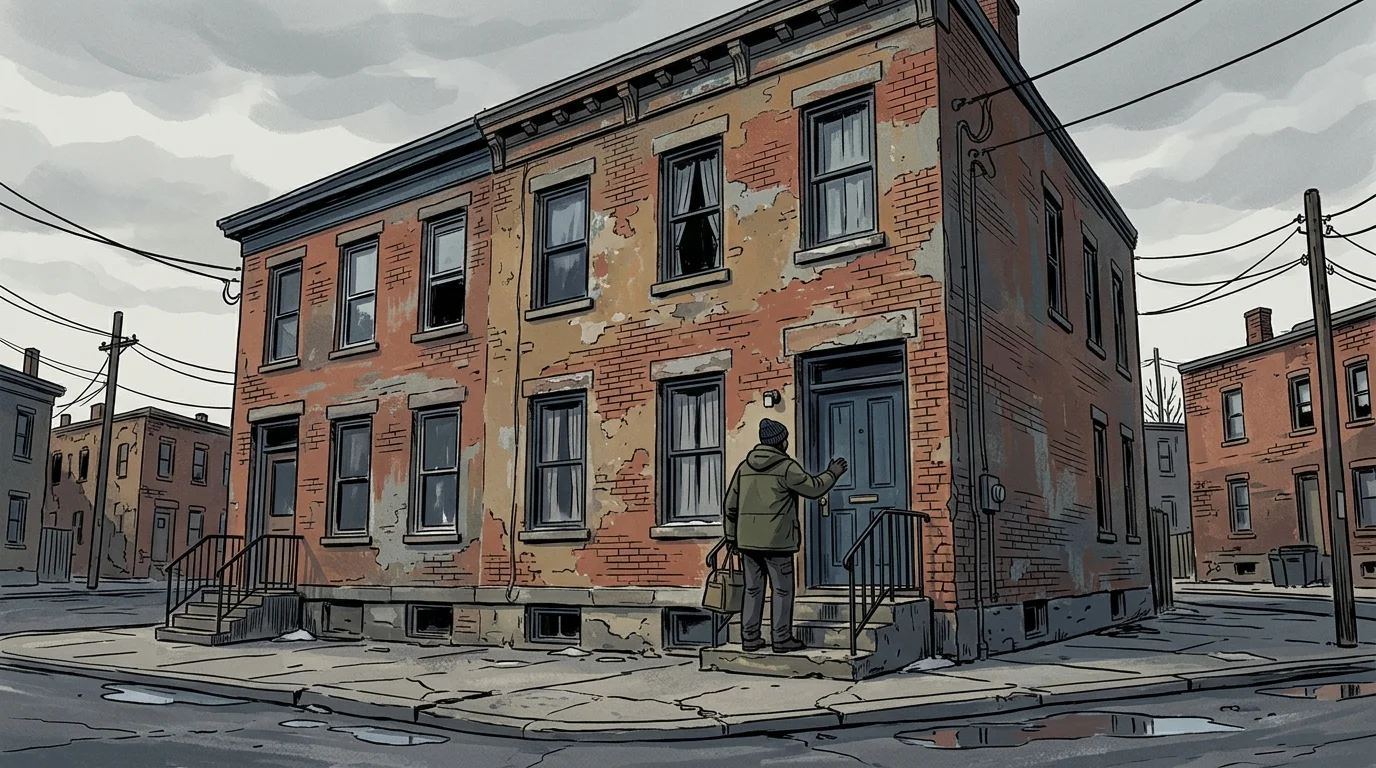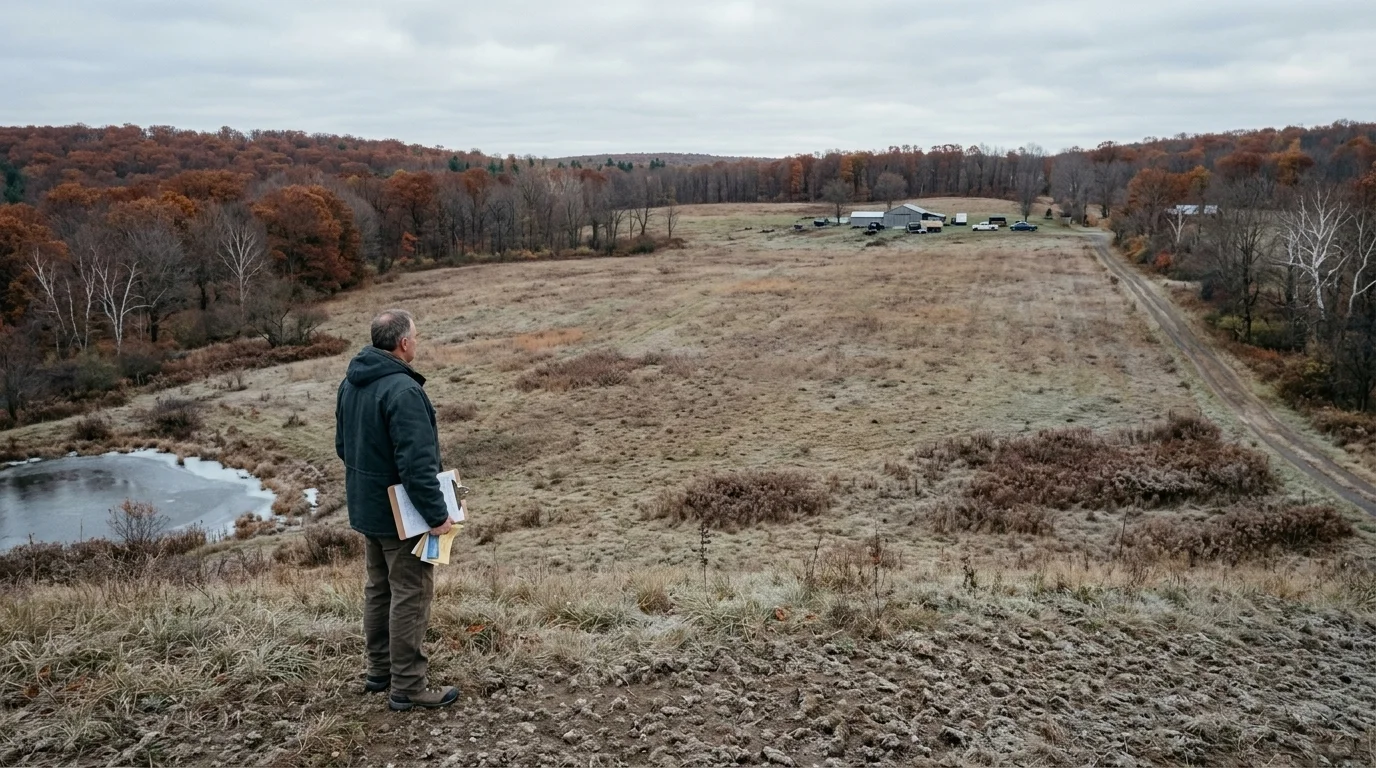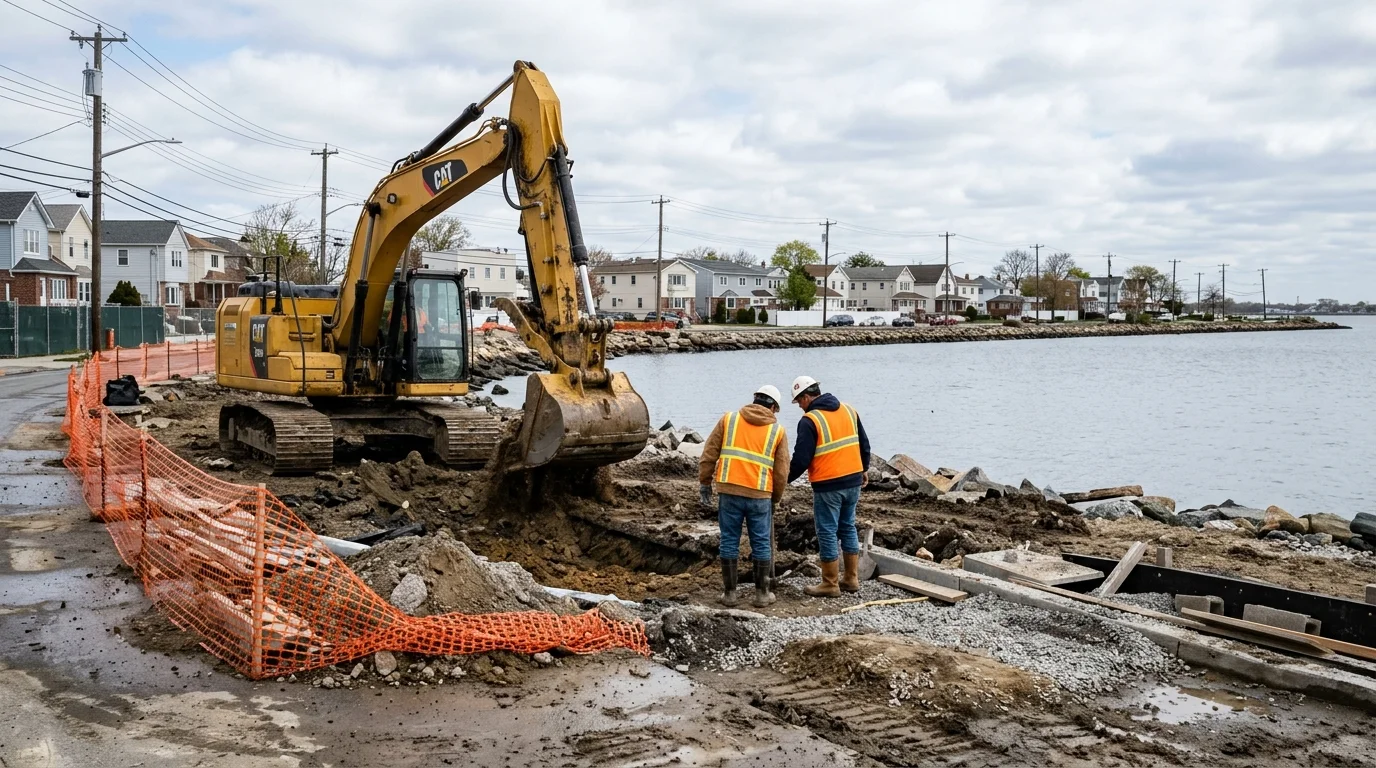
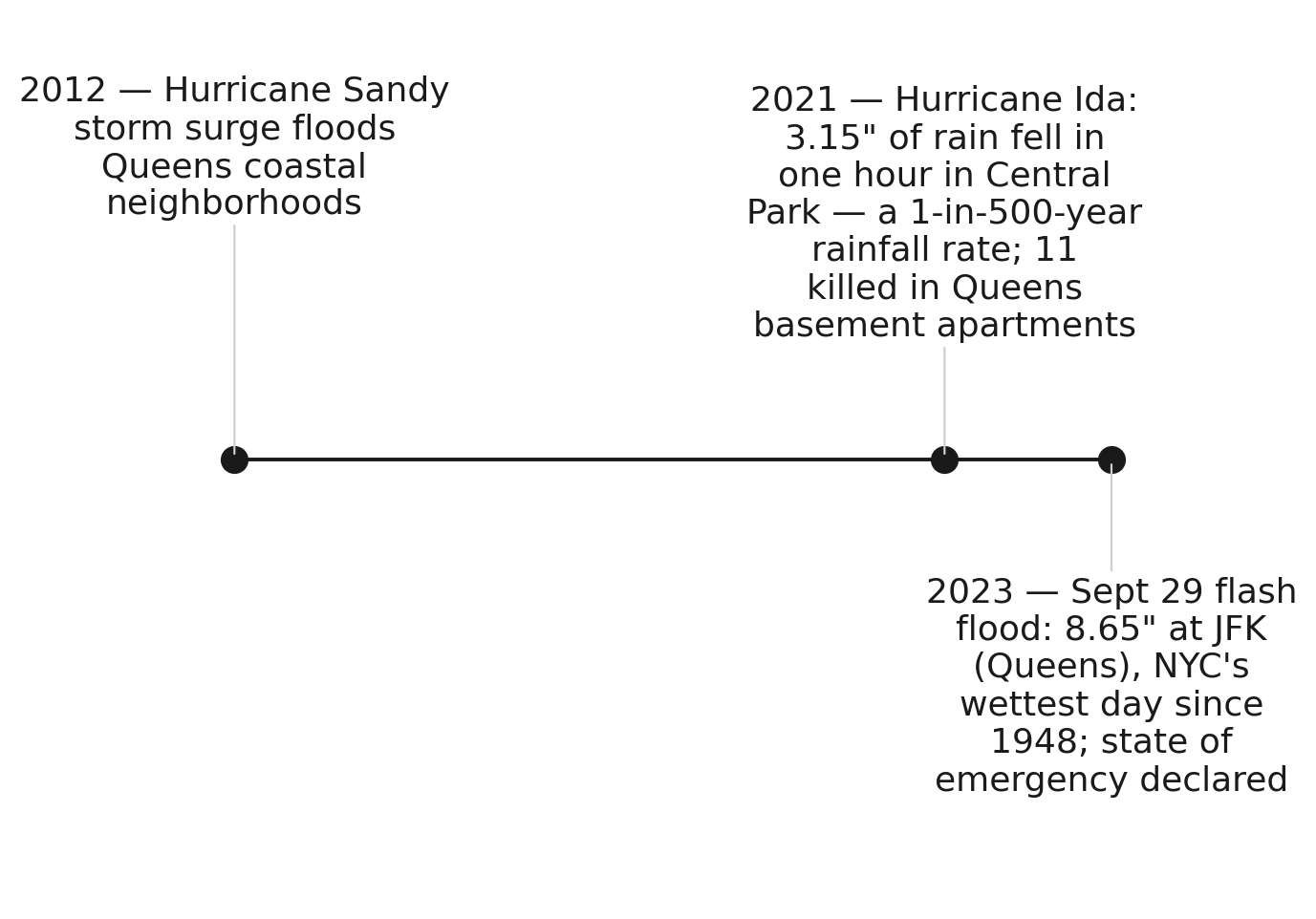
Queens is entering the construction phase of a long-delayed flood protection program, a milestone that comes more than a decade after Hurricane Sandy devastated the borough and five years after Hurricane Ida killed 11 Queens residents, most of them drowned in basement apartments during a catastrophic rainstorm.
The city is now hiring engineering firms to provide independent inspection and oversight of contractors already building flood mitigation infrastructure across the borough. The work is designated Phase 1, signaling a multi-year construction program still in its early stages. The agency overseeing the project was not identified in the solicitation, which was posted on the New York State Contract Reporter, the state's official procurement portal. (The city's Department of Environmental Protection, Department of Design and Construction, and the state's own DOT have all been active in Queens flood work in recent years.)
Queens has 190 miles of shoreline along Jamaica Bay, the East River and Long Island Sound, plus low-lying inland neighborhoods built on former marshland. Its sewer system, largely a combined network that carries both stormwater and sewage in the same pipes, was engineered for rainfall levels that climate change has already made obsolete. The borough now regularly experiences storms that would once have been called once-in-a-century events.
Source: NationGraph.
The path to this construction phase has been slow and expensive. Sandy caused $19 billion in damage citywide in 2012, and federal disaster recovery money, more than $4.2 billion in HUD grants to New York City alone, moved through years of planning, environmental review and design before shovels hit the ground. Ida in September 2021 added urgency by exposing a different vulnerability: not just coastal surge but inland stormwater flooding driven by extreme rainfall. A 2023 audit by the city Comptroller criticized the pace of Sandy-era spending. Federal funding from the 2021 Infrastructure Investment and Jobs Act and New York State's $4.2 billion Environmental Bond Act, approved by voters in 2022, have since added to the pipeline.
For communities in Howard Beach, Jamaica, Flushing and the Rockaways that have been organizing around flood safety for years, the arrival of active construction oversight signals that years of advocacy and planning are finally producing physical results. Whether contractors stay on schedule and on budget will be a central accountability question as the work unfolds, as cost overruns at the East Side Coastal Resiliency project on Manhattan's waterfront have already shown.