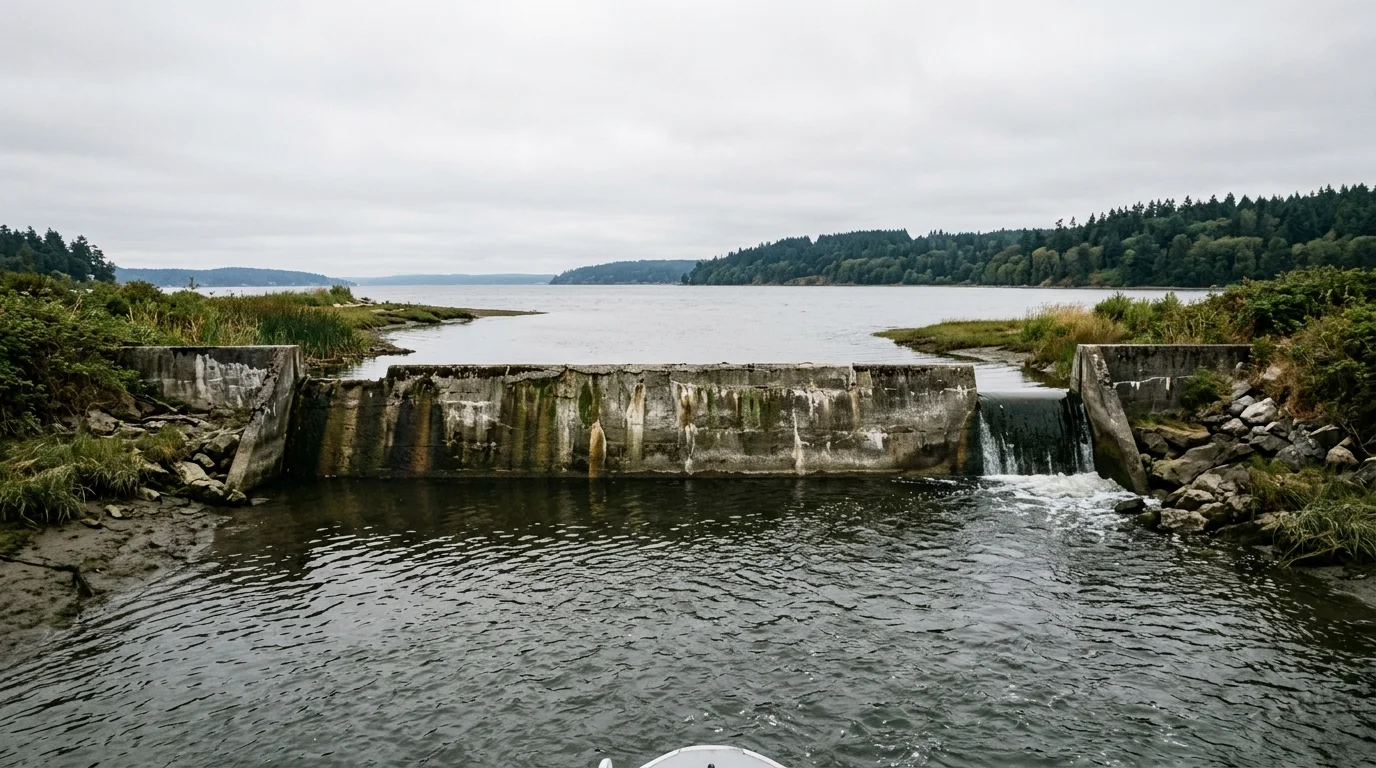
A dam at the mouth of Chambers Creek in Pierce County, Washington has blocked salmon from reaching upstream habitat and trapped sediment behind its walls for decades. Now the county is moving toward tearing it down, and the central engineering challenge is how to do it without sending that material flooding into Puget Sound.
Pierce County is hiring a design consultant to produce construction-ready plans for removing the Chambers Creek Dam, restoring the Chambers Bay estuary banks and marsh, and managing the sediment that will be unleashed when the structure comes out. The solicitation is posted through Washington's Office of Minority and Women's Business Enterprises. Preliminary engineering is already complete, so the firm hired will take the project from early design through plans ready for construction. Proposals are due June 24, 2026.
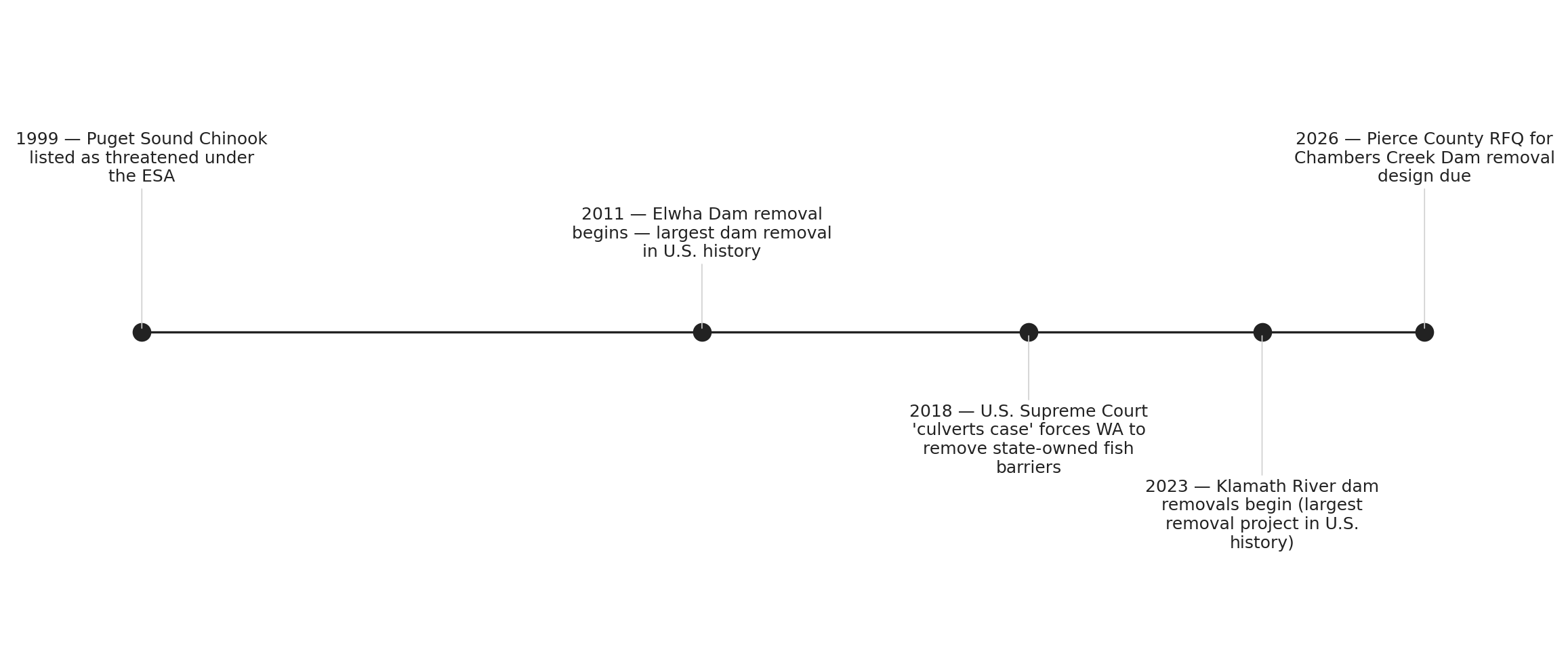
The dam sits at the boundary between University Place and Steilacoom, where the creek meets the sound near the Chambers Bay marina and golf course. The Puyallup and Nisqually tribes both hold treaty fishing rights in the affected waters, and Puget Sound Chinook salmon have been listed as threatened under the Endangered Species Act since 1999, giving decades of urgency to projects like this one.
Source: NationGraph.
Sediment is the most technically demanding piece of the project. Years of material trapped behind the dam carry legacy contaminants from the watershed's industrial past, which included a paper mill and later gravel mining operations. Releasing that sediment carelessly could smother habitat downstream, clog the marina and push pollution into Puget Sound. The Elwha River dam removals on the Olympic Peninsula, the largest in U.S. history, released roughly 20 million cubic yards of sediment when they came down between 2011 and 2014. Water quality degraded temporarily before significant ecological recovery followed. Pierce County's plan aims to manage that process more deliberately.
Federal funding has accelerated dam removal projects across Washington in recent years. The 2021 Bipartisan Infrastructure Law included roughly $2.4 billion nationally for fish passage and dam removal through NOAA and the Fish and Wildlife Service, and Washington has been among the leading recipients. A 2018 U.S. Supreme Court ruling requiring the state to remove fish barriers blocking tribal treaty fishing rights has also pushed salmon habitat spending higher statewide.
The Chambers Bay site carries unusual public visibility. The county-owned golf course hosted the 2015 U.S. Open, and the adjacent waterfront trail draws heavy recreational use, meaning construction activity and any sediment disturbance will be hard to miss. The county will need to balance those competing uses through what could be a multi-year engineering and construction process.