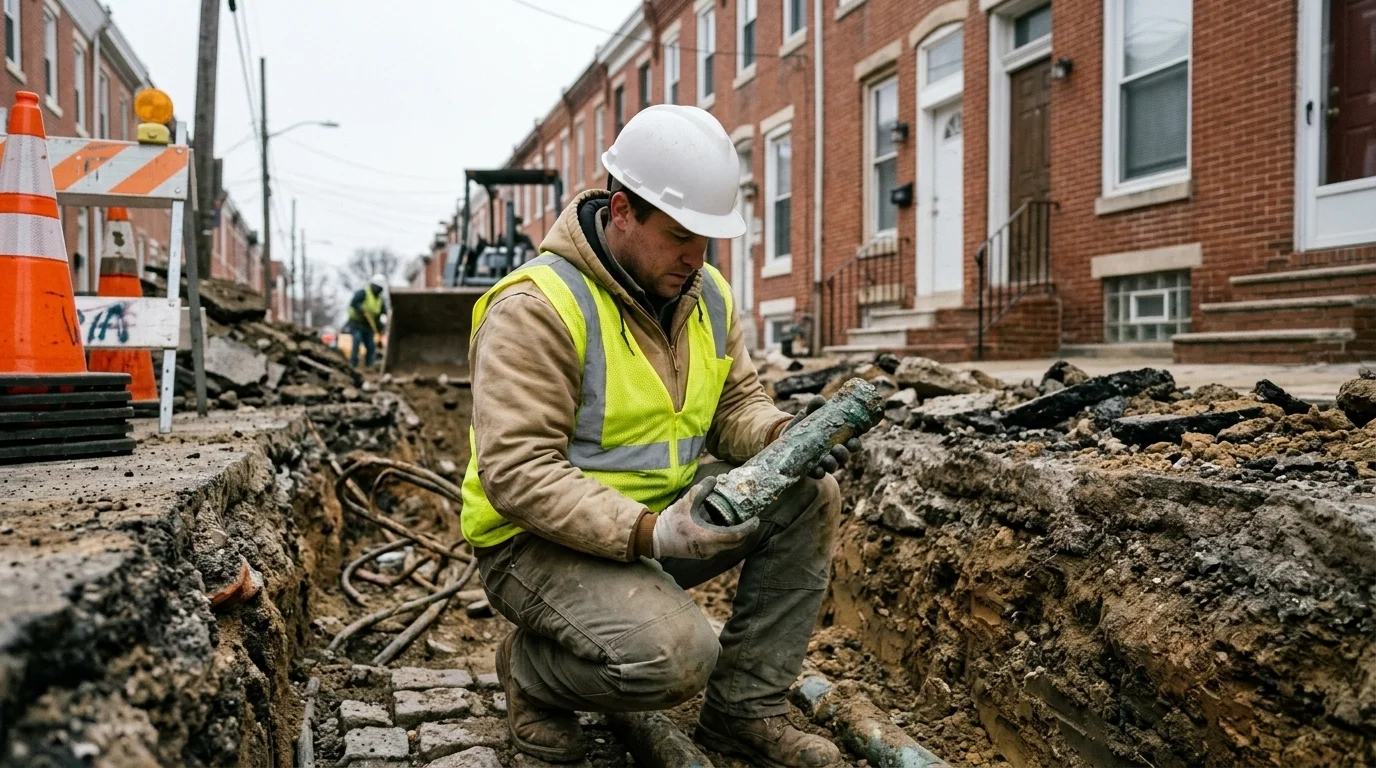
Philadelphia is ramping up its effort to pull lead pipes out of the ground beneath tens of thousands of homes, moving into a second, larger phase of replacement work as a federal deadline tightens.
The Philadelphia Water Department (PWD) has posted a new contractor solicitation for hands-on pipe replacement work, signaling the program is shifting from early-stage pilots to full-scale production. The city is estimated to have between 20,000 and 25,000 lead service lines still connecting water mains to individual homes, one of the highest counts of any city in the country, alongside Chicago, Cleveland and Detroit.
Lead service lines were standard in American construction before the mid-20th century, and Philadelphia's age shows: nearly 60% of its housing stock was built before 1960. Rowhouse neighborhoods across North, West and South Philly are heavily saturated with the old pipes. For decades, PWD relied primarily on corrosion-control chemicals to keep lead from leaching into tap water rather than replacing the pipes themselves. As recently as 2022, the city's stated goal was full replacement within 50 years, a timeline that drew criticism from environmental advocates who pointed to Newark, N.J., which replaced roughly 23,000 lead lines in under three years between 2019 and 2021.
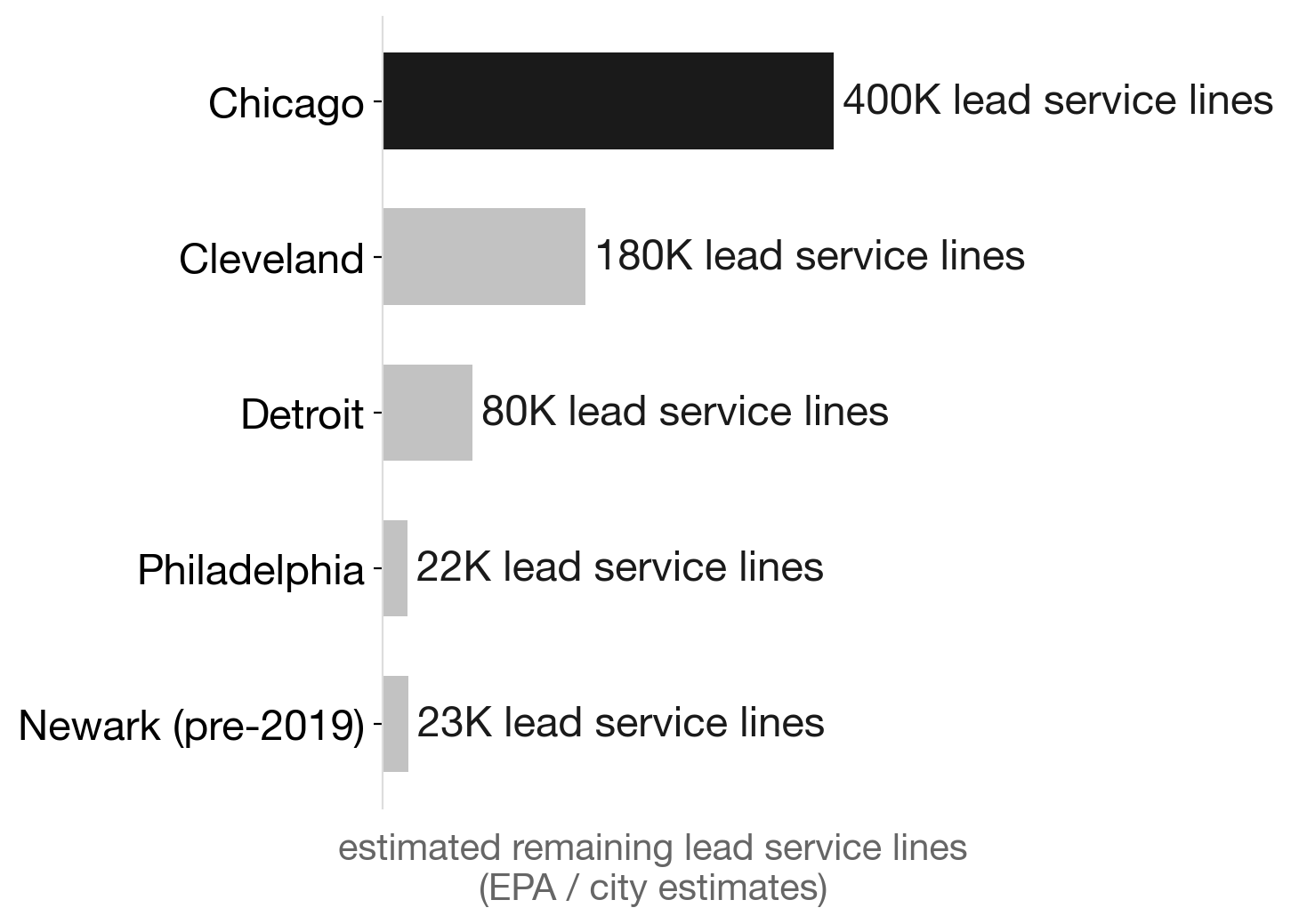
Source: NationGraph.
That slower pace is no longer an option. The EPA finalized new Lead and Copper Rule Improvements in October 2024, requiring every water system in the country to replace all lead service lines by 2037, regardless of whether lead levels at the tap exceed action thresholds. For the first time, utilities must replace the full line, including the portion on private property, not just the section running under the street.
The push is backed by federal money. The Bipartisan Infrastructure Law, signed in 2021, directed $15 billion specifically to lead service line replacement through the Drinking Water State Revolving Fund. The total budget for this phase of work has not been publicly specified by PWD.
The stakes fall heaviest on children. Philadelphia has one of the highest child poverty rates of any large U.S. city, and lead exposure, which can cause irreversible neurological damage, disproportionately affects kids in low-income Black and Latino neighborhoods. Cities like Chicago and Cincinnati are running similar programs at scale.
PWD has not disclosed how many homes will be served in this phase or which neighborhoods will be prioritized first. With roughly 13 years left before the EPA deadline and thousands of pipes still in the ground, the pace of work in the coming contracts will determine whether Philadelphia can meet the clock.