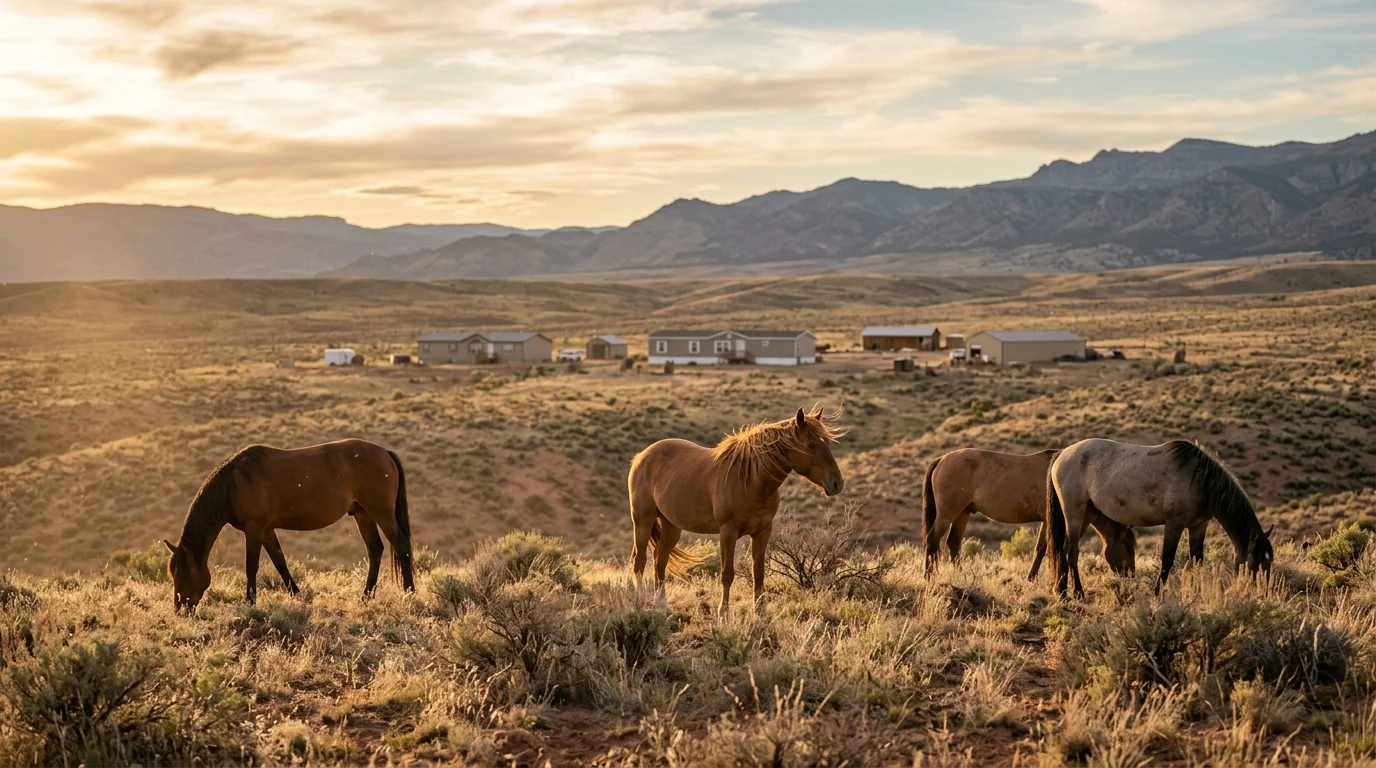
A wild horse sanctuary in rural Colorado is moving to build a modular tiny home village to house the workers who care for thousands of mustangs removed from federal land, a dual-purpose project that tries to solve two compounding crises at once.
The sanctuary, likely in Northwest Colorado's Moffat County region near Craig, is seeking modular housing contractors through the Rocky Mountain E-Purchasing system. The specific sponsoring entity has not been publicly named, and the total budget and number of units have not been disclosed in the solicitation.
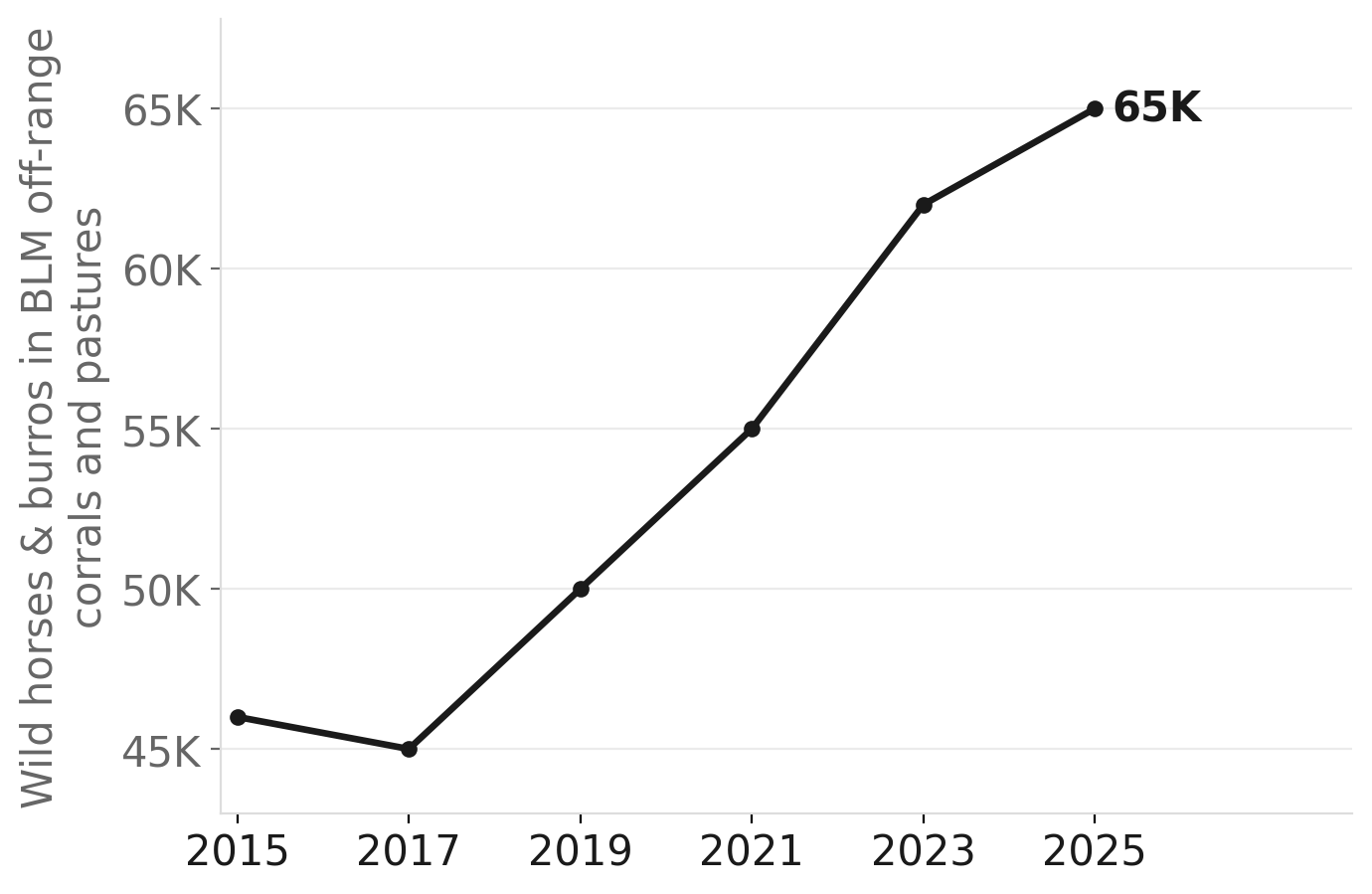
The project reflects a pressure that has built steadily across Western Colorado. The Bureau of Land Management now holds roughly 65,000 wild horses and burros in off-range facilities, more than currently roam free on public lands, after ramping up roundups under its 2020 management plan. Private and nonprofit sanctuaries in Colorado have absorbed growing numbers of those removed mustangs. But the people doing that work, wranglers, veterinary technicians and daily caretakers, face the same housing market that has pushed out agricultural workers across the region.
Source: NationGraph.
In counties like Moffat, remote-work migration, short-term rentals and second-home buyers have driven home prices far beyond what nonprofit or agricultural wages can reach. Moffat County, home to fewer than 13,000 residents, is also managing the economic fallout of the Craig Station coal plant shutdown, scheduled to complete by 2028, leaving a workforce in transition and a housing market that never built enough to begin with. That pattern is [playing out across rural Colorado](articles/colorado-boomtown-area-bets-on-housing-to-fix-its-teacher-shortage), where employers from school districts to sanctuary operators struggle to keep workers who can't afford to live nearby.
Tiny home villages have emerged as a preferred response in rural communities precisely because they're faster and cheaper to deliver than traditional multifamily housing and don't require the skilled-trades workforce that stick-built construction demands in remote areas. Modular construction, where units are largely assembled off-site, fits that logic especially well. Governor Jared Polis has made modular and alternative housing typologies a centerpiece of the state's affordable housing push, backed by Colorado's 2024 Proposition 123 affordable housing fund.
The sponsoring organization has not yet been confirmed, and key details including unit count, total project cost and a construction timeline remain unclear from the solicitation. Those details are expected to surface as contractors are selected and the project moves toward permitting.