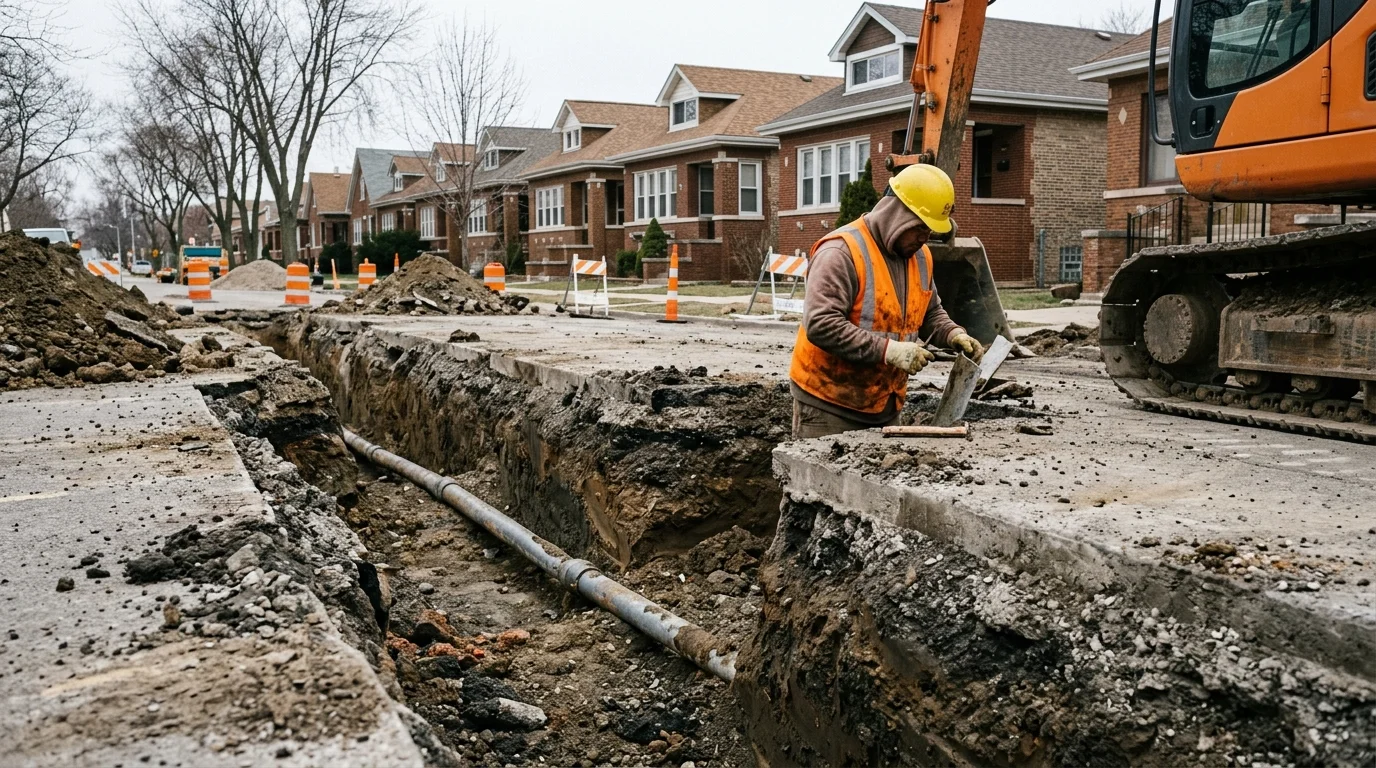
Residents on a stretch of North Allen Avenue in Chicago's Albany Park neighborhood are set to get their lead water pipes replaced under a new project from the city's Department of Water Management, one of dozens of block-level replacements the city is rolling out across the Northwest Side.
The work targets the block between N. Kimball Ave. and N. Milwaukee Ave., a corridor of early-20th-century bungalows and two-flats almost certainly connected to city water through original lead service lines. The city posted the solicitation on Aug. 17, 2026, with bids due Oct. 1. Specific costs and the number of households affected were not detailed in the solicitation summary.
Chicago's lead pipe problem is unlike any other American city's. From 1934 until 1986, Chicago's plumbing code required lead service lines, making the city the last major U.S. city to stop mandating their use. The result: an estimated 400,000 lead pipes still in the ground, roughly one in five of all remaining lead service lines in the entire country. A 2024 study in JAMA Pediatrics estimated that 68% of Chicago children under age six are exposed to lead-contaminated water.
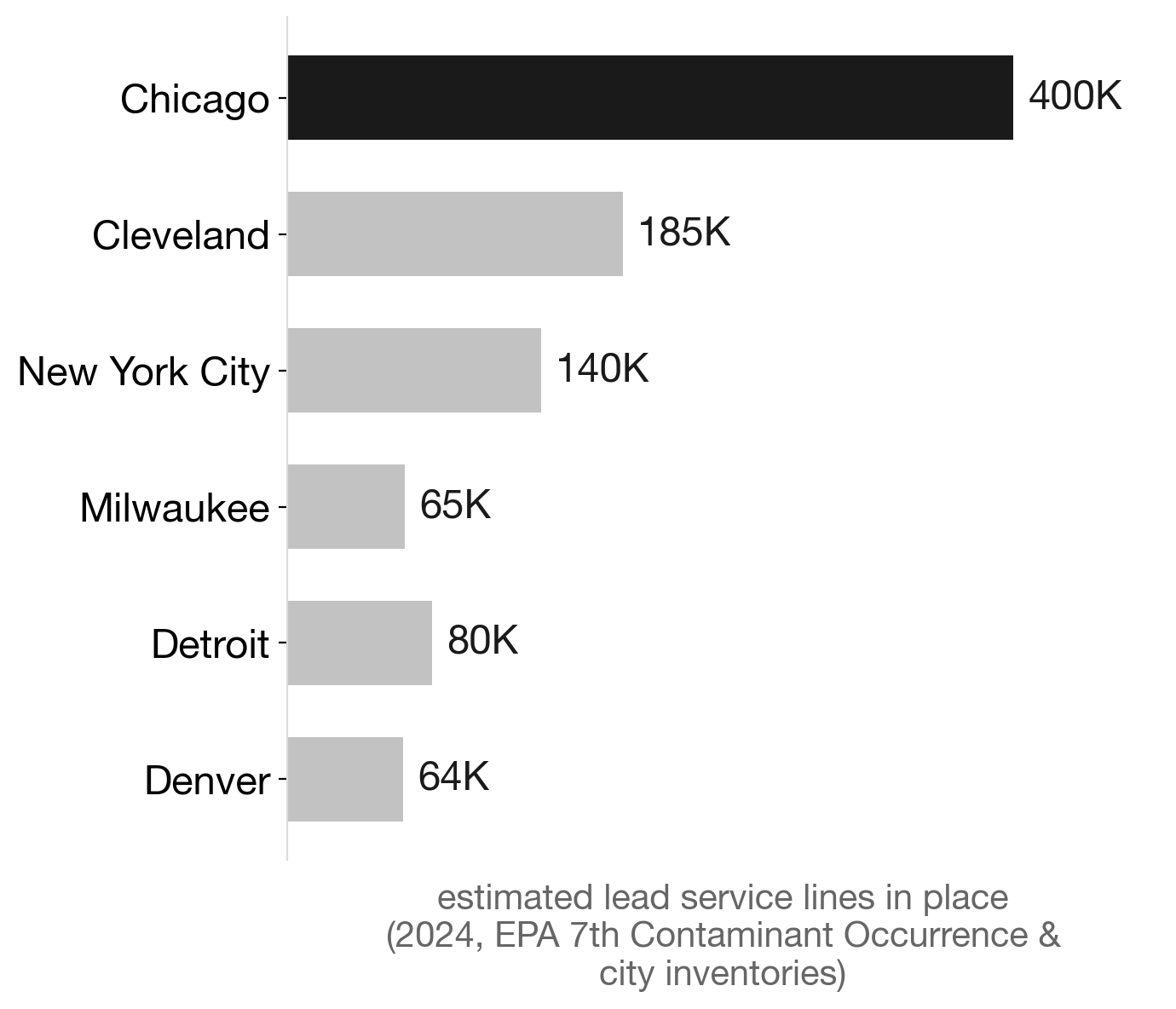
Source: NationGraph.
For decades, city officials argued that anti-corrosion chemicals kept the pipes safe. That position became harder to defend after the Flint water crisis and a 2018 Chicago Tribune investigation that documented widespread lead contamination in city homes, often triggered when water main work disturbed the pipes. The city faced an EPA lawsuit over lead violations in 2024 and is now operating under a federal mandate, finalized by the EPA in October 2024, requiring all lead lines replaced within 10 years. Because Chicago's scale is so large, the city negotiated an extension to 2047, but must still replace roughly 19,000 lines per year to meet it.
The Johnson administration has pushed a block-level strategy, doing entire streets at once rather than responding to individual homeowner requests, which lowers per-line costs and limits neighborhood disruption to a single construction cycle. The city has also moved to cover replacement costs for residents, addressing a barrier that stalled earlier voluntary programs in working-class and immigrant communities like Albany Park.
Similar block-by-block projects are underway across the city, including work already targeting Pilsen's West 19th Street. Chicago's pace will need to accelerate sharply in the coming years to hit the 2047 deadline, and environmental groups including the Get the Lead Out coalition continue to press Mayor Brandon Johnson to move faster.