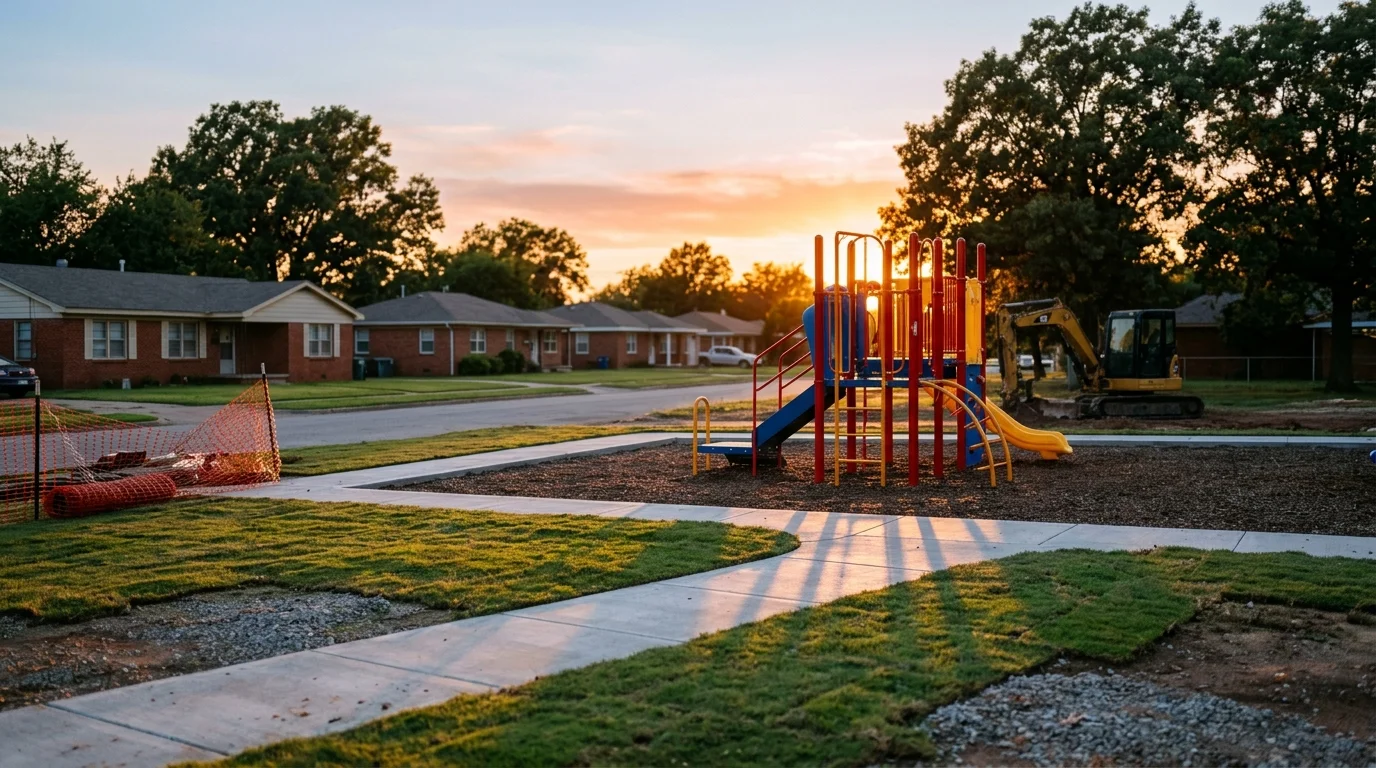
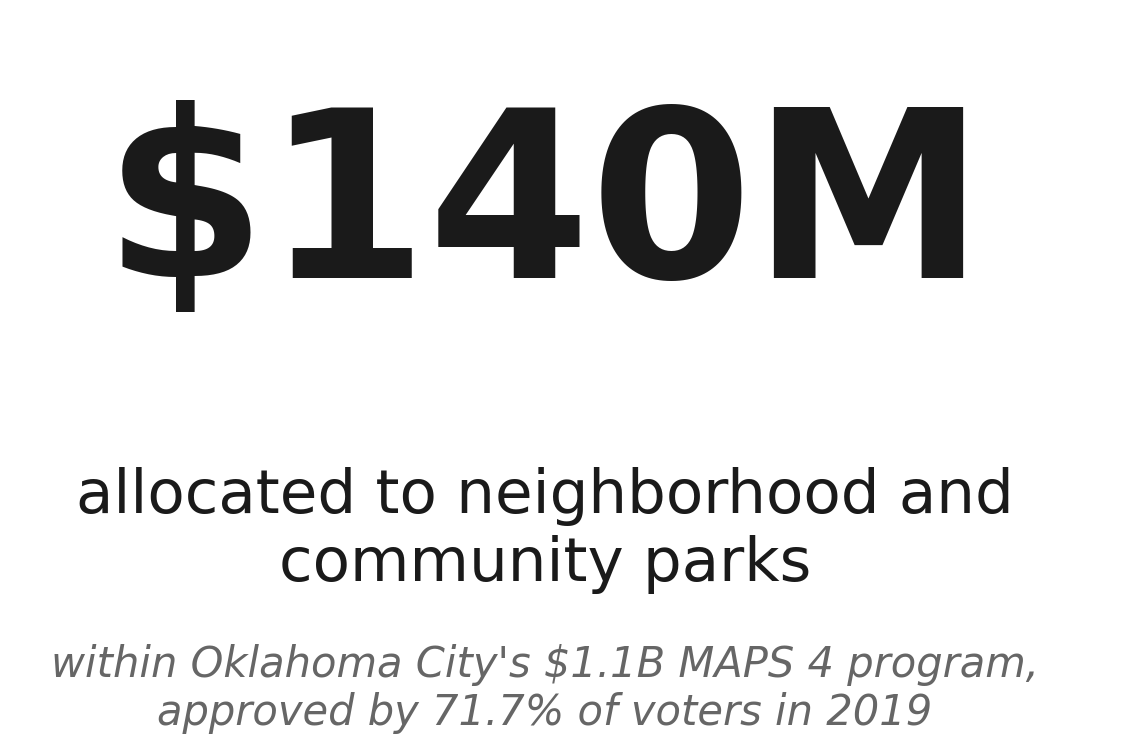
Oklahoma City is moving into the next round of construction under its landmark parks overhaul, pressing ahead with Phase 1C of a $140 million effort to upgrade neighborhood and community parks across a city that spans 620 square miles and has long struggled to spread amenities beyond its urban core.
The new phase follows earlier rounds that broke ground in 2023 and 2024 at sites including Rotary, Woodson, and Minnis Lakeview parks, as covered in earlier reporting on the city's push forward on its parks overhaul. The city has posted a solicitation on BidNet Direct to bring on contractors for the next round of work.
The parks program is one piece of MAPS 4, a $1.1 billion package that Oklahoma City voters approved by nearly 72% in December 2019. Funded by a temporary one-cent sales tax that runs through 2028, it marked a deliberate shift from earlier MAPS rounds that focused on downtown arenas and entertainment districts. This time, the bulk of the money was steered toward human services and neighborhoods: mental health facilities, affordable housing, senior wellness centers, sidewalks and parks in the parts of south and northeast OKC that critics had long said were shortchanged.
Source: NationGraph.
The MAPS model has been Oklahoma City's signature workaround for a political environment hostile to property tax increases. Voter-approved, time-limited and debt-free, it has sustained broad support across party lines since the original MAPS passed in 1993 under Mayor Ron Norick, when the city was still reeling from losing a bid for a United Airlines facility that exposed how deteriorated the downtown had become.
Oklahoma City's rapid growth adds urgency to the parks push. The city has passed 700,000 residents and now ranks as the 20th largest in the country, but its sheer geographic size means that population is spread thinly across terrain where access to maintained parks can vary sharply by neighborhood. With sales tax collection now in its final years, the city is in the middle of its heaviest construction period, and the parks phases are arriving in sequence across all four quadrants.
The program has not been without friction. Post-pandemic construction inflation has pushed costs and timelines on several MAPS 4 projects, and there has been ongoing debate about whether high-profile items like the Multipurpose Stadium are drawing funds that voters intended for neighborhood needs. How equitably the $140 million ultimately gets distributed among the city's dozens of eligible parks will be a measure of whether the program delivered on its central promise.