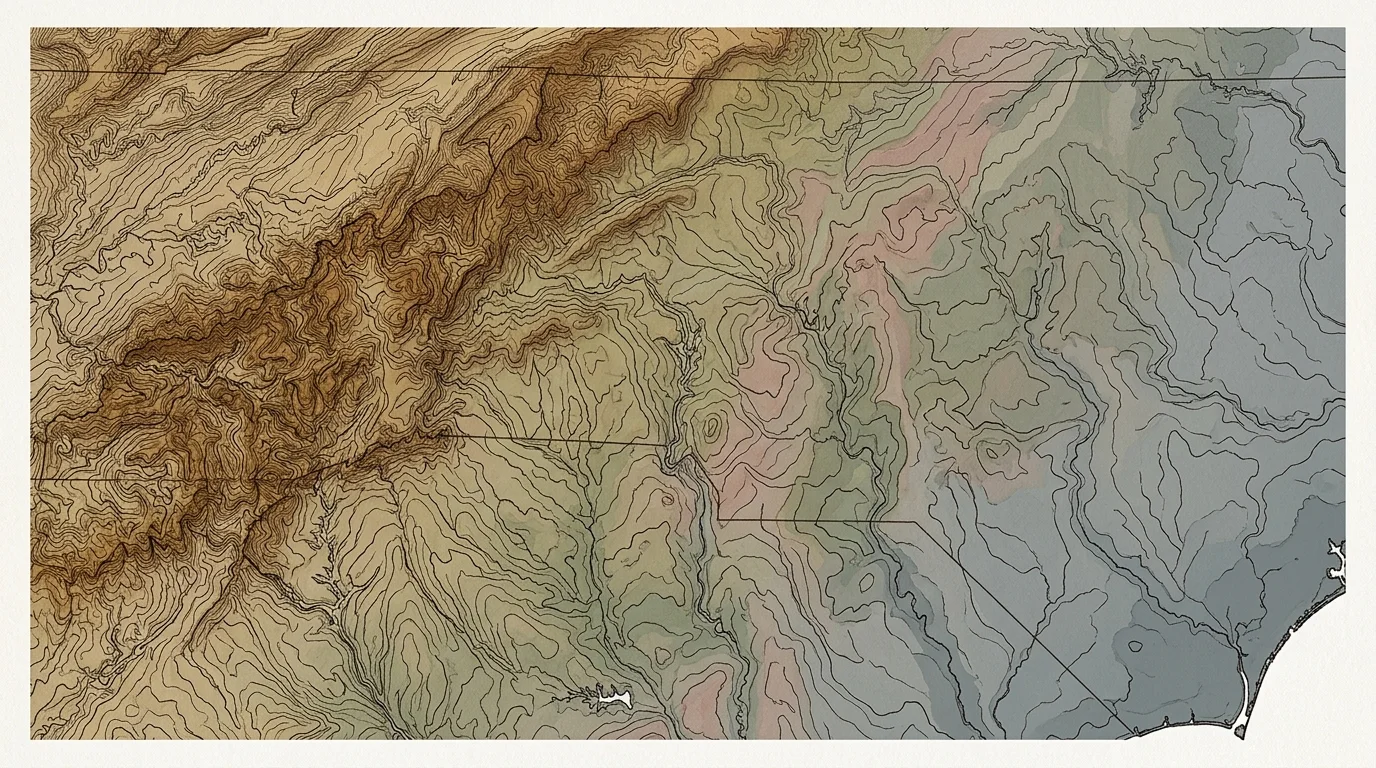
Six North Carolina institutions issued stormwater management RFPs in the last 30 days after going more than a year without one, and the two halves of that list have almost nothing in common except the procurement signal they're sending.
In Mecklenburg County's fast-growing southeastern suburb of Matthews, officials put out the town's first-ever stormwater RFP. Catawba County followed with its own first-ever solicitation, a stormwater pond modification project funded by local levy. The City of Lexington, a Davidson County mid-size city, issued its first standalone professional engineering RFQ for stormwater in roughly 410 days, explicitly for drainage system relocation using local funds. None of these are disaster recovery. They are compliance and growth catching up at once.
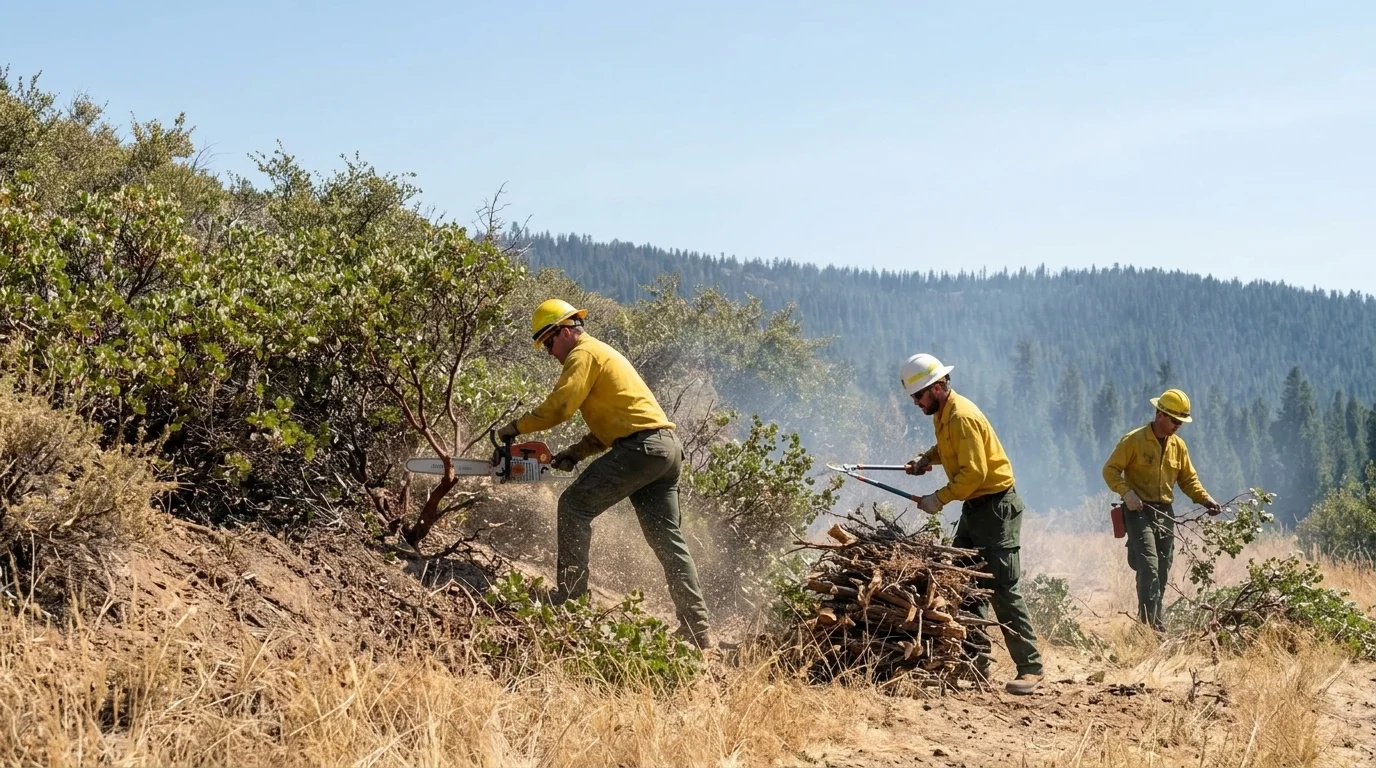
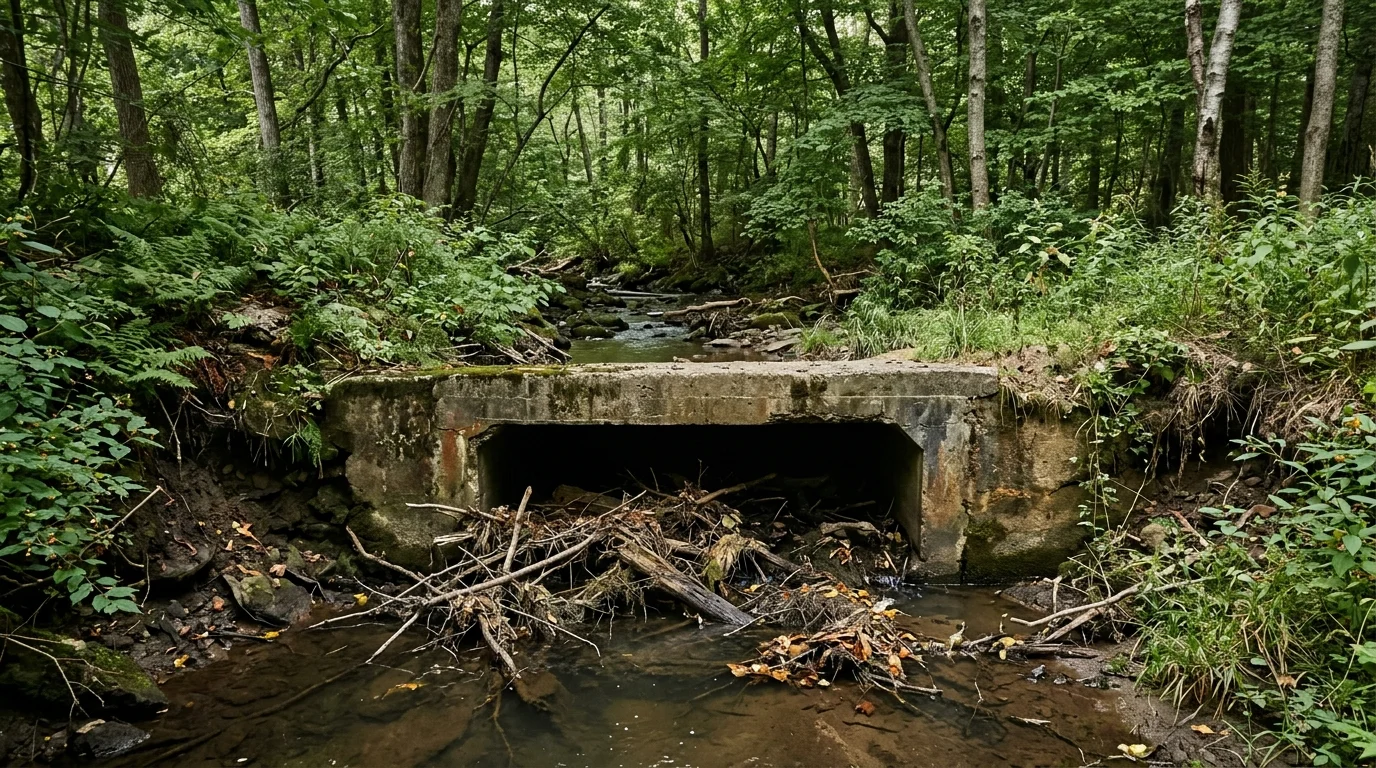
Asheville and Spruce Pine tell a different story. Asheville's recent RFPs are explicitly tied to Hurricane Helene recovery, federally funded reconstruction of historic parks infrastructure with stormwater components. Spruce Pine, in Mitchell County, is still in active debris-clearing mode nearly two years after the storm reshaped its creek corridors. These are places where the money arriving now is the first real capital for systems that were simply destroyed.
Source: NationGraph.
The same procurement signal, two entirely different crises underneath it.
The compliance side of the split traces directly to NC DEQ's reissuance of six NPDES Industrial Stormwater General Permits, effective July 1, 2026. As All4 Inc. details, the reissuance affects roughly 4,130 permitted industrial facilities statewide and creates a hard engineering deadline that facility operators and their host municipalities cannot defer. Piedmont cities absorbing rapid population growth also face a secondary pressure: the 2020 Census has already triggered new MS4 permit designations for previously unregulated municipalities, pulling towns like Matthews into the NC DEQ stormwater program for the first time and requiring immediate infrastructure assessment.
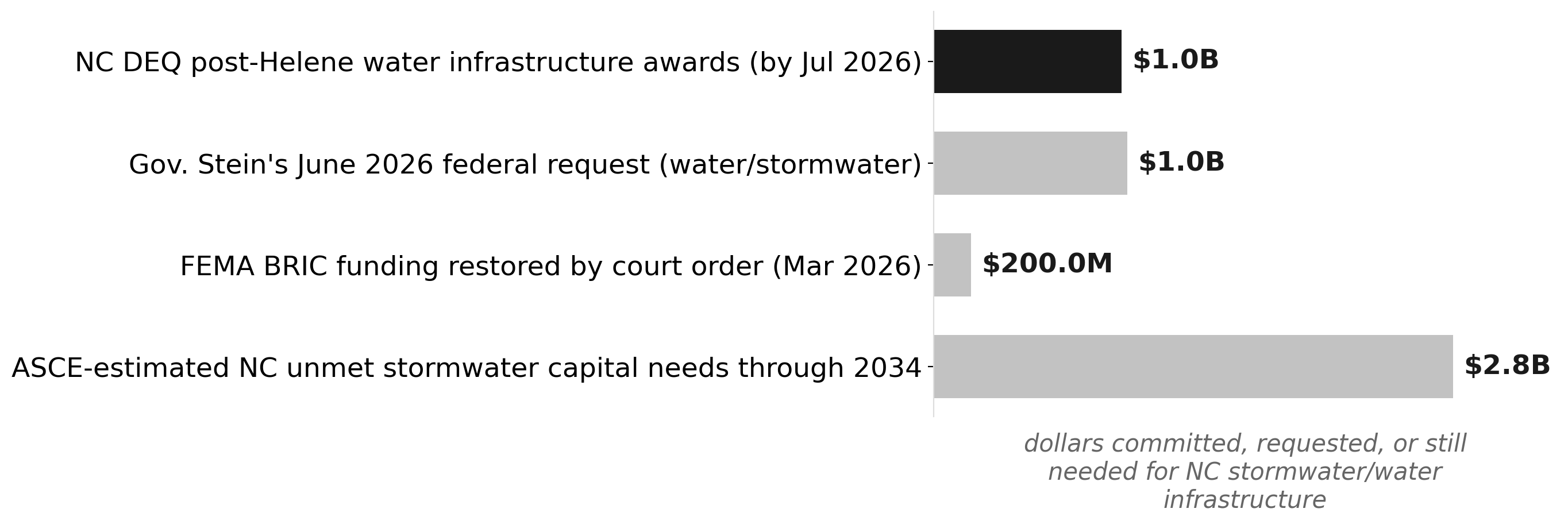
The recovery side traces to a program that crossed $1 billion in awards by July 2026. NC DEQ's Division of Water Infrastructure has now funded 222 water, wastewater, and stormwater projects across 28 western counties using federal block grant dollars appropriated specifically for Helene relief and disbursed through the State Revolving Fund supplemental program. A separate, third mechanism adds to the available pool: a March 2026 federal court order forced FEMA to restore more than $200 million in BRIC pre-disaster mitigation funding to North Carolina after the program was cut, making resilience grants newly available to jurisdictions across the state that have nothing to do with Helene.
These three funding streams, the SRF supplemental grants, the restored BRIC funds, and local levy dollars for compliance work, are legally and administratively distinct. The NPDES permit reissuance applies to industrial permittees under the federal Clean Water Act. The Helene SRF money is disaster-relief capital for damaged local governments in 28 specific counties. The BRIC grants are pre-disaster mitigation dollars available statewide. They share an administrative home at NC DEQ, but conflating them obscures why different cities are moving now for different reasons.
What unites them is the scale of what they're working against. The ASCE's 2025 Infrastructure Report Card puts North Carolina's unmet stormwater capital needs at $2.76 billion through 2034, with more than 80 percent of the state's 101 stormwater utilities reporting unmet capital needs. Governor Stein's June 2026 request to Congress included $1.03 billion specifically for water, wastewater, and stormwater rebuilding in western NC, an acknowledgment that even with a billion dollars already awarded, the repair gap remains substantial.
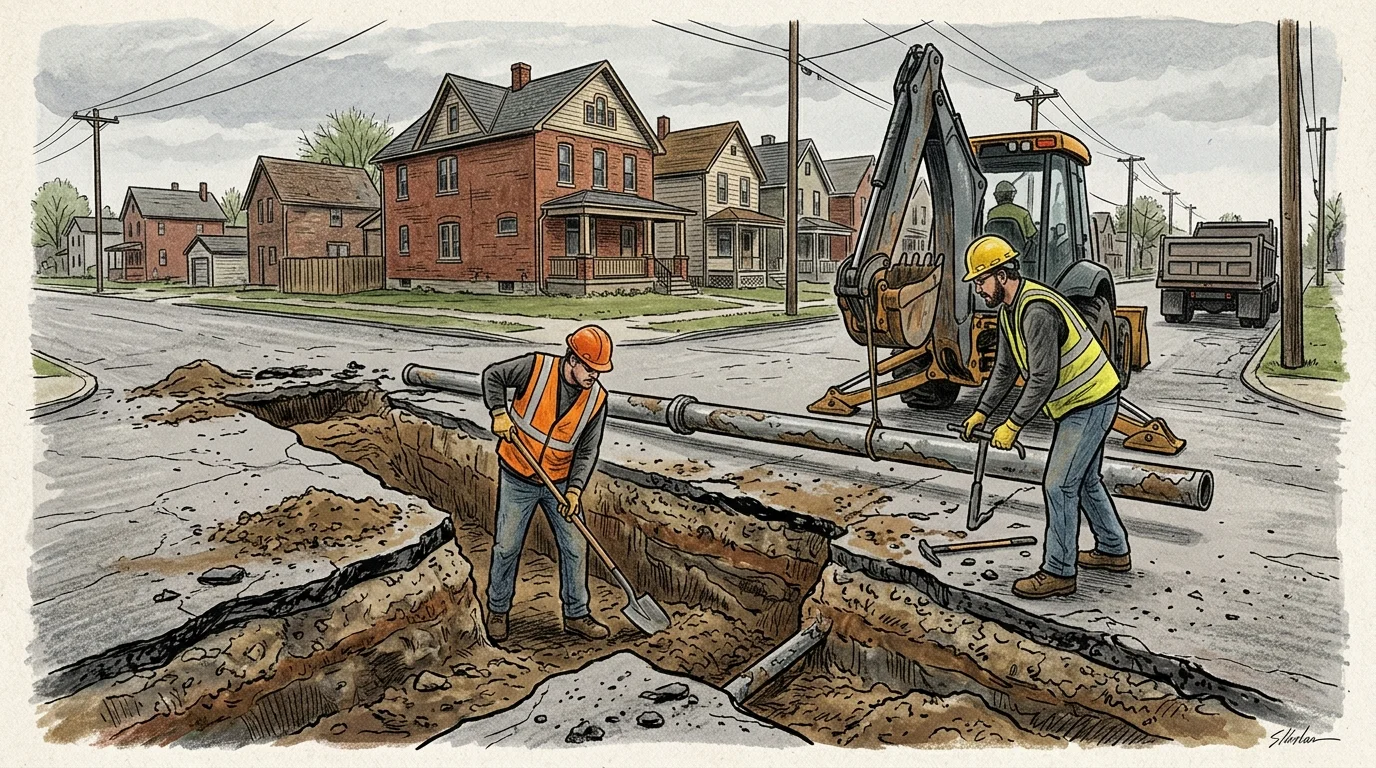
For residents in the affected jurisdictions, the practical implication is that deferred drainage, detention pond, and stream-channel work is now moving through procurement, which means construction activity over the next 12 to 24 months in areas that have seen little visible progress. In Asheville and Mitchell County, that means continued federal dollars arriving for work that began as emergency response. In Matthews and Catawba County, it means the first formal engineering assessments of systems that were never designed for the growth rates the 2020 Census confirmed.
The six new entrants are also likely laggards, not a leading edge. NC stormwater RFP activity has been running at elevated levels since mid-2025, with between 13 and 24 institutions active per month from February through August 2026. The institutions issuing RFPs for the first time now are the ones that took the longest to clear internal approvals, secure local funding, or confirm their permit obligations.
The next signal to watch is how many of the 122 MS4-permitted entities statewide have still not entered procurement by the time the NPDES industrial permit compliance cycle closes in late 2026. If the backlog is as large as the ASCE estimates suggest, six new entrants in a month may be closer to the beginning of this procurement wave than the end.