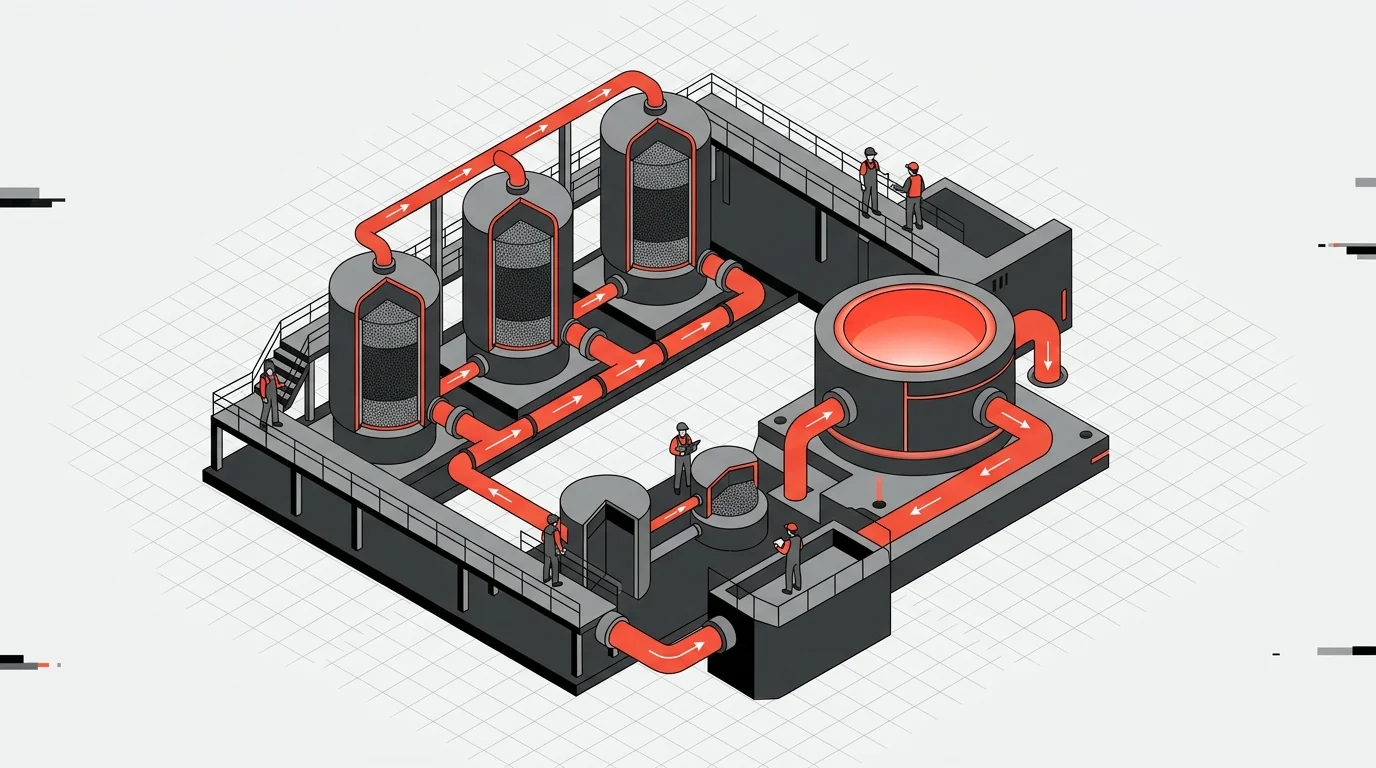
Wausau, Wisconsin has already done something many comparable cities haven't: it built a treatment system to remove PFAS, the so-called "forever chemicals," from its drinking water. Now the city of roughly 40,000 people is confronting what that commitment actually costs over time.
The city is seeking a contractor to reactivate the granular activated carbon filters at its Drinking Water Treatment Facility on Burek Avenue. Those filters work by trapping PFAS molecules on carbon surfaces as water passes through. But the carbon eventually saturates and stops working, requiring thermal regeneration at temperatures exceeding 1,000 degrees Celsius to restore its capacity. Then it gets reinstalled and the cycle starts again, typically every one to three years.
The process Wausau requires is called segregated reactivation, meaning the city's spent carbon must be kept separate from other utilities' carbon during treatment. The reason matters: mixing carbon from facilities with different contaminant profiles risks cross-contamination, a concern that's particularly serious with PFAS, which are extraordinarily difficult to destroy.
PFAS, or per- and polyfluoroalkyl substances, were manufactured starting in the 1940s and used in firefighting foam, nonstick cookware, and waterproof packaging. They earned the "forever chemicals" label because they don't break down in the environment and accumulate in human tissue. Research has linked exposure to cancers, thyroid disease, immune suppression, and developmental disorders. Chemical manufacturers 3M and DuPont faced massive litigation over contamination, with 3M agreeing to a $10.3 billion settlement with public water systems in 2023.
Wisconsin has been one of the harder-hit states. The state DNR began aggressive PFAS investigations around 2019, finding elevated levels near military bases, airports, and industrial sites statewide. The EPA followed with a landmark April 2024 rule setting the first national drinking water limits for PFAS, including a maximum of 4 parts per trillion for PFOA and PFOS. Public water systems have until 2029 to comply, but Wausau's investment in GAC filtration puts it ahead of many peers.
That proactive stance comes with a price. The EPA estimated the new PFAS rule will cost water systems $1.5 billion annually nationwide. For a working-class city like Wausau, where median household income runs below the state average, recurring water treatment costs eventually show up in residents' utility bills. The carbon reactivation cycle isn't a one-time infrastructure project. It's a permanent line item, the ongoing price of treating water that carries contamination from decades of industrial activity.
With proposals due this week, the city's Board of Public Works will review bids and decide how to proceed. Whether the costs ultimately stay manageable for Wausau ratepayers may depend partly on how competitive the market for GAC reactivation services remains as thousands of water systems across the country install similar treatment systems under the same federal deadline.