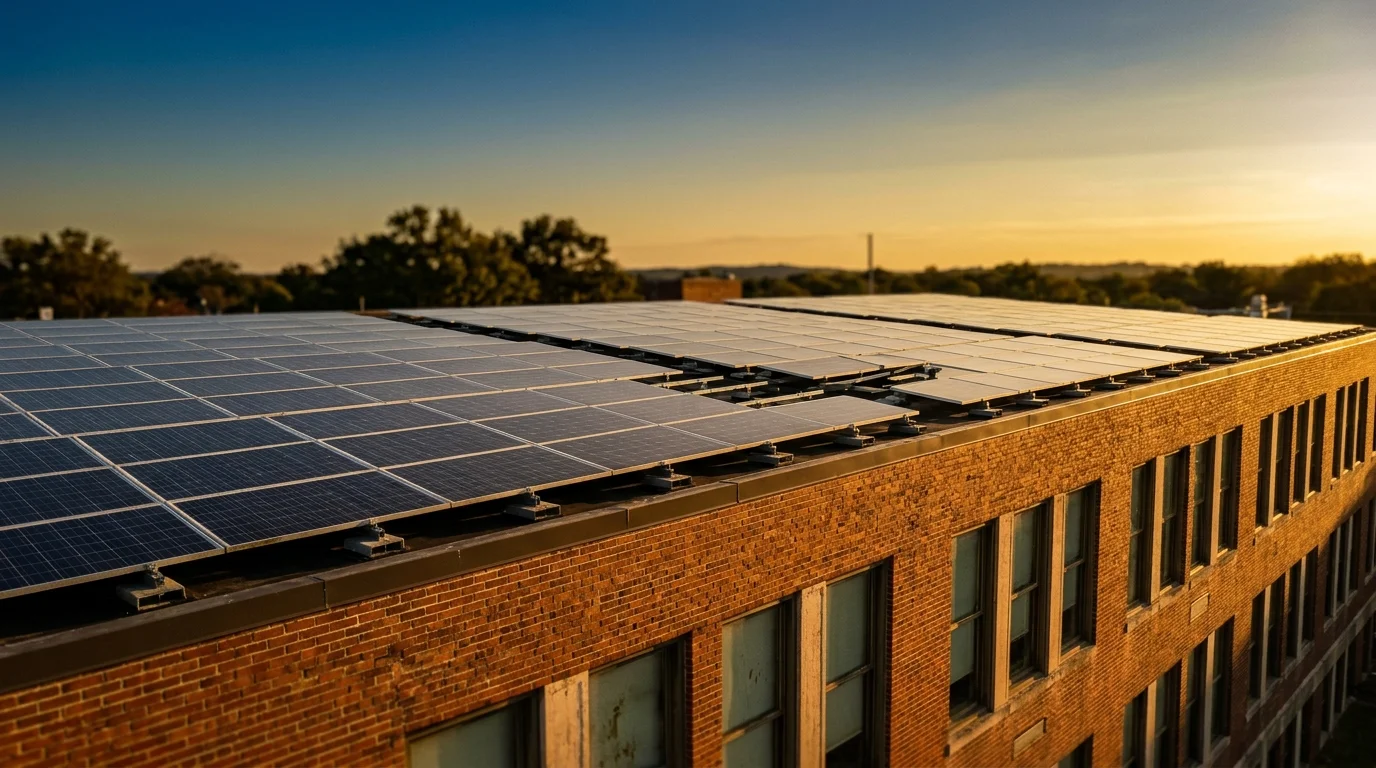
Six New Jersey school districts and municipalities issued solar Power Purchase Agreement RFPs in the last 30 days, the highest single-month concentration in at least a year, and the urgency is structural, not seasonal. The districts include New Brunswick Public Schools, Princeton Public Schools, Lakehurst, Freehold Regional High School District, Madison Borough, and Flemington-Raritan Regional, plus Camden County's community solar program targeting low-income residents auto-enrolled through their utility accounts. New Jersey is now outpacing every neighboring state in 30-day solar RFP volume: 8 solicitations versus Pennsylvania's 6, New York's 5, and Maryland's 5.
The force behind this compression is a federal deadline that has already lapsed. The One Big Beautiful Bill Act, signed July 4, 2025, preserved the Section 48E commercial Investment Tax Credit for third-party solar owners, including the developers who structure Power Purchase Agreements with public entities. But it set a hard construction-begin cutoff of July 4, 2026, and a placed-in-service deadline of December 31, 2027. As Columbia Law's Climate Change blog noted, the law created a narrow corridor for public agencies and their developer partners to lock in tax-credit-backed deals before federal clean energy incentives narrow further. That corridor is now effectively closed for new construction starts. Developers who signed contracts and broke ground before July 4 can still claim the 30% credit if their systems are placed in service by December 31, 2027. Developers who did not cannot.
School districts don't claim the Section 48E credit directly, the tax credit flows to the third-party developer who owns the solar array under the PPA structure. But the credit is precisely what makes no-upfront-cost PPAs financially viable: it offsets enough of the developer's capital cost to allow below-market electricity rates for the district. When that credit disappears, the economics of future PPAs weaken. The result is a pincer: federal deadline pressure pushing developers to close contracts before placed-in-service eligibility expires at year-end 2027, and a parallel state incentive structure pulling districts toward action now.
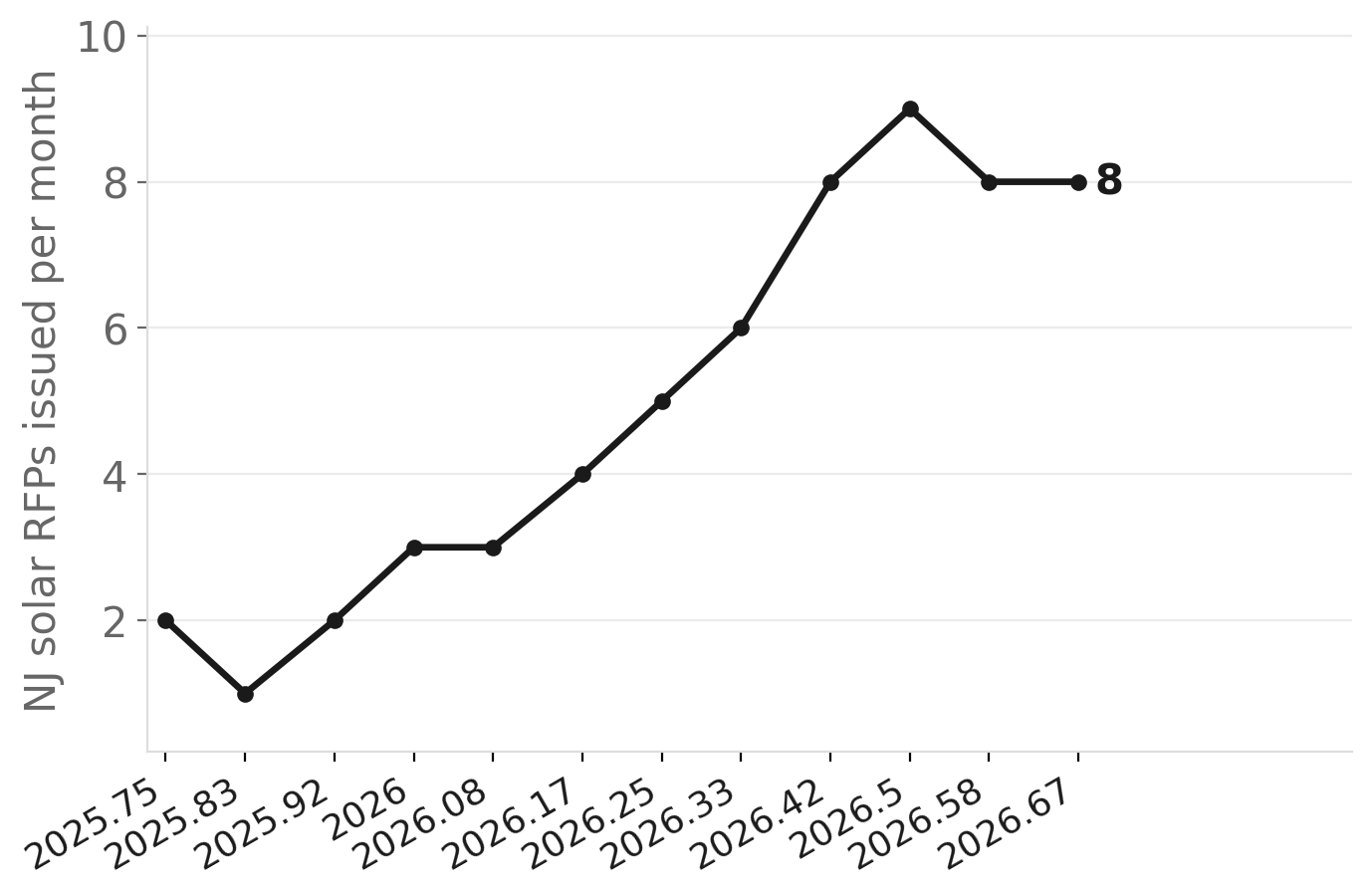
Source: NationGraph.
On the state side, the NJEDA Board expanded funding for the NJ Cool and Take Charge clean energy programs on August 26, 2026, aligning with Governor Mikie Sherrill's energy affordability agenda. NJ Cool offers RGGI-funded competitive grants up to $1 million, covering up to 50% of eligible costs for building retrofit projects including solar. The RETROFIT NJ program approved $79 million in June 2026 for large-scale decarbonization. These are state competitive programs, funded by cap-and-trade proceeds and state appropriations, mechanically distinct from the federal ITC. Together, they lower the floor on project costs at the same moment federal pressure is raising the ceiling on urgency.
A second dynamic compounds the timing. New Jersey was among the earliest states to embrace school solar PPAs, driven by NJ Board of Public Utilities guidelines and the state's original SREC program in the years around 2010 and 2011. Those agreements were typically structured as 15-year contracts. As reporting on New Jersey's solar PPA model has documented, districts that signed in that first wave are now hitting natural expirations, creating a replacement procurement cycle running simultaneously with the federal deadline crunch. A district rebidding an expiring PPA and a district signing its first solar agreement are responding to different triggers, but they are landing in the same procurement queue at the same time.
The NJ Treasury DPMC's T3104 Solar PPA term contract provides a structural assist. The pre-qualification mechanism allows schools and state agencies to run streamlined mini-bids against an approved vendor list rather than conducting full open procurements, reducing the calendar time between an RFP decision and a signed agreement. That frictionless path matters when the placed-in-service clock is running.
For residents and school board members, the practical question is what happens to district electricity costs after December 31, 2027. Districts that sign PPA contracts with construction already begun under the July 4 cutoff can lock in rates against New Jersey's persistently high electricity prices for the next 15 to 20 years. Districts that miss the placed-in-service window will face a solar market with weaker tax-credit economics and, likely, higher PPA rates. The SREC-II program's production-based income, at $85.90 per MWh rising to $95.23 in EY2026-27, remains available and softens but does not replace the federal credit.
The signal to watch is how many of the current RFPs convert to signed contracts before year-end 2027. Issuing an RFP is a commitment to a process, not a guarantee of a deal. Districts that move quickly through vendor selection and contract negotiation will capture the last generation of federally subsidized school solar economics. Those that run long procurement timelines may find the financial model has shifted underneath them.