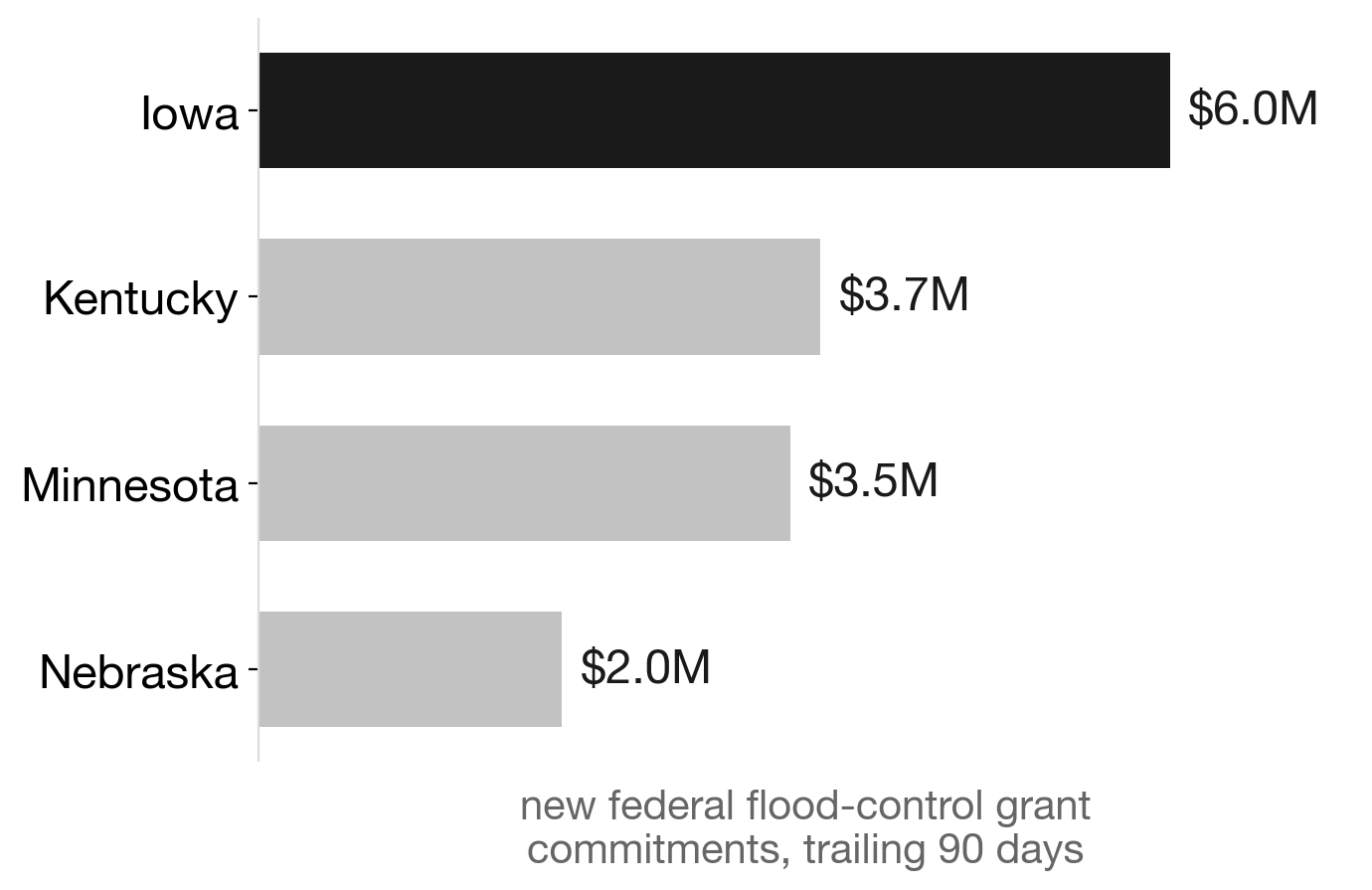
Federal flood-control grants newly committed to Iowa have surged to $6 million in the last 90 days, up from $384,860 in the same window a year ago, a 1,459% increase that makes Iowa the top recipient of new flood-control grants among all Midwest states. Kentucky is second, at $3.7 million. The jump is not the result of a new storm. It is the delayed consequence of one that happened two years ago.
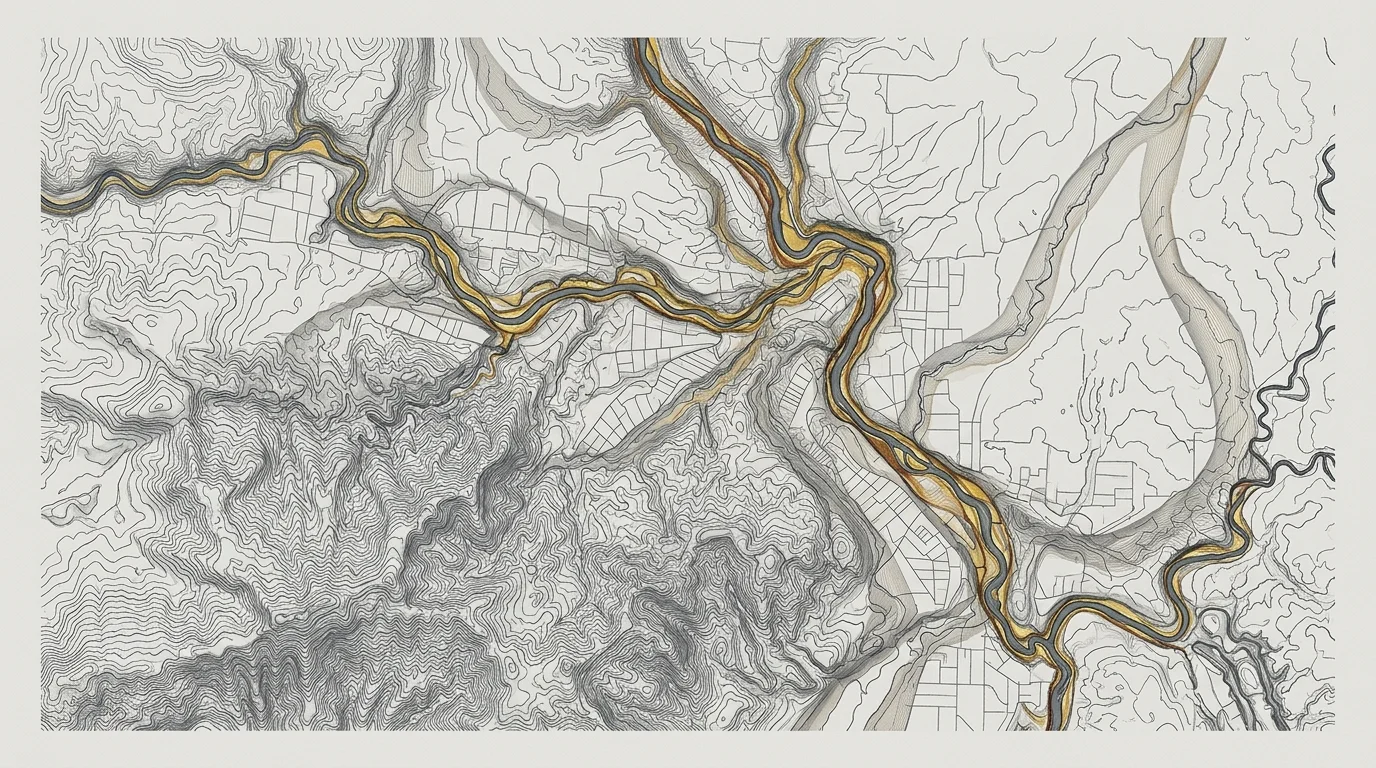
On June 22, 2024, catastrophic flooding swept through 22 counties in Northwest Iowa. The Rock River near Rock Valley crested five feet above its prior record of record, according to USGS hydrologists, and total damage across the region exceeded $310 million. President Biden approved Major Disaster Declaration DR-4796 two days later. That declaration activated FEMA's Hazard Mitigation Grant Program and Flood Mitigation Assistance program, setting off a federal funding process that, by design, takes months to years to complete. The money is arriving now.
The single largest commitment in the trailing 90-day window is a $6 million DOT Bridge Investment Program grant awarded June 4, 2026, to the City of Cedar Rapids for a flood-critical bridge replacement. Cedar Rapids is midway through a decade-long, $1 billion-plus permanent flood-control system along the Cedar River, a project that began after the catastrophic 2008 flood and requires east-side infrastructure to achieve full federal levee certification. The new bridge grant fills a structural gap in that system and runs through 2031.
Source: NationGraph.
That 90-day figure, however, understates the full surge. A $14.3 million FEMA Flood Mitigation Assistance award to Iowa Homeland Security landed April 24, 2026, just outside the window. Of that amount, $13.1 million is designated for demolishing repetitive-flood commercial structures in Clive. Then, on June 30 and July 2, FEMA obligated more than $22 million in Hazard Mitigation Grant Program funds for Rock Valley to buy out 104 flood-damaged properties. Rock Valley City Administrator Tom Van Maanen told Iowa Public Radio that the obligation meant relief had finally arrived, two full years after the disaster. Iowa's total active flood-grant portfolio across DOT, DHS, EPA, USGS, and USDA programs now runs to at least $34 million in obligated funds.
The two-year gap between disaster and mitigation money is not an Iowa anomaly. It is structural. FEMA's April 2026 announcement of more than $250 million in FMA and Swift Current funds nationwide named Iowa explicitly, with FEMA Senior Official Karen S. Evans citing the need to move pending mitigation awards expeditiously. The language reflected an agency aware of the optics: communities that flooded in 2024 were still waiting in 2026. Rep. Randy Feenstra (R-IA-4) has worked the pipeline from the congressional side, facilitating direct meetings between Rock Valley officials and FEMA leadership. His office announced in July 2026 that it had helped secure more than $100 million in total FEMA disaster assistance for Iowa's 4th District.
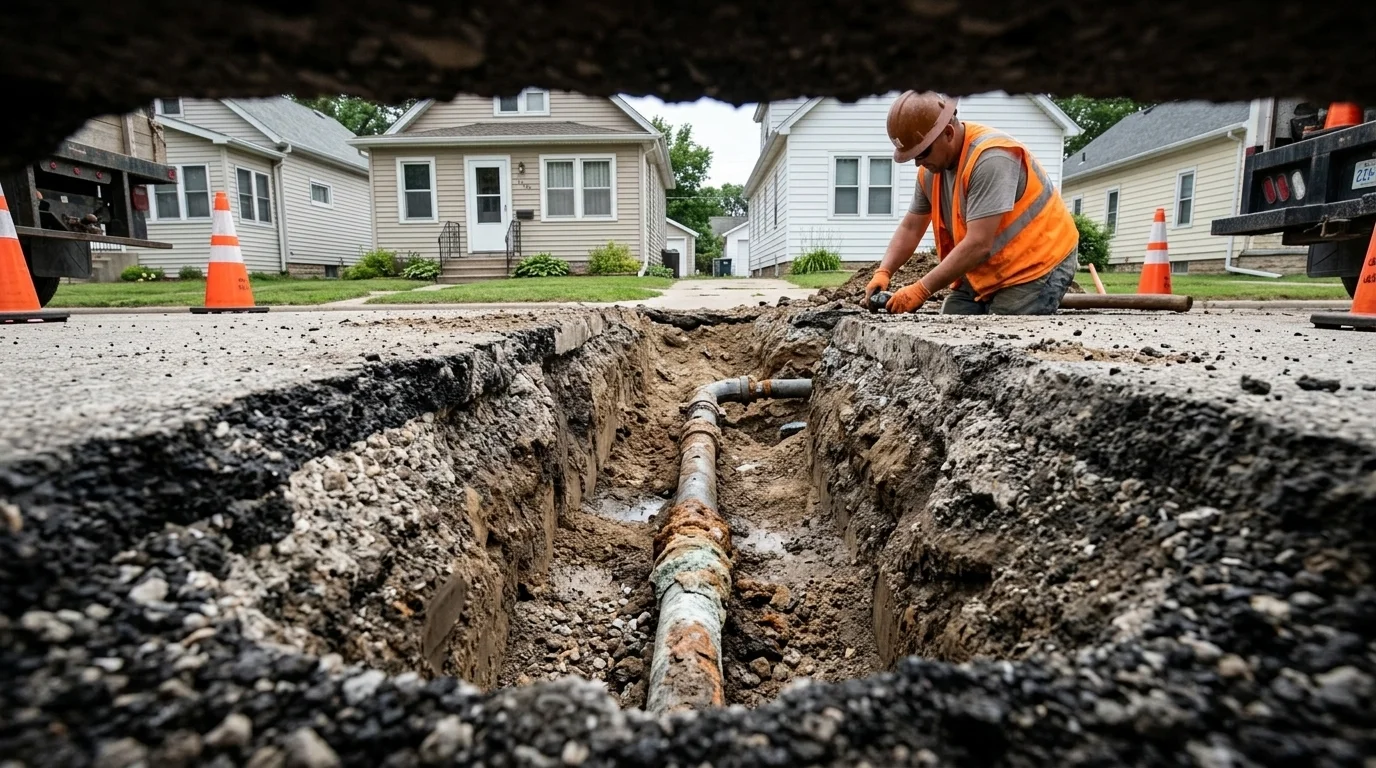
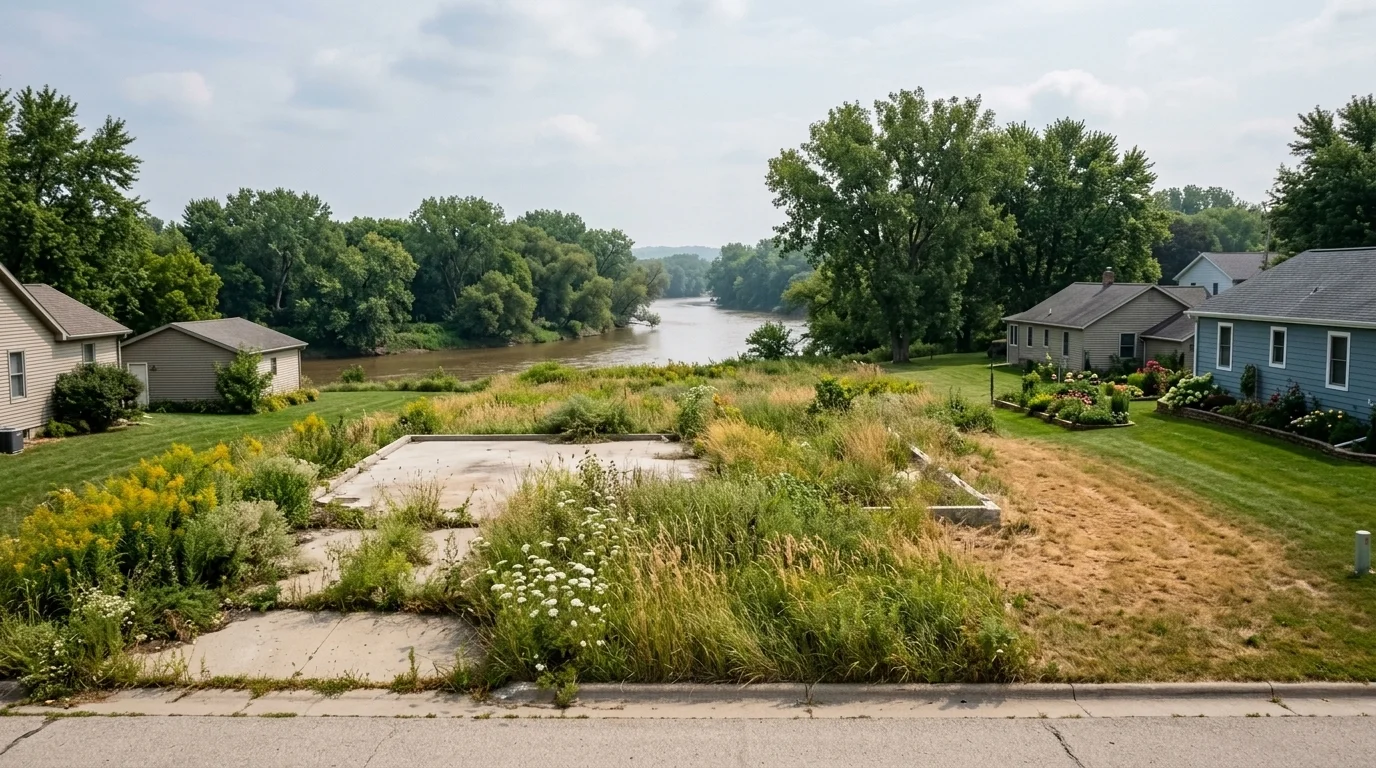
What arrives at the local level reflects the gap between recovery and mitigation. In Rock Valley, the $22 million buyout program will convert 104 flood-damaged properties into open land, a legitimate long-term flood-risk reduction strategy, but the residents and businesses on those lots have already been displaced for two years. In Clive, the FMA commercial demolition funds address repetitive-loss structures, exactly the category FEMA targets for permanent removal from the floodplain, but those buildings have already flooded repeatedly. Des Moines Water Works issued three RFPs in July and August 2026 for levee gate upgrades at its Fleur water treatment plant. Mason City put out an RFP for FEMA-funded flood mitigation engineering. Both are forward-looking, but both are also years behind where the 2024 flooding put them.
The honest accounting is that Iowa communities are doing both things at once: finishing recovery from one disaster while trying to harden against the next one, using the same federal dollars to do it. The distinction matters because mitigation funding, by definition, is supposed to reduce future losses, not compensate for past ones. When buyout money arrives two years after the flood that triggered it, the calculus blurs.
The next signals to watch are straightforward. FEMA's HMGP pipeline, opened by DR-4796, is still active. Additional buyout and infrastructure awards for Northwest Iowa communities are expected through the remainder of 2026. Cedar Rapids' bridge project enters its construction phase before the decade closes. And Iowa's 2025 and 2026 flood seasons have already produced new weather events in some of the same river corridors, which could trigger new declarations and restart the clock on another slow-motion funding surge.