Pennsylvania has issued 20 mental health RFPs in the last 30 days, against a trailing monthly average of roughly 11, nearly twice the normal run rate, and the only state among Pennsylvania, New York, New Jersey, and Ohio currently running above baseline. The number sounds like progress. The source of those contracts tells a different story.
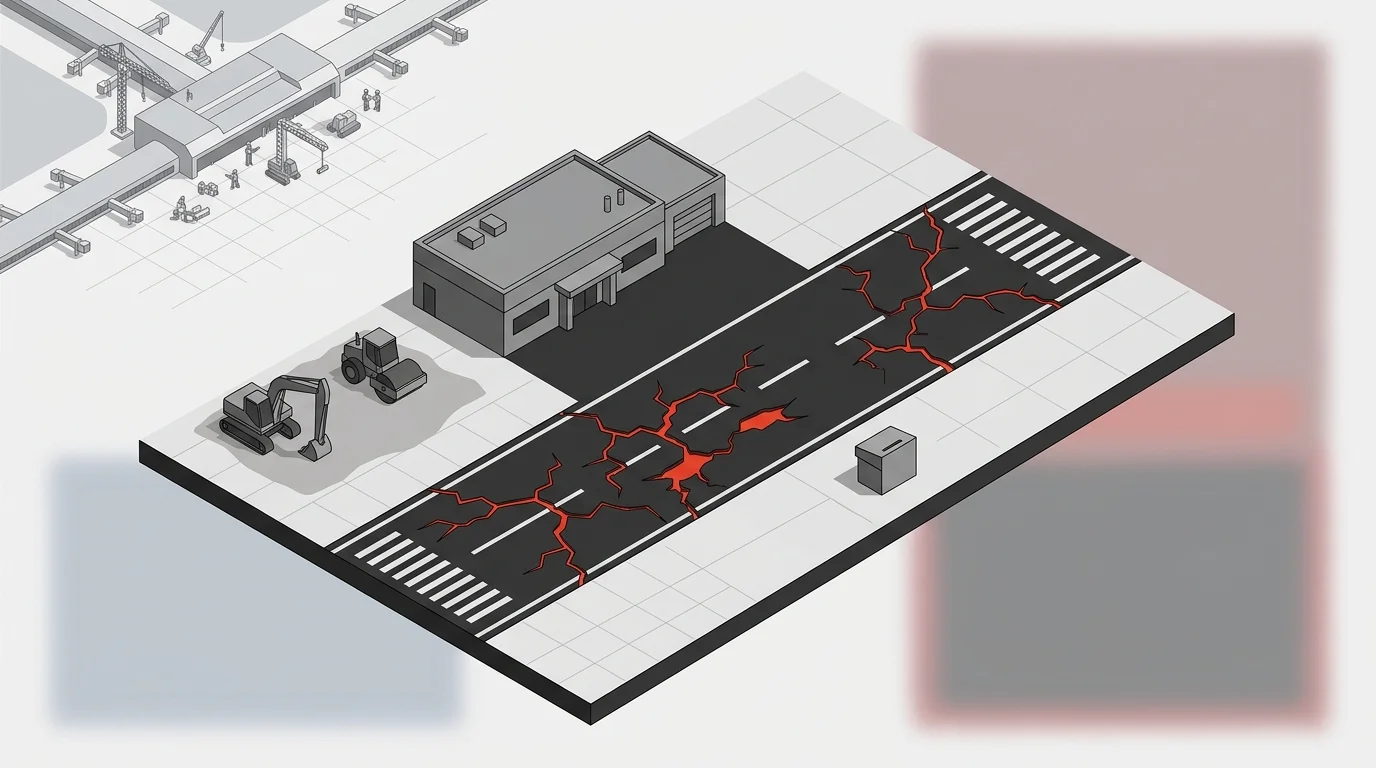
The sharpest genuinely new procurement signal in the dataset is not coming from a county behavioral health office or a community clinic network. It is coming from the Pennsylvania Department of Corrections, which issued four "Certified Peer Specialist" RFPs in rapid succession between April 12 and May 27, 2026. Philadelphia's correctional system issued an $80 million-per-year behavioral health RFP in November 2025, with a contract start date of July 1, 2026. When corrections agencies are your most active mental health procurers in a given window, the procurement volume is not measuring expansion of care. It is measuring where unmet need has pooled.
The structural reason for this is not complicated. A two-year Spotlight PA and Lehigh Valley Justice Institute investigation published in August 2025 documented that county mental health administrations spent roughly $150 million less on mental health between 2017 and 2023, and that state-funded services now reach about 85,000 fewer Pennsylvanians than a decade ago. Pennsylvania closed several state hospitals in the 2000s with the intention of shifting care to community-based settings. That transition was never fully funded. The gap it left has been absorbed, by default, by county jails and state prisons, where both the number of people with mental health needs and the acuity of those needs have increased. Suicide rates in county jails have risen alongside the caseload.

Source: NationGraph.
The political pressure to reverse this is real and arriving fast. Governor Shapiro's FY2025-26 budget injected $100 million in school mental health grants and $20 million in new county base funding. His proposed FY2026-27 budget adds $111 million more for school safety and mental health, plus a new $5 million line for walk-in behavioral health crisis stabilization centers modeled on Bucks County's Bright Path Center. Those numbers, combined with a $1.125 billion active federal mental health grant portfolio in Pennsylvania of which only $503.6 million has actually been outlayed, have created a specific kind of pressure: agencies sitting on committed but unspent dollars, facing the end of a budget cycle, now moving to contract quickly.
That urgency is visible in the procurement data, but so is its unevenness. Westmoreland County accounts for eight of the 20 RFPs in the last 30 days, and most of those are re-postings of legacy solicitations originally issued between 2017 and 2022, not new programs. The acceleration at the headline level is real; the new capacity it represents is considerably smaller.
What the data cannot capture is how far behind the contracting activity sits relative to demonstrated need. County commissioners testified in January 2026 that six-month-plus waits for services are now routine across the state. Greene County Commissioner Betsy McClure told state lawmakers that "inadequate state funding paired with increasing demand has pushed the county mental health system to the point of collapse." Pennsylvania's 67 counties are the primary delivery mechanism for state-funded community mental health services, an unusually decentralized model that makes county-level procurement a leading indicator of system stress. When counties are scrambling to re-post contracts they have been trying to fill for years, and the corrections system is moving faster than the clinic network, the procurement surge is a symptom more than a solution.
For Pennsylvanians seeking services, the immediate picture is not improved by the RFP count. Contracts take months to execute. Providers take longer to hire and train. The federal dollars sitting unoutlayed represent money obligated but not yet delivering services. The walk-in crisis stabilization centers proposed in the FY2026-27 budget do not yet exist as funded line items, pending a budget agreement.
The signal to watch is whether the Shapiro administration's proposed $111 million clears the legislature and whether the county base funding formula is structured to reach the counties, like Greene, that have been absorbing the most acute demand with the least capacity. A corrections system issuing peer specialist contracts in rapid succession is doing real work under impossible conditions. Whether the community infrastructure that would reduce that work gets built is a budget and political question, not a procurement one, and that answer comes this summer.