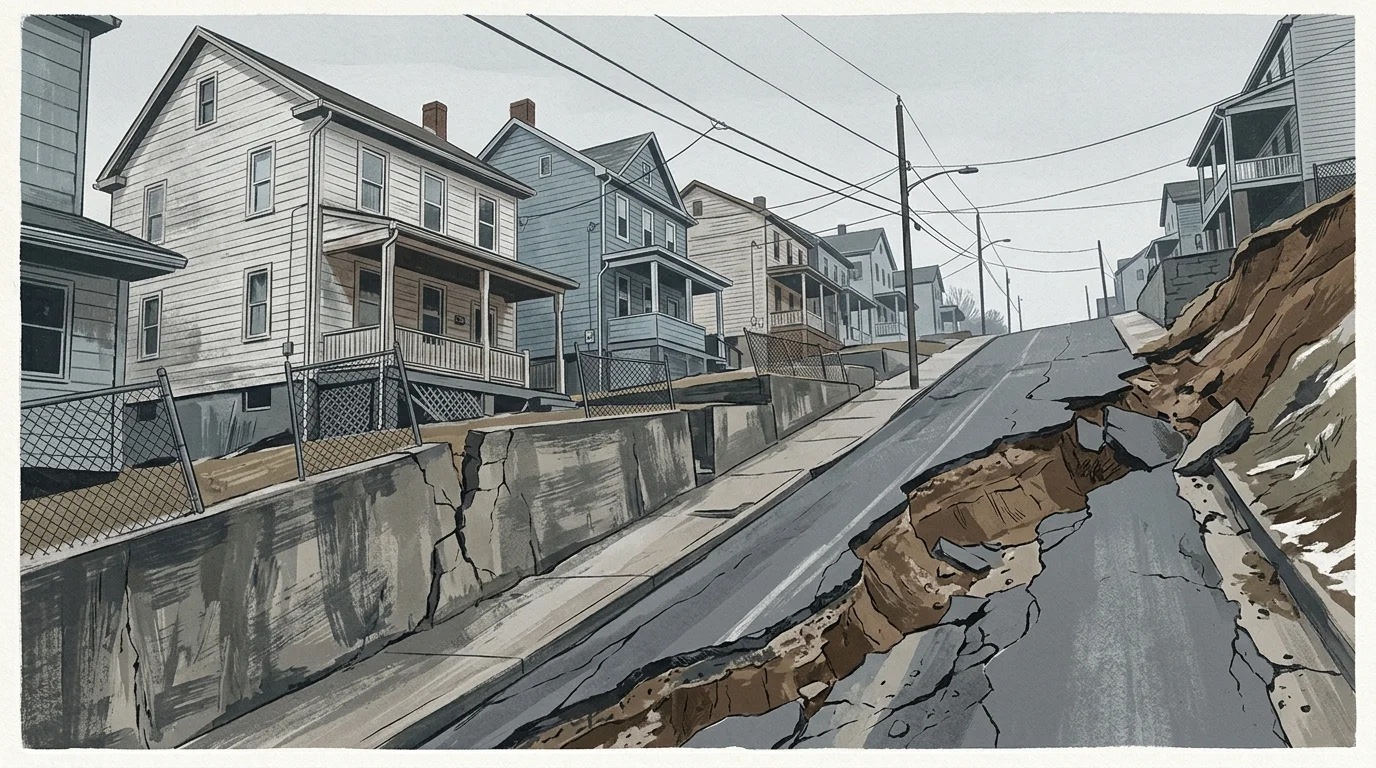
A hillside along Creek Street in Munhall, Pa., is moving, and the small Allegheny County borough is scrambling to stop it before it takes homes and infrastructure down with it. The stabilization project is expected to cost more than $2 million, a staggering sum for a town of roughly 11,000 people that has been shrinking for decades.
Munhall sits on the steep slopes above the Monongahela River, in territory that geologists consider among the most landslide-prone urban land in the United States. The region's clay-rich soils, punishing freeze-thaw cycles, and more than a century of coal mining beneath the hills create conditions that practically invite slope failure. Allegheny County alone has recorded more landslide-prone terrain than almost any other urban county in the country, and Pennsylvania spends more on landslide repair than nearly any other state.
The timing is no accident. Western Pennsylvania has been battered by heavy rainfall since 2018, when Pittsburgh recorded more than 57 inches of rain in a single year, triggering hundreds of slides across the region and forcing municipalities to declare emergencies. Climate trends aren't helping: the Northeast has seen roughly a 55% increase in heavy precipitation events since mid-century, the largest jump of any U.S. region, and every major storm saturates hillsides that are already barely holding together.
Source: NationGraph.
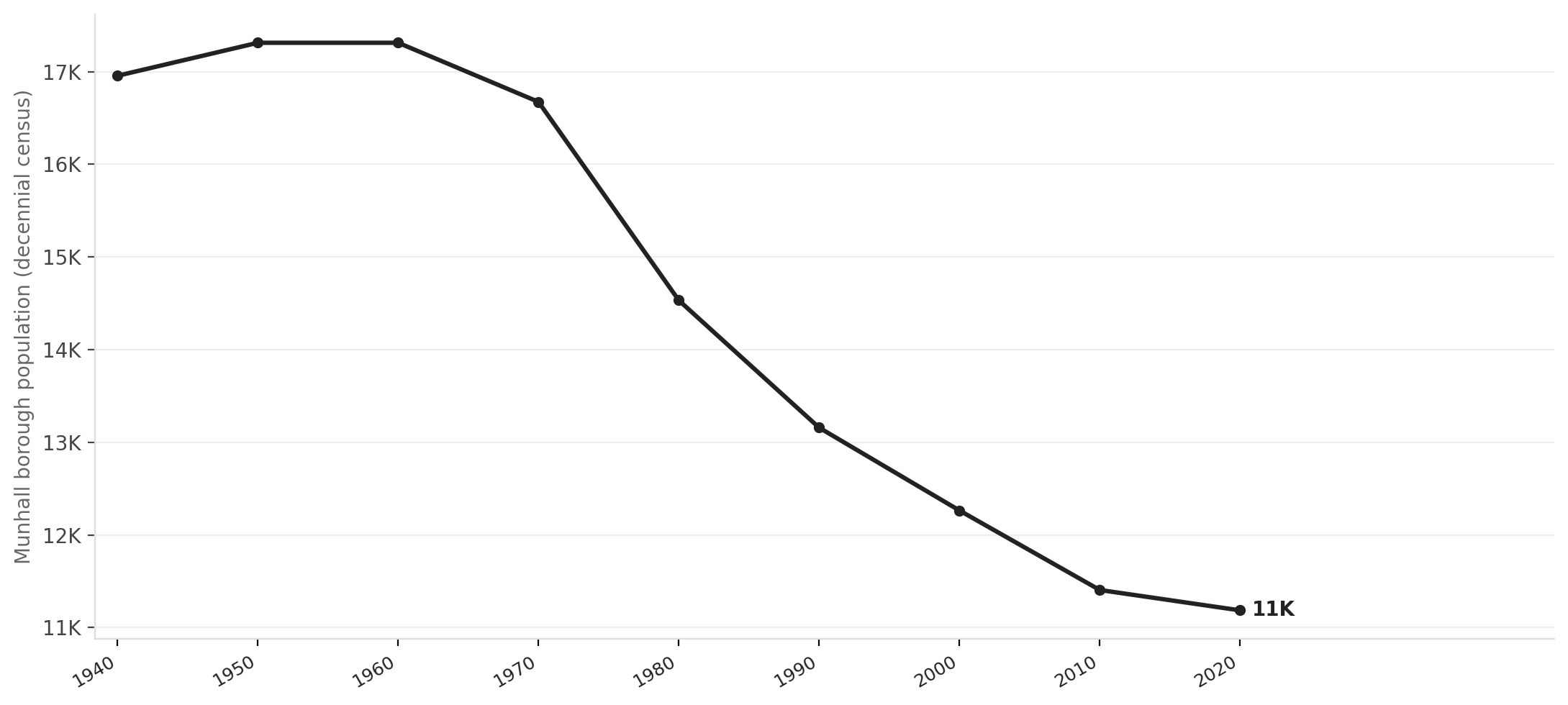
For Munhall, the cost lands especially hard. The borough was once home to the Homestead Steel Works and nearly 17,000 residents at its mid-century peak. Today the population is around 11,000 and the industrial tax base that once funded public works has long since eroded. A $2 million geotechnical project represents a significant share of what a borough this size can raise in a year, which is why outside state or federal funding is almost certainly part of the financing picture, though the specific source has not been publicly confirmed.
The borough is working with KLH Engineers, a Pittsburgh-area civil engineering firm with experience in municipal stabilization work across the Mon Valley. The project bid is listed on KLH's website, where contractors can access the full specifications.
Munhall is not alone in this bind. Small boroughs across western Pennsylvania are quietly absorbing multi-million-dollar geotechnical bills to protect streets and homes built generations ago on ground that is slowly giving way. The question facing many of them is how long they can keep doing it.