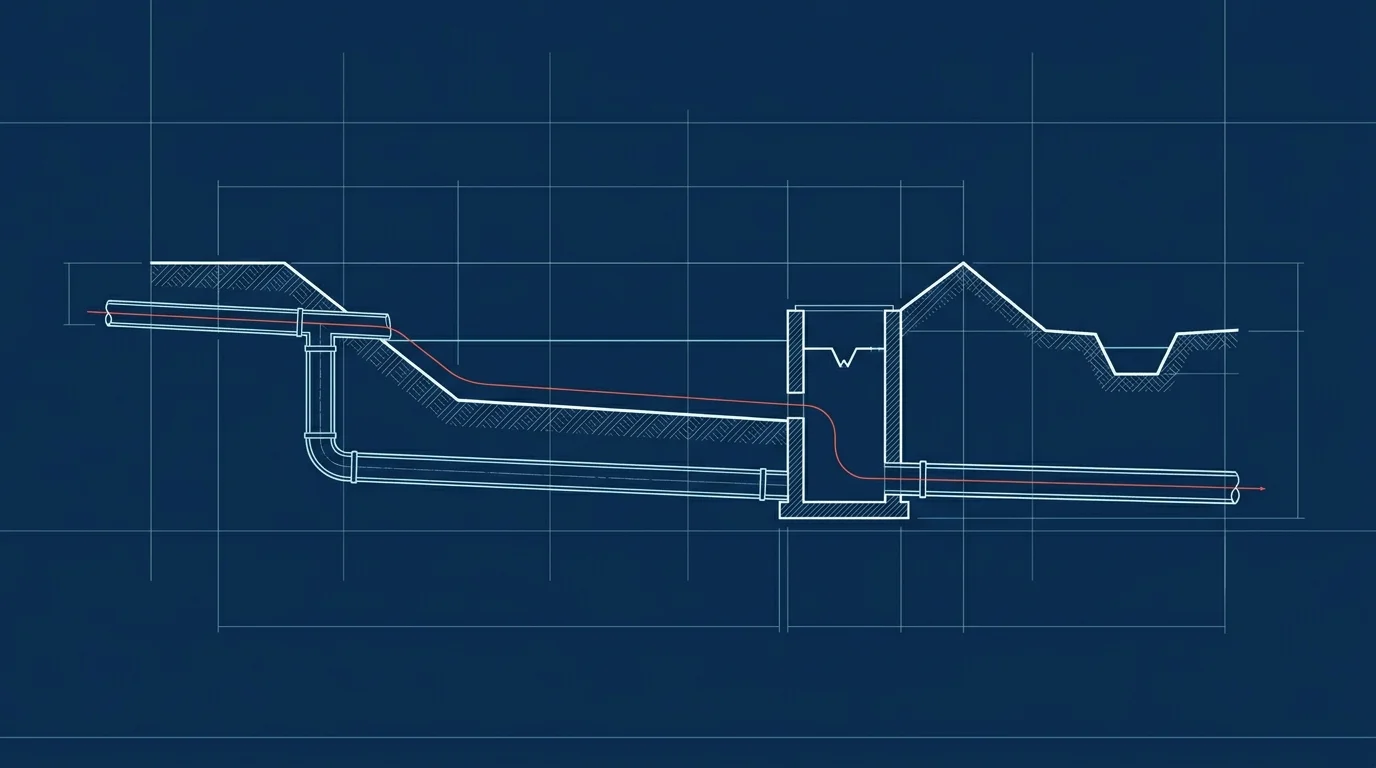
New York has issued 24 flood-related procurement solicitations in the past 30 days, against a trailing monthly average of roughly 9.2, a 2.6-times surge that represents the sharpest single-month spike in the state's recent contracting record. The buyers driving the number are not emergency managers reacting to a fresh disaster. They are universities, a transit authority, and an airport operator moving on capital plans they have been accumulating for years.
The three largest issuers tell the story precisely. CUNY accounts for eight of the 24 RFPs, all for campus-level flood hardening at Brooklyn College, Medgar Evers College, and the College of Staten Island, drawing on a capital budget that holds more than $650 million for infrastructure. The MTA and NYC Transit have issued three solicitations, including an emergency deployment of flood mitigation assets posted in late May. The Port Authority of New York and New Jersey has posted three more, anchored by LaGuardia Airport flood response work. These are institutions with long planning cycles. When all three move in the same 30-day window, something external has shifted their calendars.
Three things shifted at once. On April 22, 2026, FEMA announced more than $250 million in Flood Mitigation Assistance awards across 20 states, with approximately $2 million going directly to New York through the state Division of Homeland Security and Emergency Services. That announcement reset a federal grant pipeline that had been largely dormant since late 2024. Eight days later, FEMA republished its FY2024 Swift Current notice of funding opportunity with an August 6, 2026 application deadline, giving every public agency in the state a hard date to work backward from. Then New York's $269 billion state budget, 57 days overdue before it was finalized in late May, locked in $525 million for clean water infrastructure and preserved the $450 million Environmental Protection Fund. Capital offices that had been waiting on Albany's spending authority got it in the same week FEMA's clock started running.
Source: NationGraph.
The MTA's piece of this is the largest in dollar terms. Its October 2025 Climate Resilience Roadmap Update confirmed more than $1.5 billion secured in the 2025-2029 Capital Plan: $700 million for subway stormwater mitigation and $800 million for Metro-North Hudson Line resilience. MTA Chair Janno Lieber called publicly for urgency in executing the plan. The emergency flood-asset solicitation posted in May is the first visible sign that the plan has moved from document to active contracting. Behind it sits $503 million in DOT Emergency Relief funds flowing to the MTA through June 2027, and $33.3 million in new FTA Formula Grants that began in September 2025. The MTA's procurement calendar is not speculation; the money is already obligated.
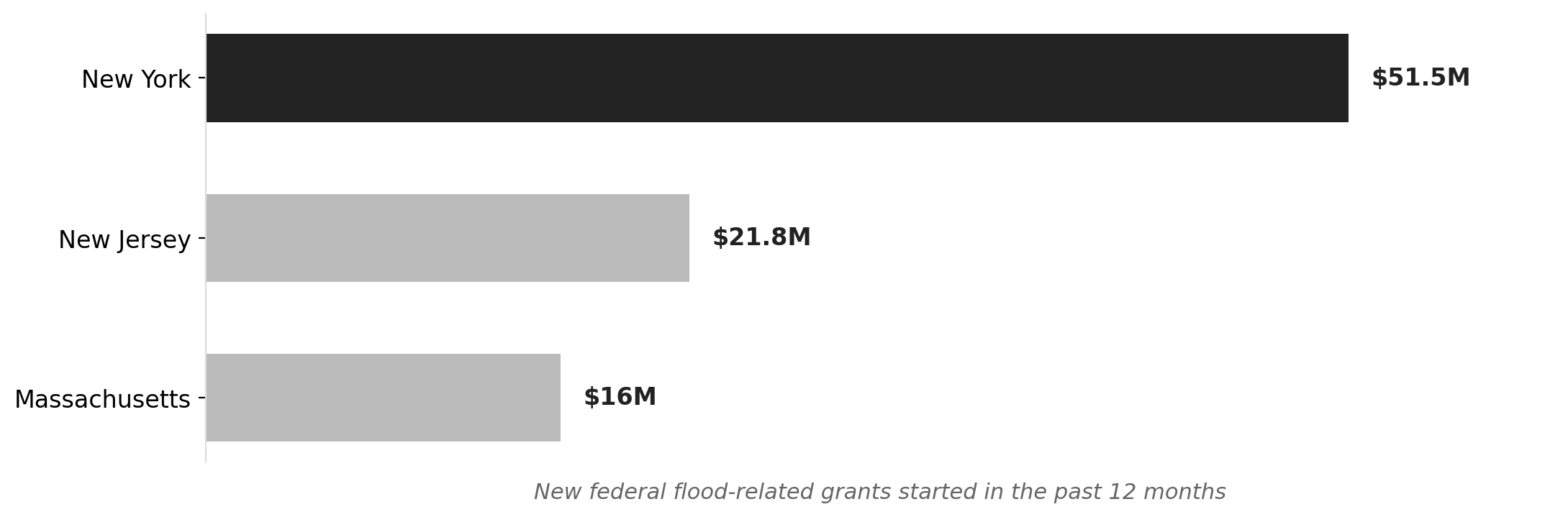
The context that sharpens the urgency is what is absent from the federal ledger. The Trump administration's suspension of FEMA's Building Resilient Infrastructure and Communities program eliminated roughly $42 million earmarked for the Seaport Coastal Resilience project and between $46 million and $50 million each for four New York City cloudburst management hubs. That is roughly $200 million in deferred work that no federal program is currently replacing. State and institutional budgets are now absorbing it. New York already leads the Northeast in new federal flood grants over the past 12 months, at $51.5 million, more than double New Jersey's $21.8 million and more than triple Massachusetts's $16 million. Even so, the BRIC gap is real, and the current RFP surge reflects, in part, public agencies deciding not to wait for a program that may not return.
For New Yorkers, the immediate practical consequence is that flood hardening is moving from proposal to construction at a pace the state has not seen in this form before. Prior procurement spikes in New York followed named storms, Sandy in 2012, Ida in 2021, and were dominated by repair contracts. This cycle is dominated by hardening contracts issued before any storm, by institutions that manage the infrastructure millions of people use daily.
The next signal to watch is the August 6 FEMA Swift Current deadline. Applications filed by New York public agencies in that round will indicate how much of the current procurement activity is being matched with federal dollars and how much is being carried entirely by state and institutional budgets. If the match rate is low, the surge will likely slow when CUNY and the MTA exhaust their current capital allocations. If federal awards follow quickly, another procurement wave could begin before the end of 2026.