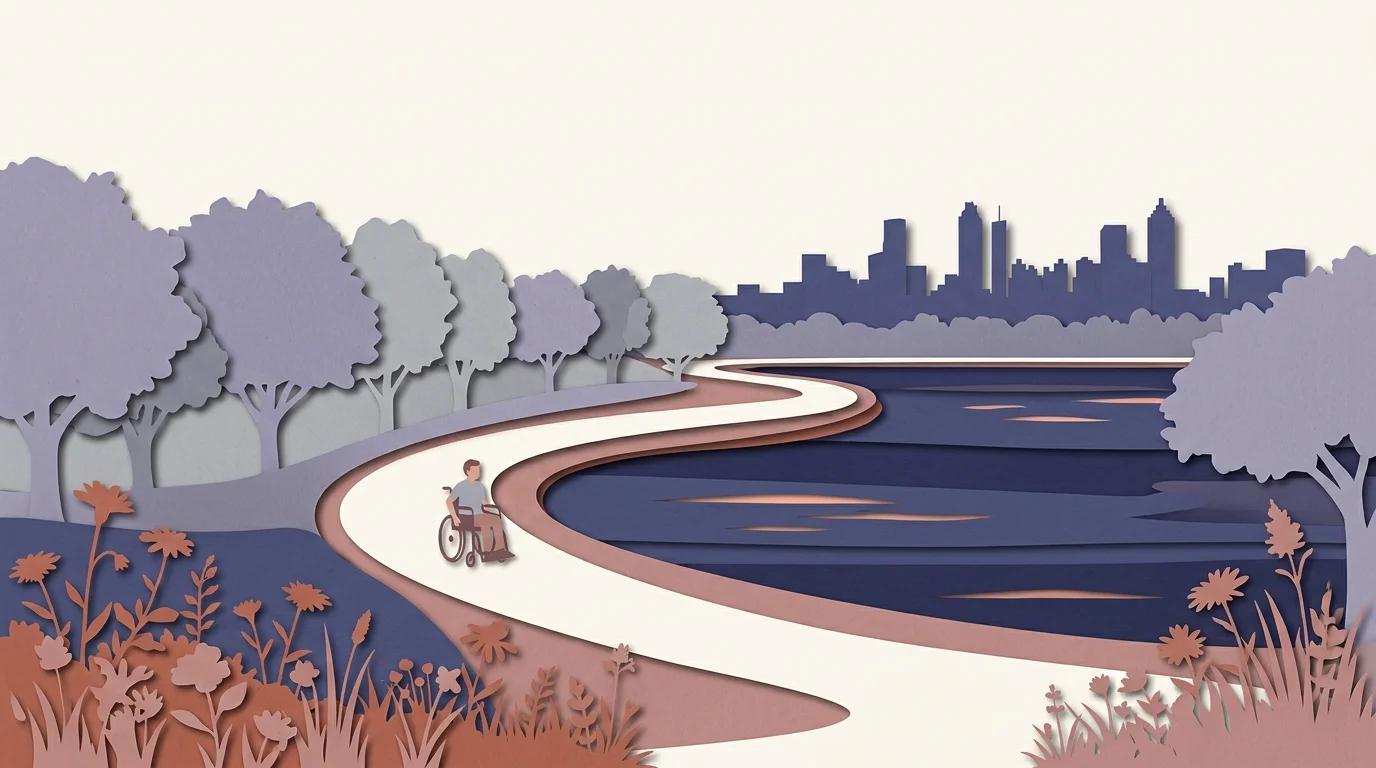
Atlanta's ambitious effort to turn the Chattahoochee River corridor into more than 100 miles of connected parks and trails is taking a concrete step forward, with construction now being sought for a wheelchair-accessible trail called "Wheel Beautiful" in the RiverLands greenway. The agency overseeing the project is an unexpected one: Georgia's Department of Corrections.
The RiverLands initiative, championed by the Trust for Public Land and Atlanta-area officials since its conceptual unveiling in 2020, aims to transform long-neglected stretches of Chattahoochee riverfront into accessible public greenspace. The Universal Access Trail component is designed from the outset to go beyond minimum ADA requirements, prioritizing genuinely usable paths for wheelchair users, people with mobility impairments, and families with strollers, a priority Atlanta's disability community has pushed for as the city's outdoor recreation options have lagged.
The project has moved past planning and design, and the state is now seeking a construction contractor through the Georgia Procurement Registry. What the RFP doesn't spell out is precisely why the Department of Corrections (GDC) is running the procurement. Georgia has a long-established practice of deploying incarcerated and supervised individuals on public works projects, from road cleanup to park maintenance, as part of structured rehabilitation and work programs. It's possible the trail will be built in whole or in part using correctional labor, or GDC may simply be managing the contract on behalf of another agency, or administering property it holds within the corridor. The listing's "non-state" designation suggests outside funding or a partnership arrangement may be involved, but the specifics aren't public.
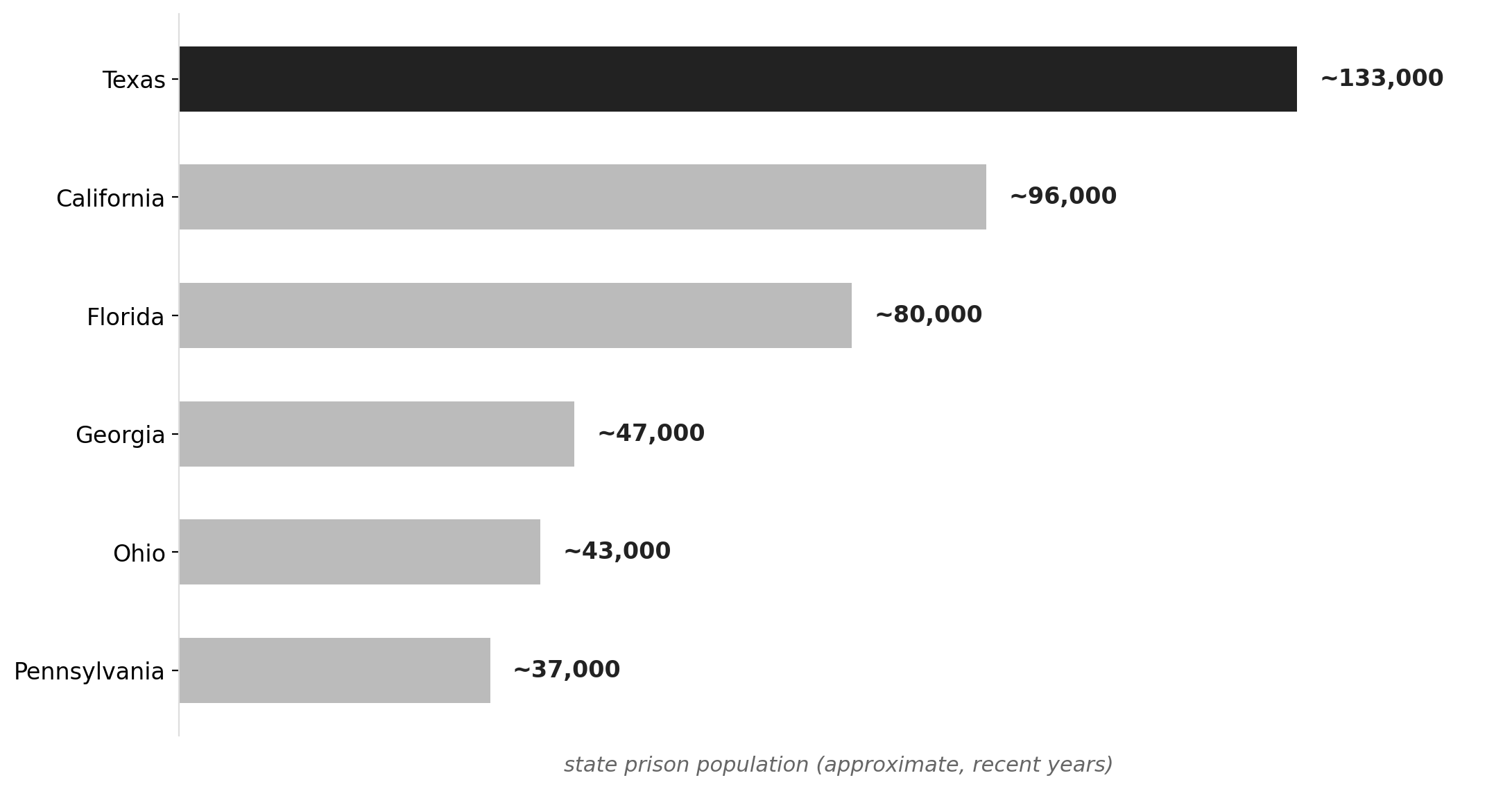
Source: NationGraph.
The GDC's role in building public amenities is not new. The agency has previously moved to restore a degraded stream on state land and has been connected to other infrastructure work at corrections sites, reflecting a broader pattern of the department operating well beyond the walls of its prisons.
For Atlantans who've waited years for accessible riverfront recreation, the trail's completion matters more than the contracting arrangement. But the question of who builds it, and under what conditions, is one residents and advocates are likely to keep asking as the project moves forward.