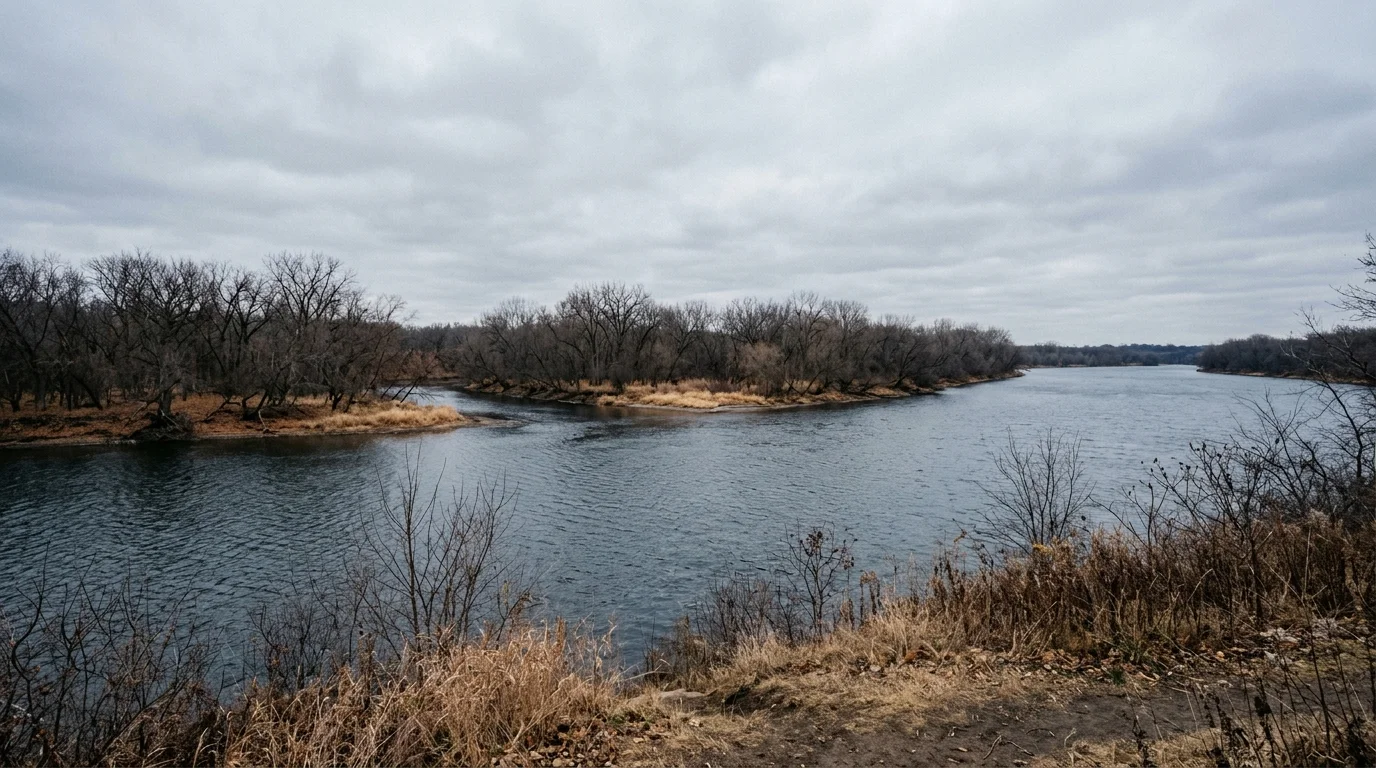
Minnesota's Office of Justice Programs is sending staff to stand at the confluence of the Mississippi and Minnesota Rivers, on ground where the U.S. Army imprisoned roughly 1,600 Dakota people during the winter of 1862-63, as part of a full-day immersive training in Dakota history and contemporary Indigenous perspectives.
The agency, a division of the Department of Public Safety, is purchasing two private sessions of "Learning from Place: Bdote" through the Minnesota Humanities Center. The program is led by Dakota community educators at sites along the Bdote, the Dakota word for where two waters meet, a place Dakota people consider a site of creation. It is also the site of Fort Snelling, where hundreds of Dakota women, children, and elders died during that winter internment following the U.S.-Dakota War. In December 1862, 38 Dakota men were hanged in Mankato in what remains the largest mass execution in U.S. history.
The training is designed to surface what the Humanities Center calls "absent narratives": the historical events and living Dakota perspectives largely absent from standard accounts of Minnesota's past. Staff spend the day moving through the landscape and engaging with both that history and its present-day consequences.
Source: NationGraph.
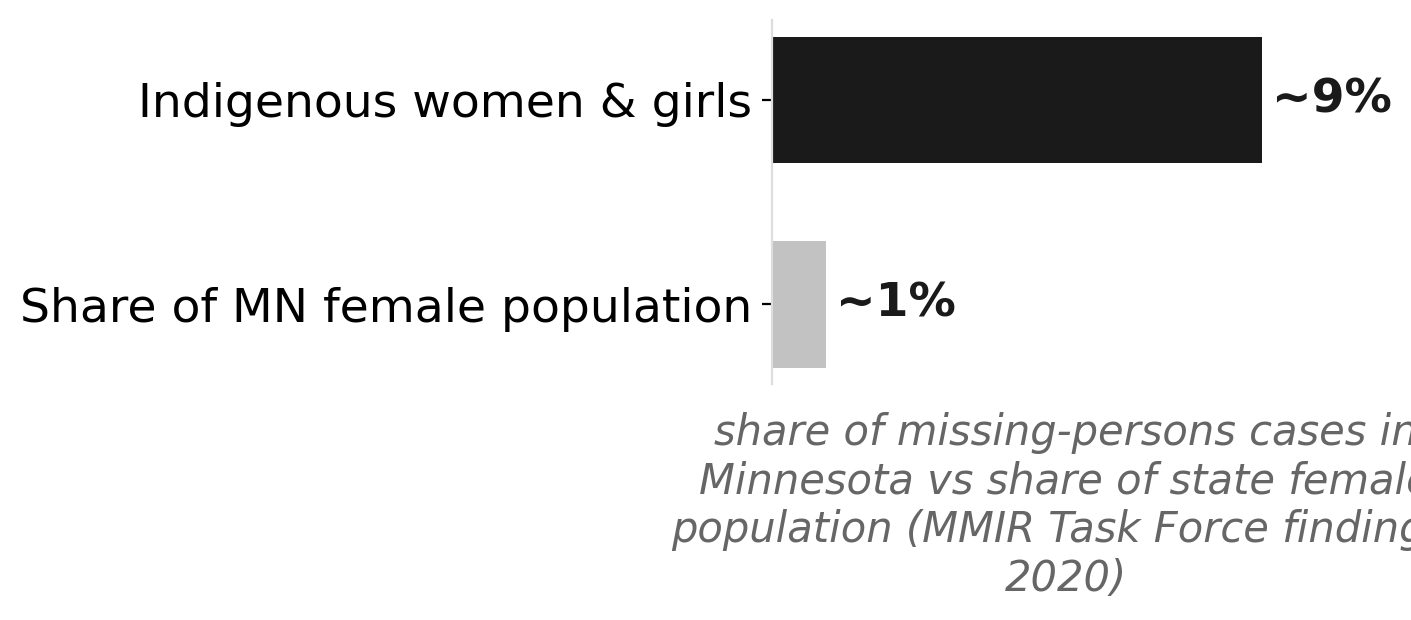
For OJP, the stakes are concrete. The office administers Minnesota's Missing and Murdered Indigenous Relatives Office, which the state established in 2021 as the first of its kind in the nation. Indigenous women in Minnesota go missing at rates far above the state average, and Native people are dramatically overrepresented in the criminal justice system relative to their roughly 1% share of the state's population. Training criminal justice and victim services staff on historical trauma and Dakota and Ojibwe community relations has become a stated priority inside the department, an effort that accelerated amid the murder of George Floyd in Minneapolis in 2020.
The Minnesota Humanities Center developed the Bdote curriculum in the mid-2000s, and it expanded significantly around the 2012 sesquicentennial of the war. State agencies, school districts, and nonprofits have increasingly used it since. The program gained wider public attention in 2019, when the Minnesota Historical Society rebranded Fort Snelling as "Historic Fort Snelling at Bdote," a change that drew political backlash from Republican legislators who briefly cut the society's funding over the name. Governor Tim Walz issued a formal apology to the Dakota people in 2023.
OJP did not disclose the cost of the two sessions. The agency justified buying directly from the Humanities Center by noting the training is available nowhere else in the state, an assessment that reflects both the program's specialized curriculum and its dependence on Dakota community educators who are not interchangeable with outside vendors.