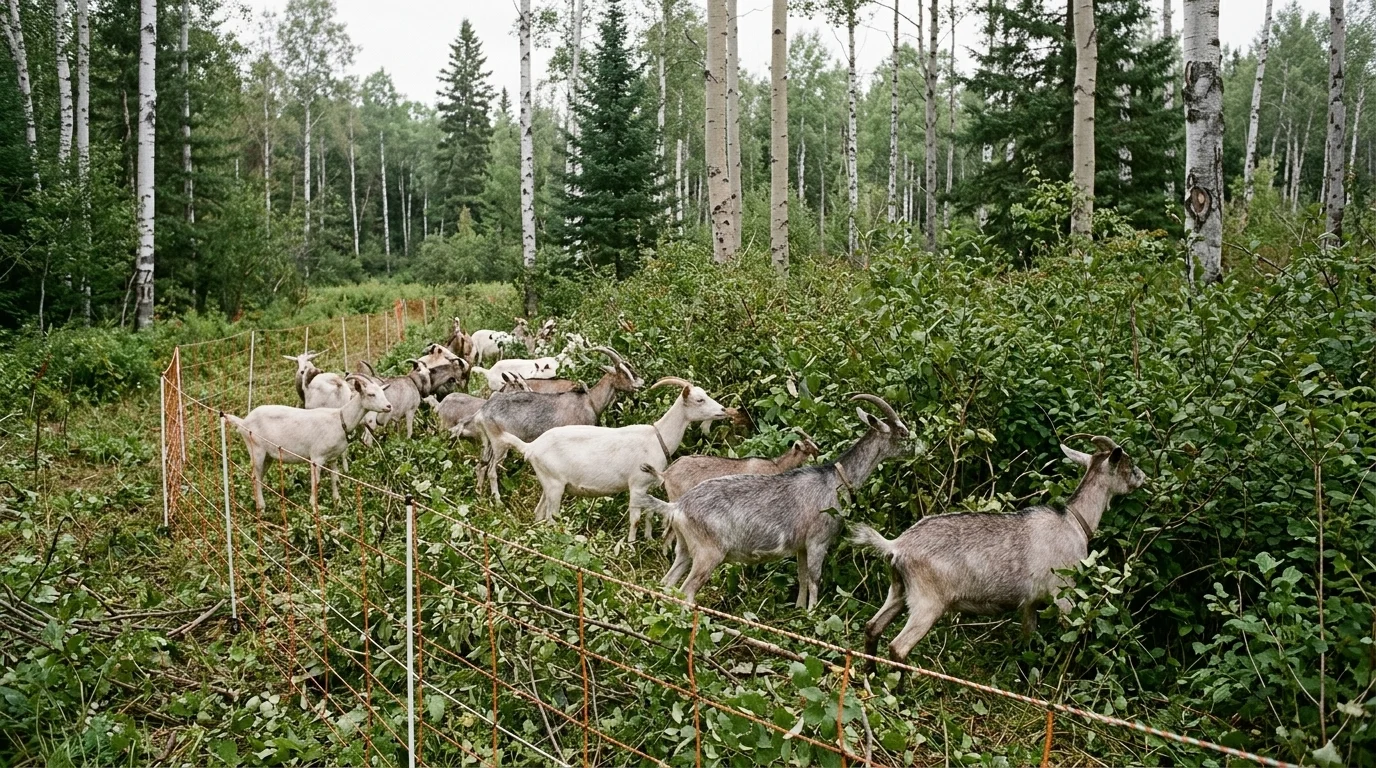
State-managed land near Walker, Minnesota, is getting an unusual maintenance crew: a herd of goats hired to eat through invasive brush and reduce the risk of wildfire on grounds that have sat largely unmanaged for nearly two decades.
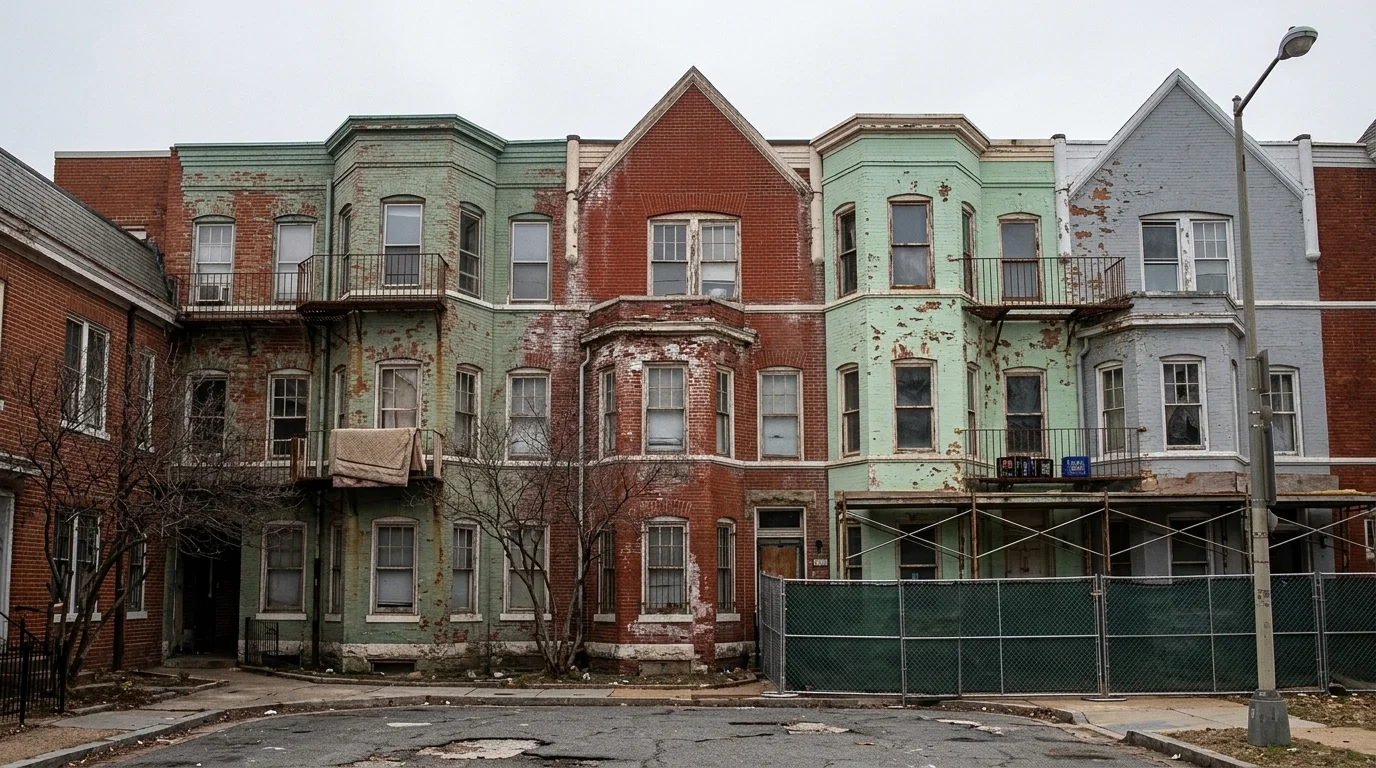
The site is Ah Gwah Ching, a property in Cass County with a long history. It operated as a state tuberculosis sanatorium starting in 1907, later became a nursing home, and closed in 2008, leaving the state to manage its overgrown acreage ever since. Now that acreage, situated in the forested transition zone between hardwood and northern pine near Leech Lake, is being targeted with prescribed goat grazing services as a tool for both invasive species control and fuel-load reduction.
Goats are well-suited to the job in ways cattle and sheep aren't. They'll eat woody browse like buckthorn and other shrubby invasives that have taken hold across Minnesota's woodlands since the 1990s, and they can navigate steep or rocky ground that machinery can't easily reach. Contractors typically deploy them within portable electric fencing, moving the herd across a site systematically.
Source: NationGraph.
The approach has grown from a niche experiment into routine practice for public land managers. Minnesota's DNR and the Three Rivers Park District have used contract grazing since at least 2016, and as NationGraph has reported, the DNR has deployed goats at Glacial Lakes State Park for similar invasive brush control. Nationally, the method drew wide attention after California used goat herds to create wildfire fuel breaks near the Reagan Library.
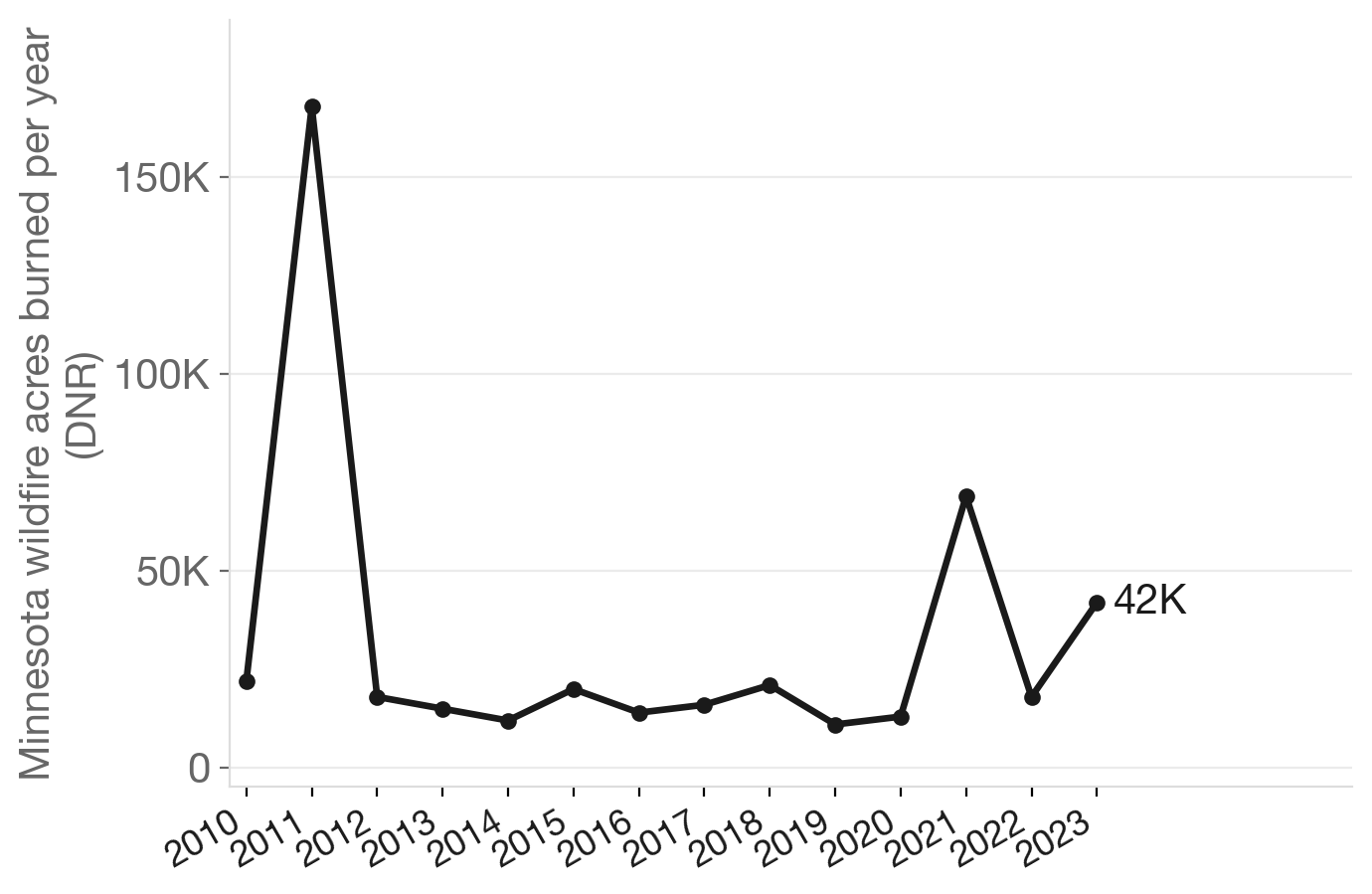
The urgency behind these efforts has grown in northern Minnesota. The 2021 drought year stretched fire seasons well beyond historical norms, and the 2023 Greenwood Fire burned roughly 26,000 acres in the region, making clear that fuel accumulation is a year-round concern even in historically wet forested areas. The Leech Lake region, surrounded by Chippewa National Forest and reservation lands, sits squarely in that fire-prone ecotone.
The specific management area referenced in the solicitation is identified by an acronym that wasn't defined in the posted record, leaving some ambiguity about the exact parcel involved. What's clear is that Minnesota is looking for a contractor to bring animals in, and the window for this grazing season won't stay open long.