A public parks agency is looking to put livestock to work managing vegetation across multiple park locations, joining a growing number of municipalities that have swapped herbicides and mowers for hooves.
The agency posted a solicitation for livestock grazing services on Aug. 3, 2026, covering an unspecified number of park sites. The issuing agency's name and location were not included in the public record, but the procurement platform used points to a mid-to-large public agency.
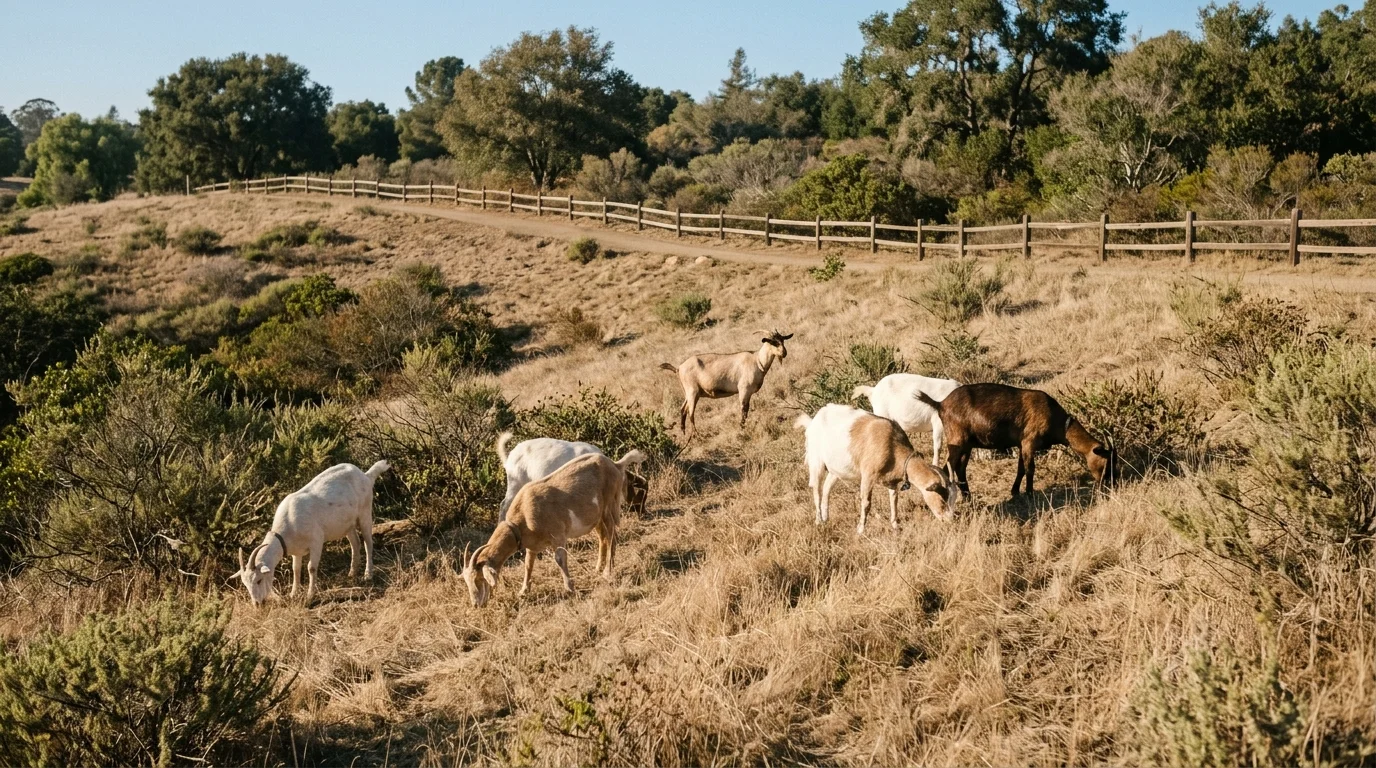
The approach, sometimes called prescribed or targeted grazing, typically uses goats, sheep, or cattle to clear brush, invasive plants, and dry grasses that would otherwise require machinery, chemical sprays, or manual labor. Parks agencies across the West have increasingly turned to it for several converging reasons.
Source: NationGraph.
Wildfire risk is a major driver in fire-prone states. Dry vegetation in parkland can act as fuel, and grazing animals can reduce that risk efficiently, especially on steep or brushy terrain where mowers can't easily reach. The USDA and Cal Fire have both promoted prescribed grazing as a fire-mitigation strategy in recent years.
At the same time, political and legal pressure around herbicides has grown. Following a 2015 World Health Organization finding that glyphosate, the active ingredient in Roundup, is a probable carcinogen, and a subsequent Bayer settlement exceeding $10 billion, many parks departments have become reluctant to spray chemicals on land where children play.
Invasive species are another pressure point. Plants like yellow star-thistle, Himalayan blackberry and poison hemlock spread faster than parks crews can remove them by hand. Livestock, particularly goats, will eat species that machinery can't efficiently clear.
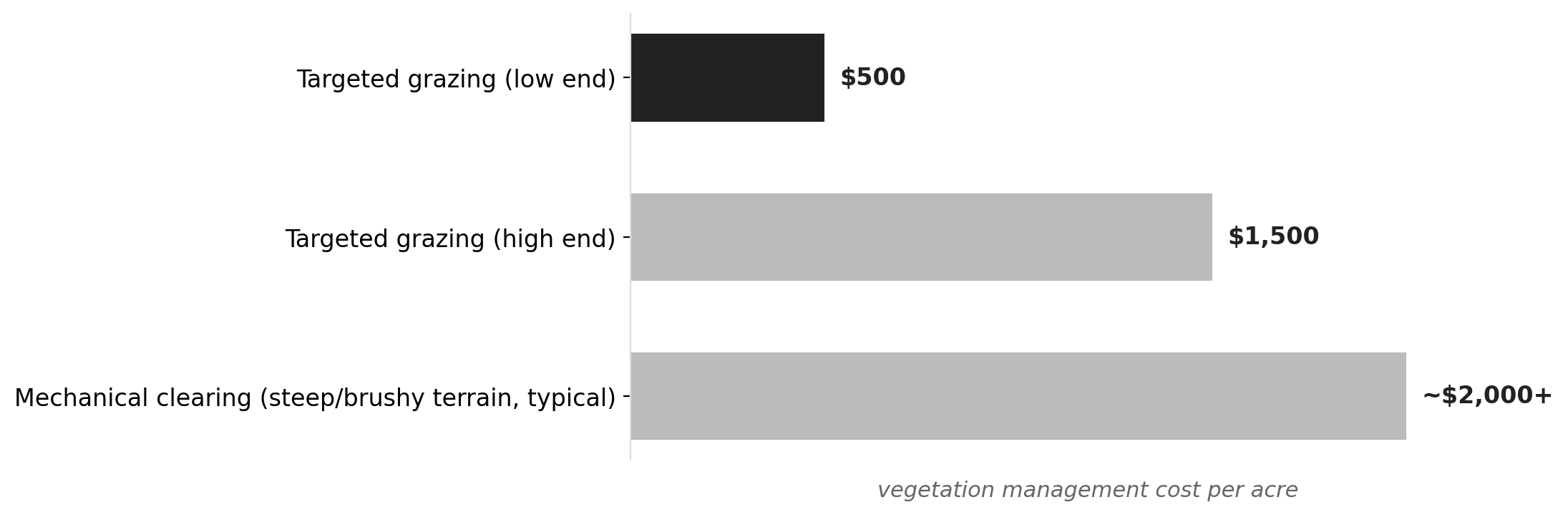
Cost is also part of the calculation. Grazing contracts typically run between $500 and $1,500 per acre, which can be competitive with or cheaper than mechanical clearing, particularly on difficult terrain. Municipal parks budgets have remained tight amid the fiscal strain of the COVID era.
The Presidio Trust, East Bay Regional Park District, and cities including Reno, Boise, Anaheim and Salem have all used grazing contracts in recent years. What began as a niche practice in the Bay Area is now a standard line item in parks procurement across the country.
The specific parks involved, contract value, and timeline for this solicitation remain unclear from the public record. NationGraph News is working to identify the issuing agency.