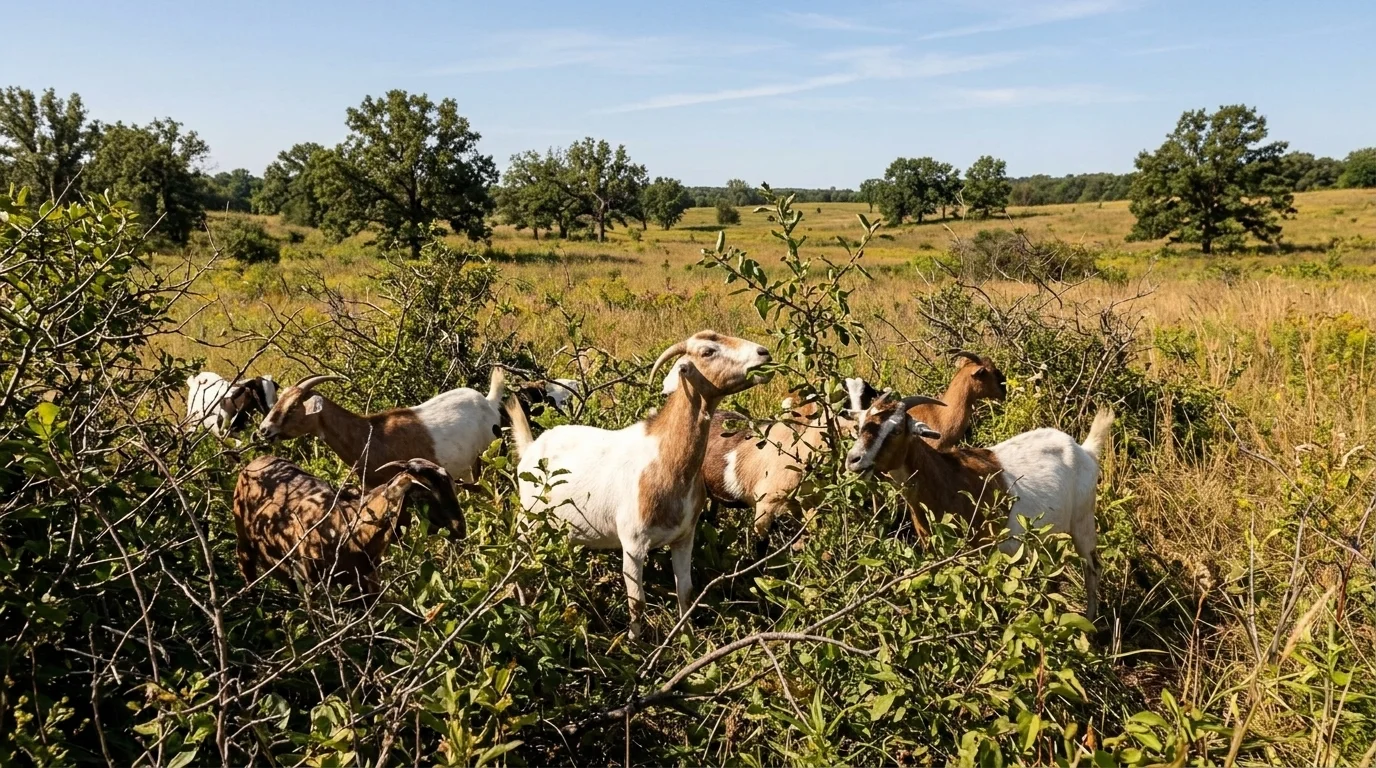
A herd of goats is heading to one of west-central Minnesota's rarest prairie landscapes, where the state is counting on them to push back decades of woody encroachment threatening native ecosystems and increasing wildfire risk.
The Minnesota Department of Natural Resources is hiring a contractor to run targeted goat browsing at the Lake Minnewaska area in Pope County, most likely within Glacial Lakes State Park, under a two-year agreement. The DNR posted the solicitation on July 22, 2026, through the state's supplier portal. Specific acreage, herd size and contract value were not disclosed in the posting.
The park protects rare remnants of tallgrass prairie and oak savanna in Minnesota's prairie-to-forest transition zone. Those ecosystems evolved with fire and bison grazing, but a century without either has allowed cedar, buckthorn and other woody species to move in and crowd out native plants. Goats are well-suited to reversing that: they eat woody invasives that mowers can't reach and handle steep or rocky terrain that crews struggle to work.
Source: NationGraph.
The two-year term sets this apart from a one-off deployment. The DNR has used goats in state parks since at least the mid-2010s to combat species like buckthorn, garlic mustard and wild parsnip, but a multi-year contract suggests the agency is building goat grazing into its regular management rotation for this site.
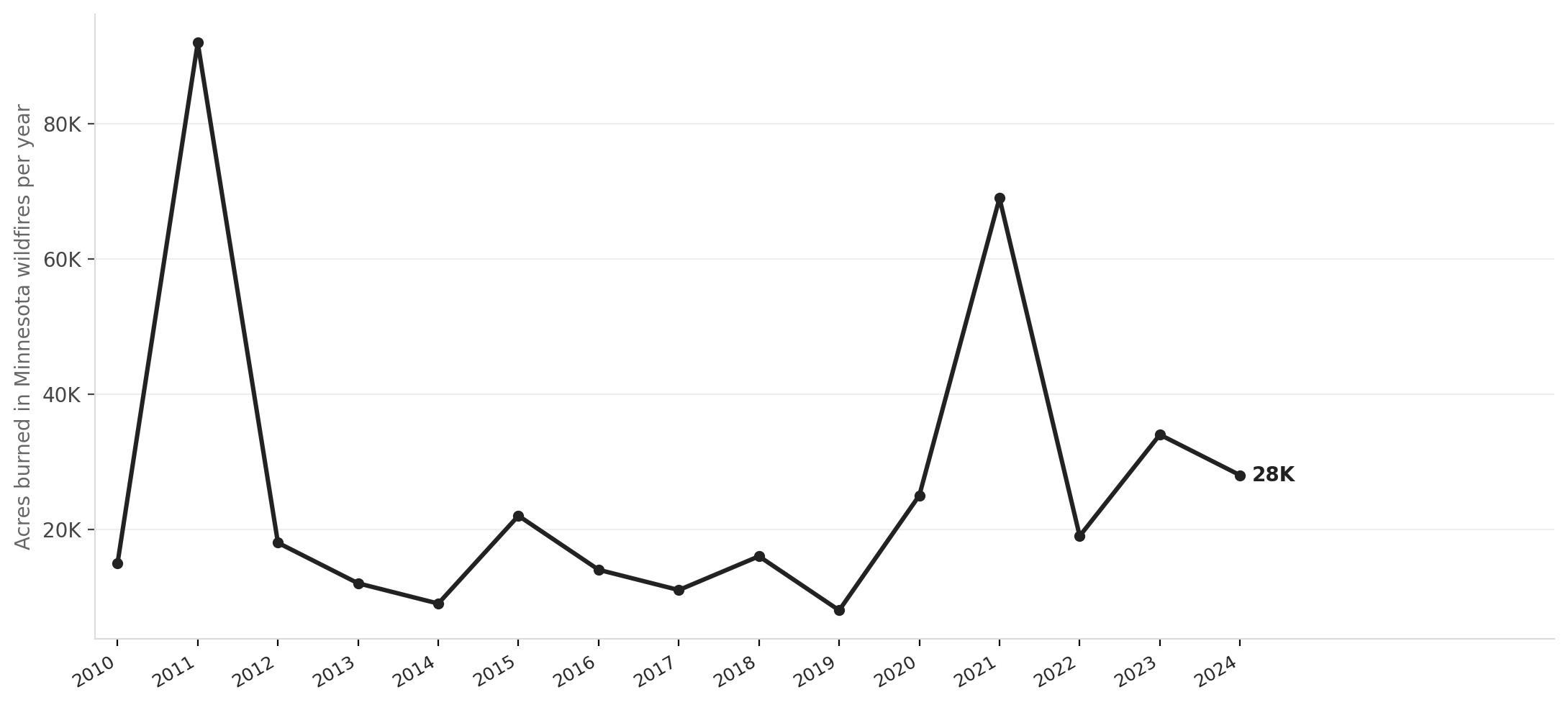
The timing reflects a broader shift in how Minnesota thinks about fire and land management. The 2021 Greenwood Fire in the Superior National Forest and increasingly dry summers have put wildfire risk on the radar in a state that historically didn't worry much about it. At the same time, public pressure and DNR policy changes have pushed away from chemical herbicides on public lands, and manual brush removal crews are expensive and hard to staff. Goats offer a cost-effective middle path.
Funding for habitat restoration projects like this is supported in part by Minnesota's Legacy Amendment, a dedicated revenue stream voters approved in 2008. Pope County, home to roughly 11,000 people, has limited local resources for large-scale land management, making the state's sustained investment in the park consequential for the region.