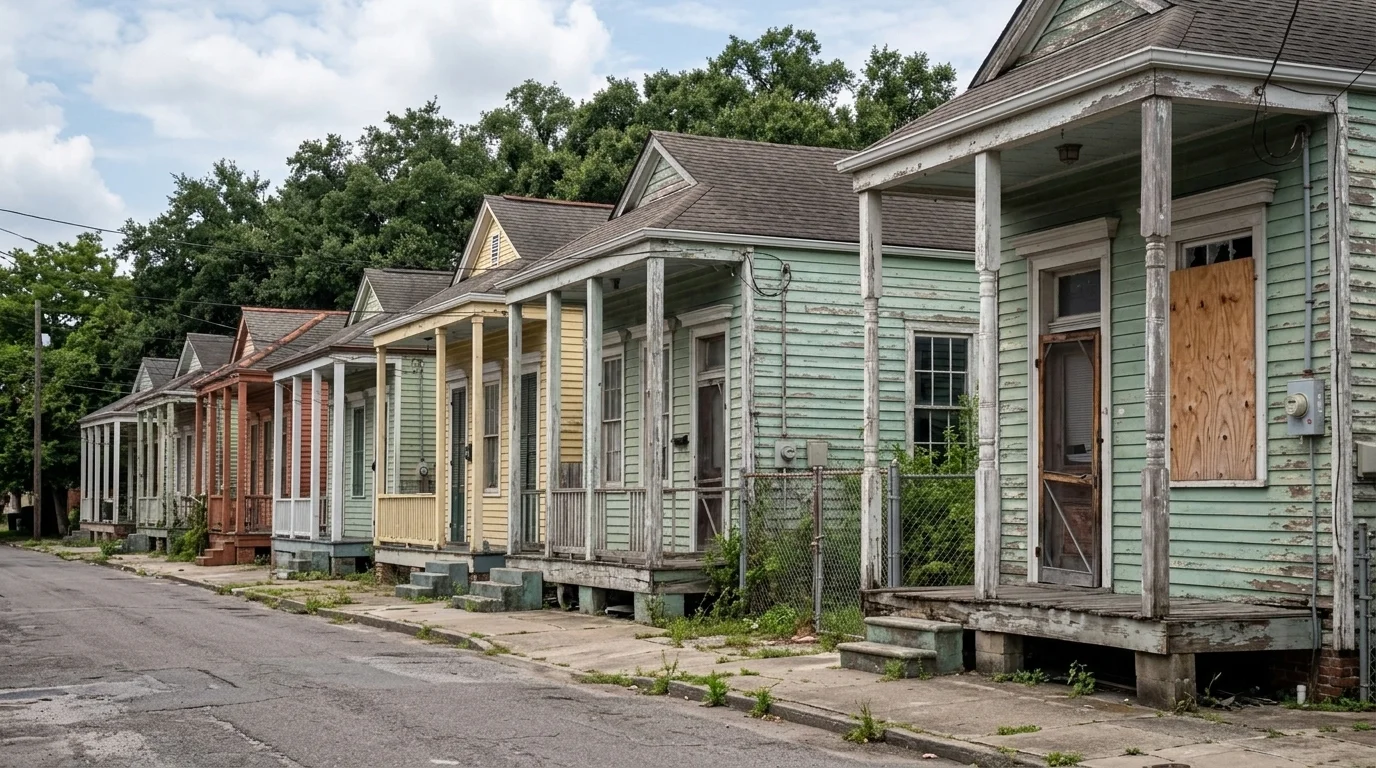
New Orleans is opening its checkbook to developers and nonprofits willing to build or preserve affordable housing in a city where more than 60% of renters are already spending more than they can afford on housing, and where a shortage of roughly 33,000 affordable units has lingered since Hurricane Katrina reshaped the city two decades ago.
The New Orleans Redevelopment Authority (NORA) has posted a competitive application for the New Orleans Housing Investment Program, known as NOHIP, which will award public gap financing to qualifying housing projects across the city. The program is open to both private developers and nonprofit organizations.
The stakes are significant. Katrina destroyed roughly 134,000 housing units in 2005, and the rebuilding that followed never fully restored the affordable stock that lower-income residents depended on. The city's four largest public housing developments were demolished and replaced with smaller mixed-income projects, netting a loss of thousands of deeply affordable units. Short-term rentals flooded neighborhoods like Treme and Bywater after 2010, squeezing supply further. Today, New Orleans ranks among the least affordable cities in the country relative to local wages, even as its population has dropped from about 485,000 before the storm to roughly 365,000 today.
What has made the problem especially stubborn in recent years is Louisiana's property insurance crisis. After Hurricanes Laura and Ida in 2020 and 2021, multiple insurers left the state, driving premiums up more than 50% in some areas. That cost surge has made the math on affordable housing development nearly impossible without public subsidies, and closing that gap is what NOHIP is designed to do. The program is expected to layer local dollars alongside federal funding streams including HOME-ARP, CDBG-DR, and Low-Income Housing Tax Credits.
NORA was created after Katrina to manage blighted and abandoned properties across the city and has gradually evolved into a financing partner for housing development. The new program reflects a broader push by the Cantrell administration and City Council to direct consolidated local dollars toward projects that private capital alone won't fund.
How much money NOHIP will distribute in its first round, and at what income levels it will target residents, was not specified in the publicly available materials. Developers and nonprofits interested in applying can find full program details through NORA's portal. The program's rollout comes as the Cantrell administration enters its final stretch before the 2026 mayoral race, adding political weight to whether the city can show measurable progress on a crisis that has earned failing grades in annual housing report cards for years.