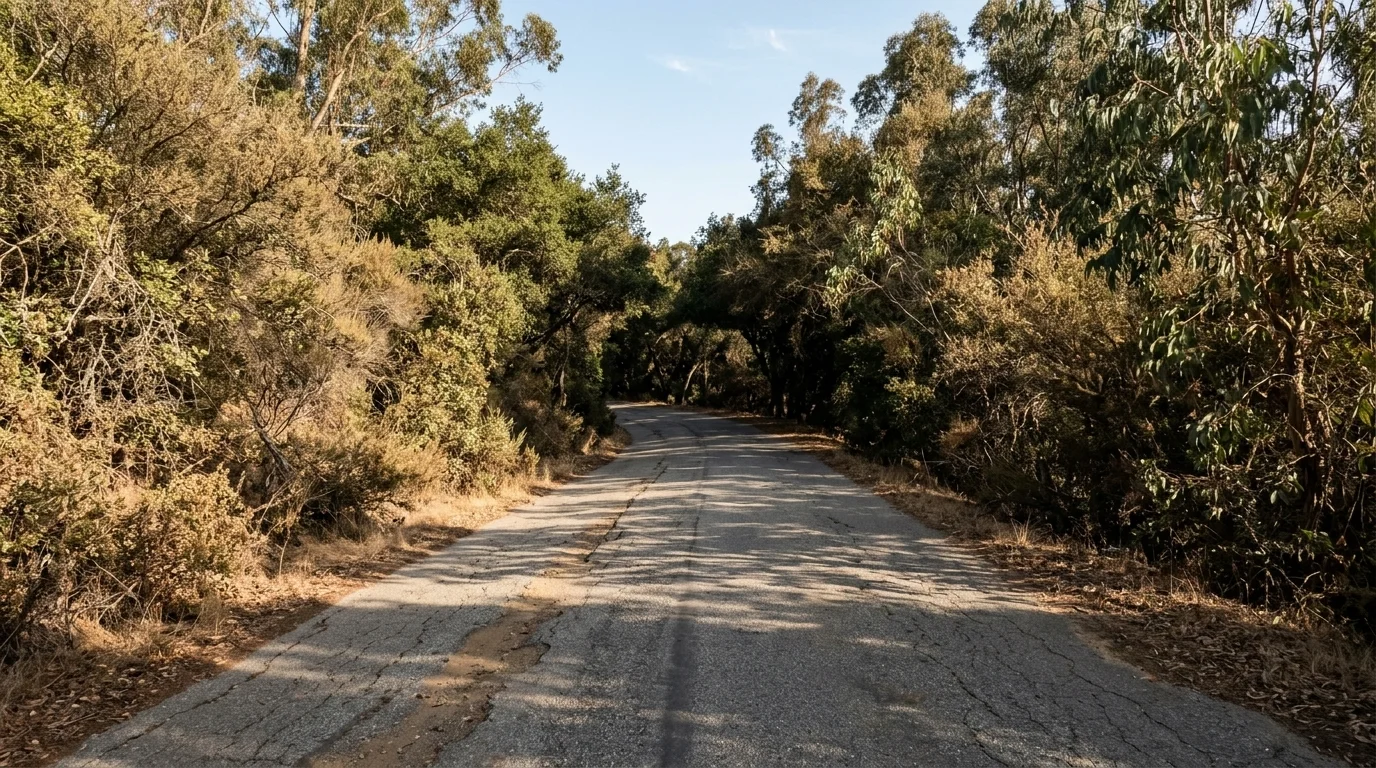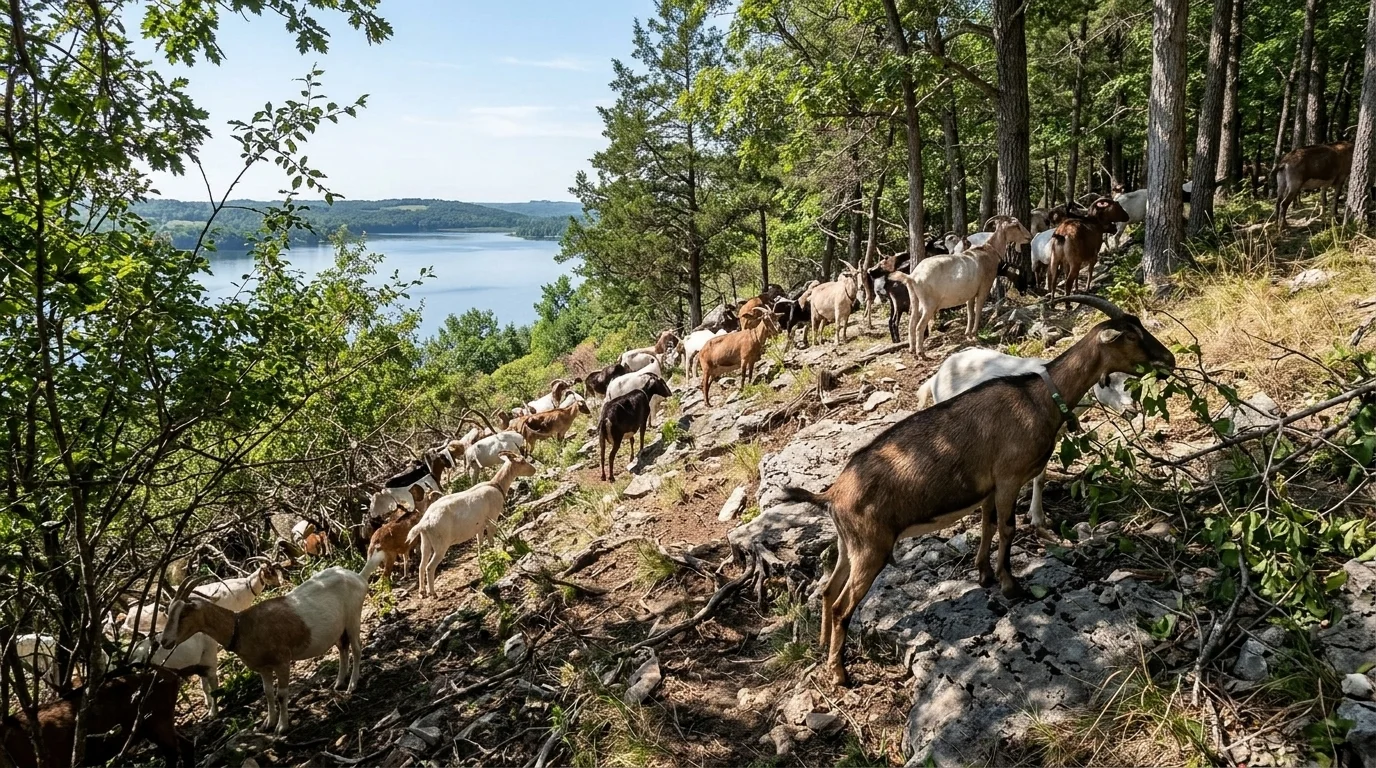
Lake Minnewaska State Park in Glenwood, Minnesota is getting an unusual new land management crew: a herd of goats tasked with chewing back invasive vegetation on the park's bluffs and woodlands over the next two years.
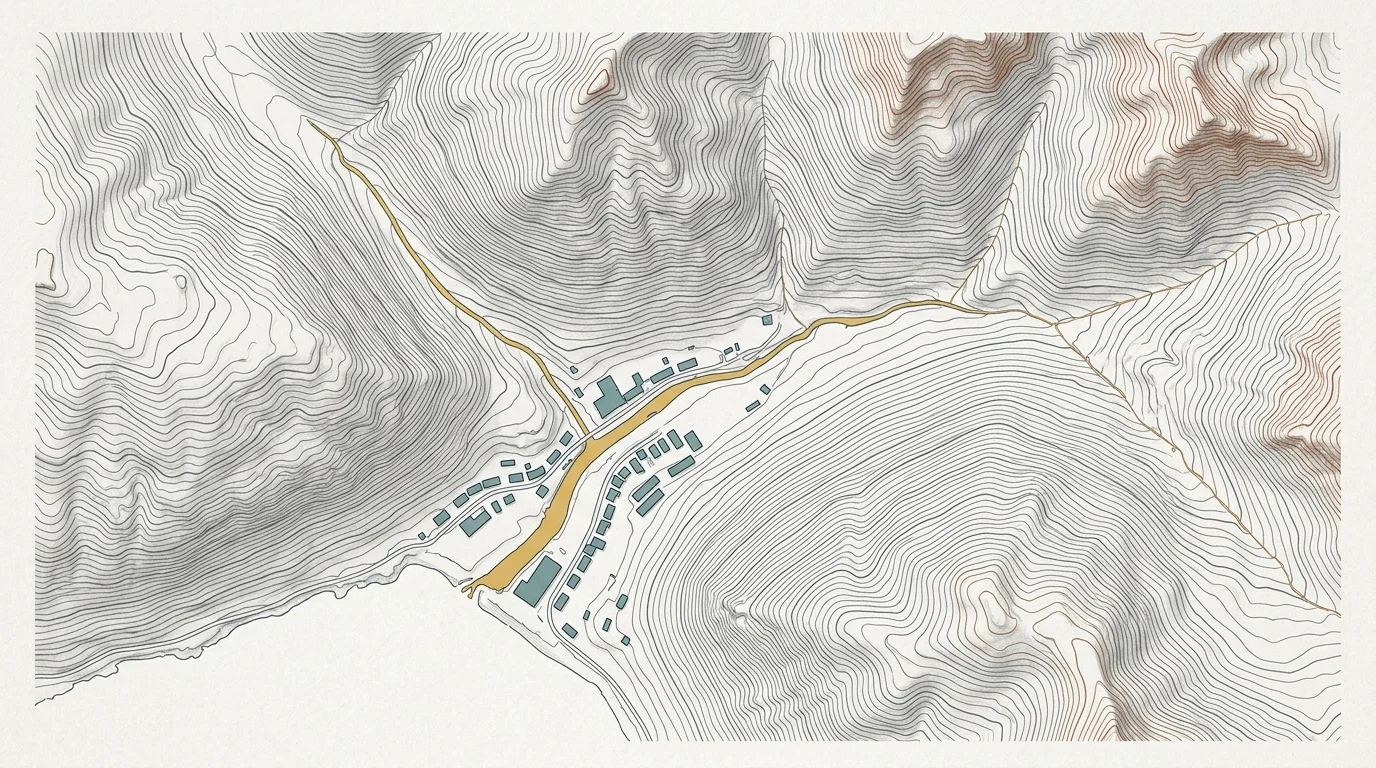
The Minnesota Department of Natural Resources is seeking a contractor to graze goats across sections of the west-central Minnesota park in a pilot designed to tackle two problems at once. European buckthorn, an invasive shrub that has overwhelmed the understory of Minnesota's oak savannas and prairie woodlands, has proven expensive and labor-intensive to remove by hand or chemical treatment. Goats eat it readily and can navigate the steep, rocky terrain along Lake Minnewaska's shoreline where mowers can't reach. At the same time, the DNR wants to reduce the dry vegetation that accumulates into wildfire fuel.
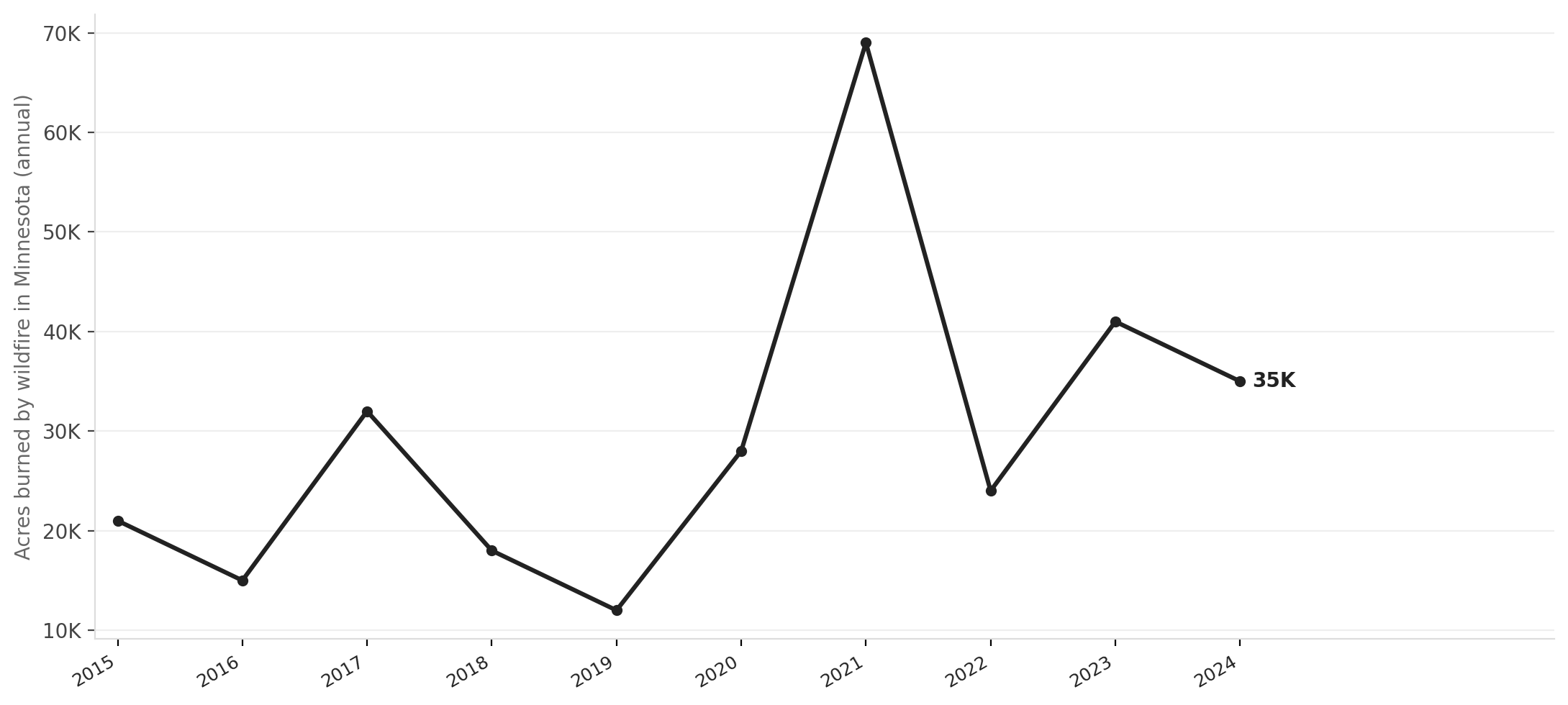
Minnesota isn't typically thought of as wildfire country, but that's changing. The 2021 Greenwood Fire was the largest in northern Minnesota in decades, drought conditions have persisted across much of the state in recent years, and climate projections show Minnesota summers trending hotter and drier. Fuel reduction has moved up the DNR's priority list.
Source: NationGraph.
Goat grazing has become a mainstream land-management tool in Minnesota over the past decade. The DNR has used herds at Frontenac and Whitewater state parks, and metro agencies including the Three Rivers Park District have run similar programs targeting buckthorn and garlic mustard. The practice appeals to agencies and the public alike as a non-chemical, low-noise alternative to herbicide-and-cut crews.
What makes the Minnewaska project stand out is its length. Most goat grazing contracts run a single season; this one spans two years, signaling that the DNR wants sustained pressure on the vegetation. Goats knock back invasives but rarely eliminate them in a single pass, and a multi-year contract allows the agency to measure whether repeated grazing produces lasting results before deciding whether to expand the approach elsewhere in the state park system.
Lake Minnewaska, the state's second-largest lake, anchors regional tourism in Pope County and sits in a transition zone between prairie and hardwood forest, exactly the kind of landscape where buckthorn thrives and where fire historically played a natural role. The bid is posted on the state's supplier portal. The DNR has not yet said how many goats would be involved or which specific areas of the park would be grazed during the pilot.