Mercer County, New Jersey is investing $500,000 in a new effort to keep Trenton's young people out of the justice system, betting that community-rooted restorative practices can break an incarceration cycle that has long hit the city's Black and Latino youth hardest.
The one-year pilot, funded through the county's Youth Justice Commission and running from July 2026 through June 2027, has a dual focus: preventing Trenton youth from ever entering the juvenile justice system and supporting those who are leaving Youth Justice Commission facilities as they transition back into their communities. Mercer County is seeking a local government agency or nonprofit to lead the work, with a stated preference for organizations based in Trenton itself.
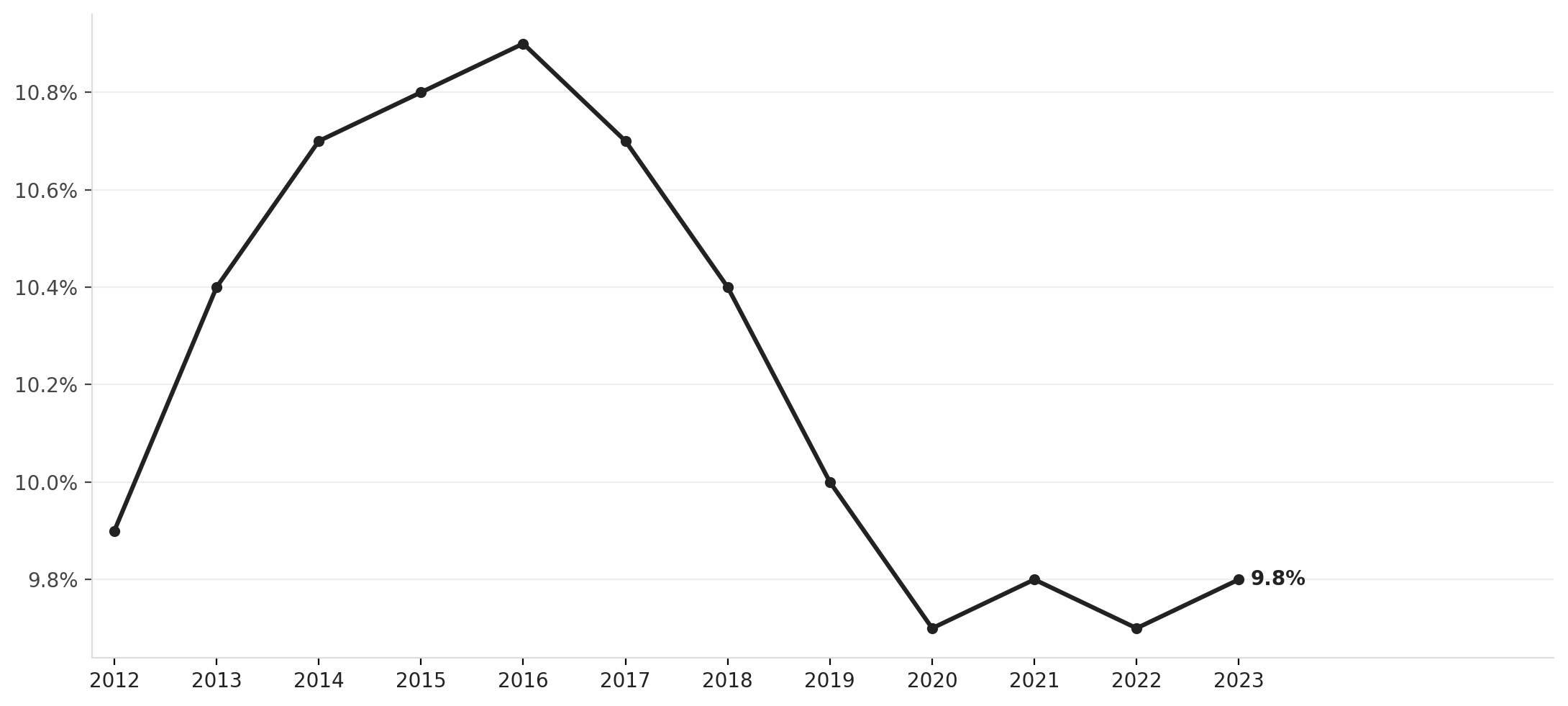
That preference reflects both practical reality and a broader philosophy. Trenton, the county seat and state capital, is home to about 83,000 residents, roughly 85% of whom are Black or Latino. The city's poverty rate runs nearly three times the state average, with a median household income around $36,000. Youth from Trenton make up a disproportionate share of Mercer County's juvenile justice caseload, and advocates have long argued that effective alternatives to incarceration have to be built by people with deep roots in the neighborhoods they serve.
Source: U.S. Census Bureau, American Community Survey.
Restorative justice, the model at the heart of this program, focuses on repairing harm through facilitated dialogue among young people, those they've affected, and the wider community, rather than punishment alone. New Jersey has been at the leading edge of this shift nationally: the state closed its last two youth prisons in 2016 and has seen its juvenile detention population fall roughly 70-80% since the early 2000s. This pilot extends that trajectory to the county level in a city where need has long outpaced resources.
The $500,000 is modest relative to the scope of Trenton's challenges, but the program includes two one-year extension options based on performance, meaning a successful pilot could grow into a roughly $1.5 million, three-year initiative. That structure signals the county is treating this as a test of a model it may eventually scale.
Organizations interested in leading the pilot are currently in the application process. The county's selection of a lead agency will determine how quickly services can be standing up for Trenton youth when the program year begins July 1.