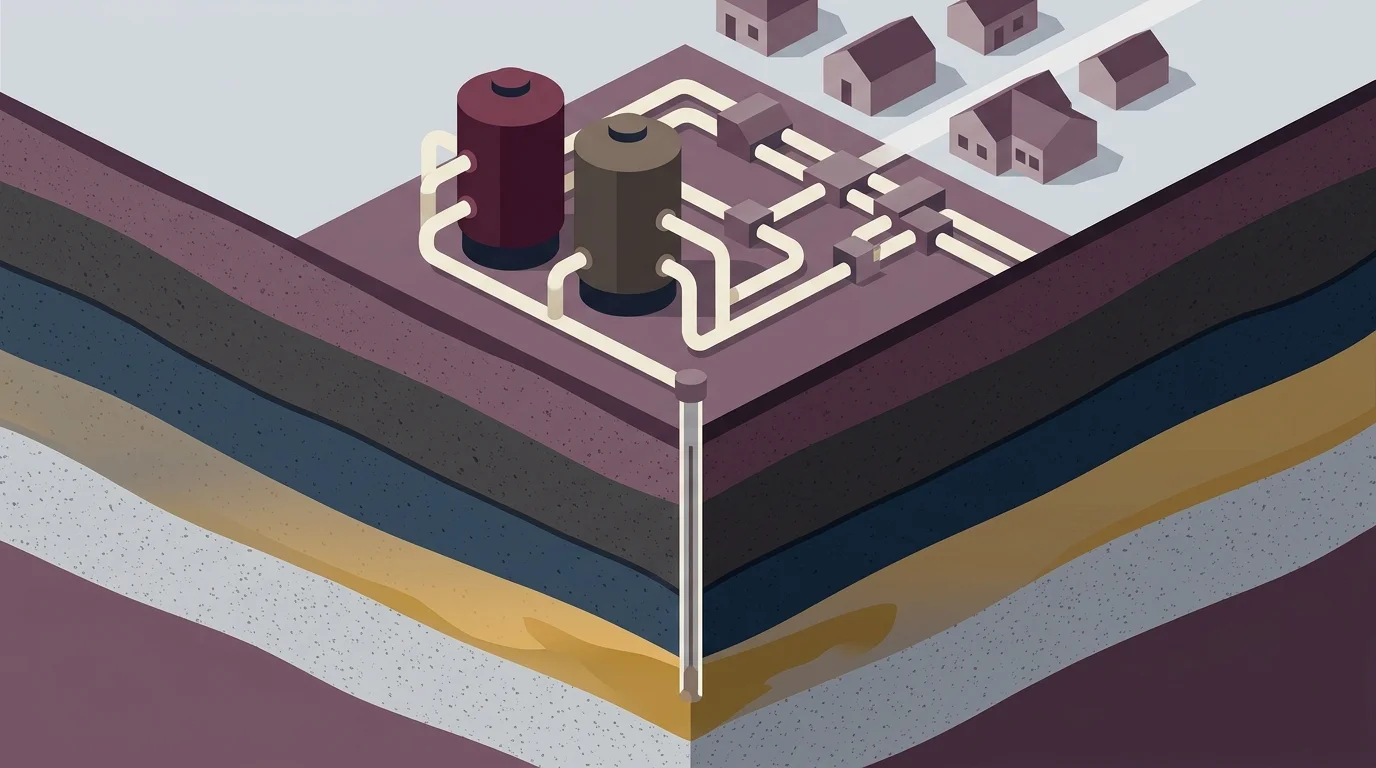
A Massachusetts municipality is moving to strip cancer-linked "forever chemicals" from its drinking water supply, purchasing specialized filtration equipment and filter media for an upgrade at the Lincoln Street Well.
The project targets PFAS, a family of synthetic compounds used for decades in nonstick cookware, waterproof clothing, and firefighting foam. Because they don't break down naturally, PFAS have accumulated in groundwater supplies across the country and have been linked to cancers, thyroid disease, immune suppression, and developmental problems in children. In Massachusetts, where groundwater feeds a large share of public water systems, hundreds of wells have tested above safe limits in recent years.
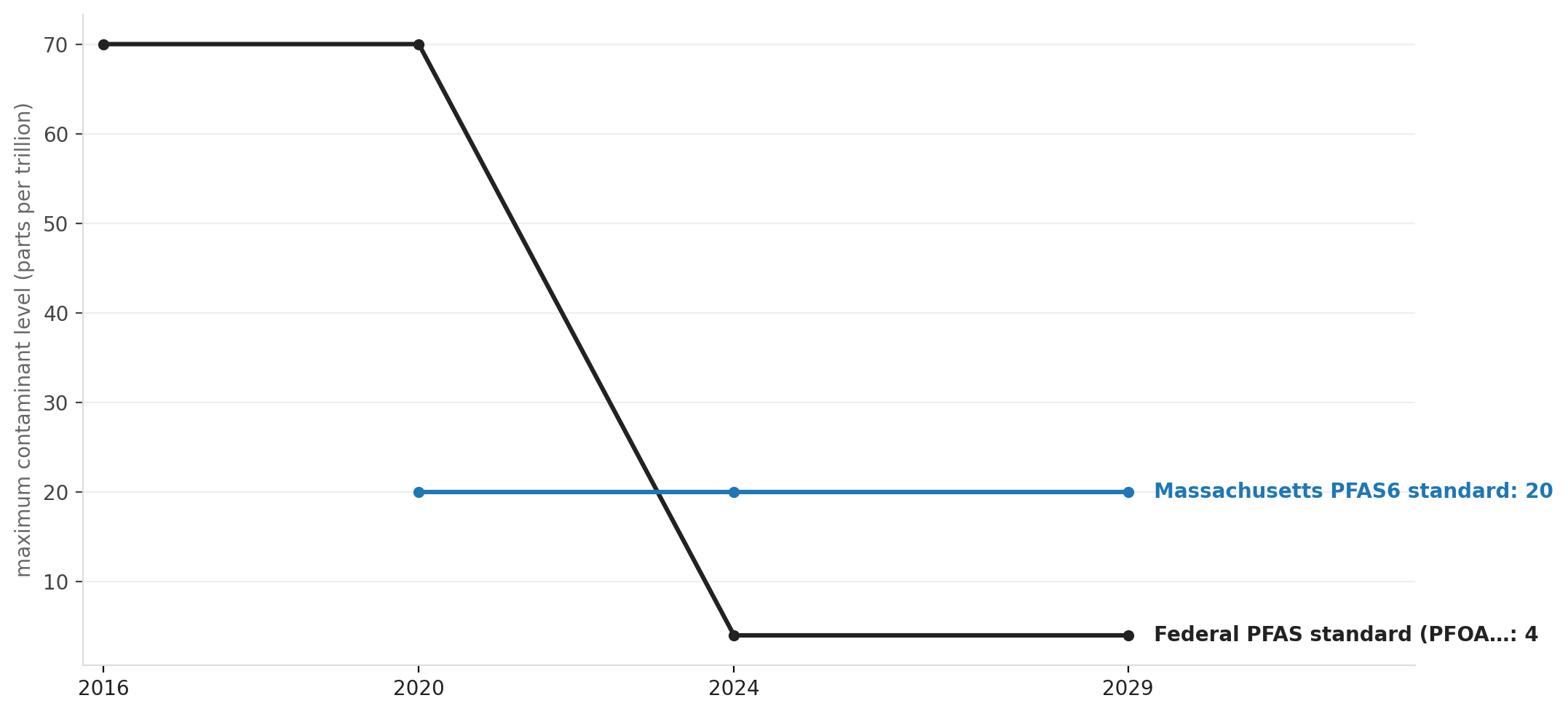
Massachusetts was already ahead of most states when it set a PFAS limit of 20 parts per trillion for a combination of six compounds back in 2020. Many communities discovered their wells exceeded that threshold during testing and scrambled to find interim solutions while engineering longer-term treatment systems. The federal government caught up in April 2024, when the EPA finalized its first-ever national PFAS drinking water rule, setting a limit of 4 parts per trillion for the two most common compounds, roughly 17 times stricter than its previous guidance. Public water systems nationwide have until 2029 to comply.
Source: NationGraph.
The Lincoln Street Well upgrade will likely rely on granular activated carbon or ion exchange resin, the two dominant technologies for pulling PFAS out of drinking water. Both approaches work by adsorbing the chemicals as water passes through, but they carry very different cost profiles. The filter media must be periodically replaced or regenerated, meaning the ongoing operating expenses can ultimately exceed what a town spends to build the system in the first place.
For smaller communities that depend on a single well or a handful of wells, the financial hit is especially sharp. Funding packages often blend state revolving fund loans, federal Bipartisan Infrastructure Law dollars, and ARPA funds, but much of the cost still lands on ratepayers through higher water bills. A national settlement with 3M worth $10.3 billion and a separate $1.19 billion agreement with DuPont and Chemours are expected to reimburse some municipal treatment costs, though per-system payouts are unlikely to cover more than a fraction of actual expenses.
The Lincoln Street Well procurement, posted through Massachusetts' state purchasing system in late May, signals the project has moved past planning and into active construction. Once equipment and media are delivered and installed, the well can return to service producing water that meets the new federal and state limits.