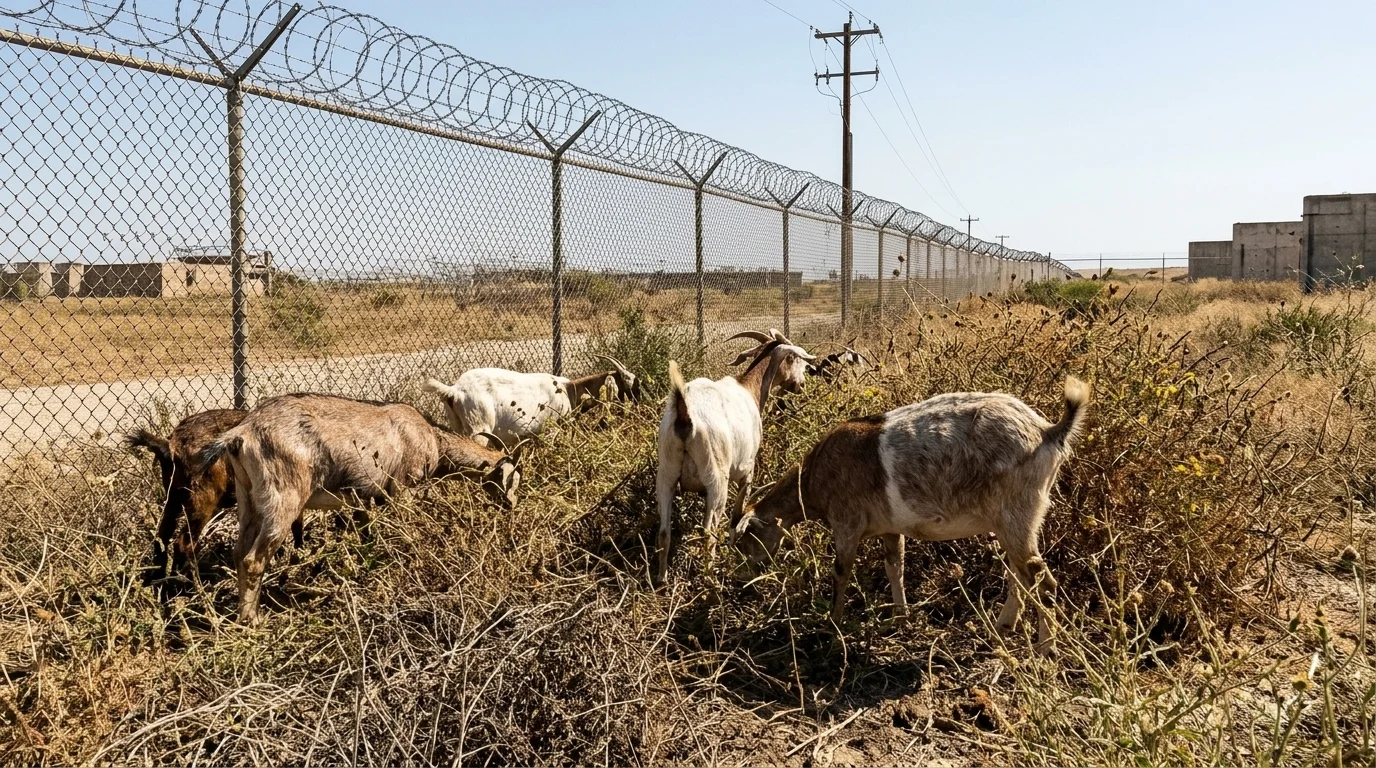
The Maryland Department of Military Affairs is bringing in goats to graze down the dense undergrowth and invasive plants that have turned its military installations into wildfire hazards, part of a growing shift away from chemicals and heavy equipment on sensitive public land.
The agency, which manages roughly 70 facilities statewide including training sites like Gunpowder Military Reservation in Baltimore County and Camp Fretterd in Reisterstown, is seeking grazing contractors to handle vegetation on state property. The specific acreage, dollar value and installations targeted were not disclosed in the procurement record.
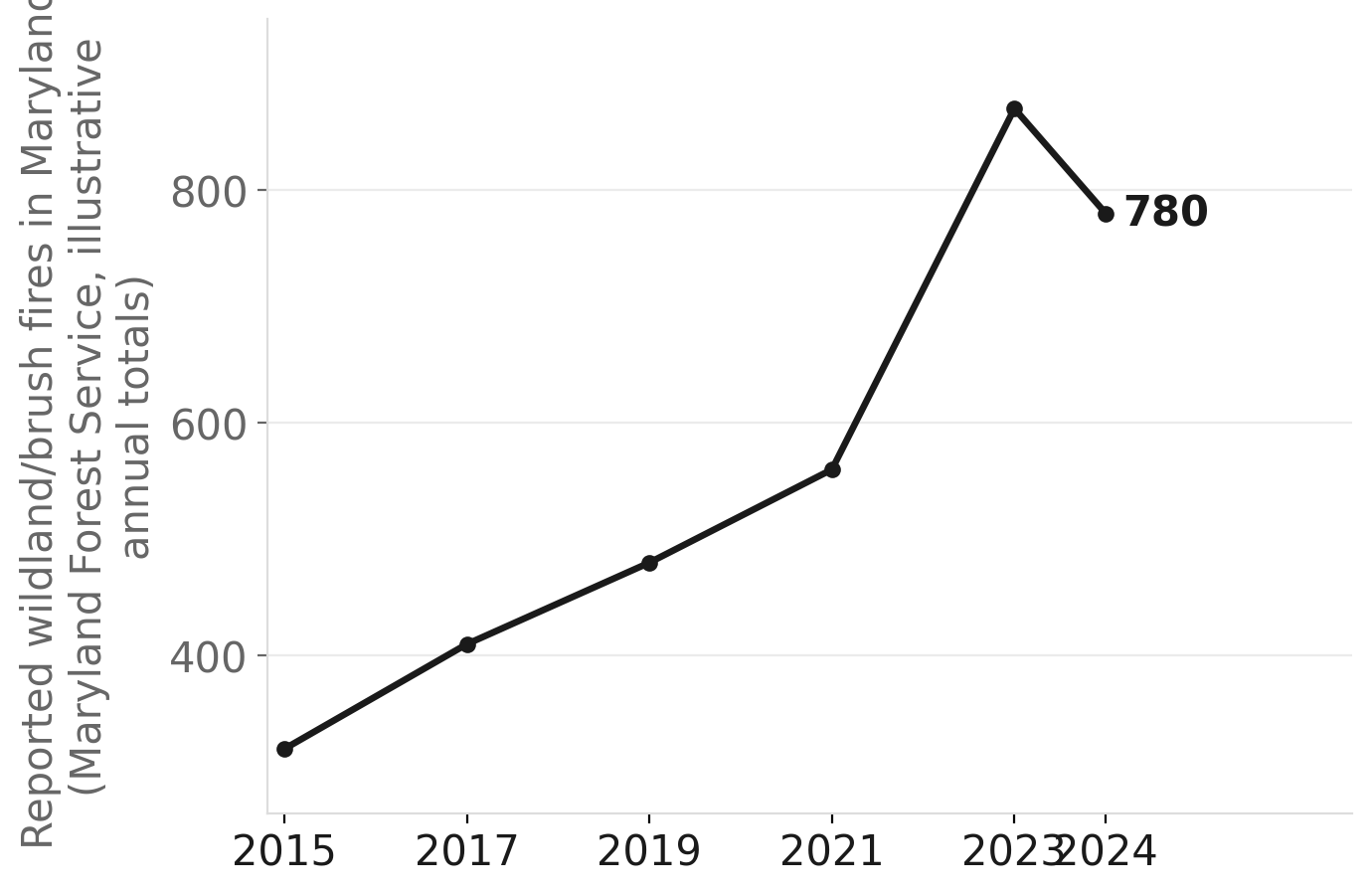
The move reflects two pressures that have been building across East Coast land managers for years. First, wildfire risk is no longer just a Western problem. Maryland saw elevated brush fire danger through much of 2023 and 2024 amid drought conditions, and the dense invasive species that have colonized military buffer zones, such as kudzu, multiflora rose and autumn olive, add fuel that can carry a fire into surrounding suburban neighborhoods. Second, agencies have grown wary of herbicide use near troops, waterways and the public, a wariness that intensified amid Bayer's glyphosate litigation, which resulted in a roughly $10.9 billion settlement in 2020. Maryland's Chesapeake Bay watershed protections already restrict chemical runoff, making non-chemical alternatives especially attractive.
Source: NationGraph.
Goats offer something heavy equipment and pesticides cannot: they work on steep and uneven terrain, generate no ignition risk and leave no chemical residue. The Pentagon has been piloting goat grazing at installations like Fort McCoy and Marine Corps facilities since the 2010s, in part because goats can clear vegetation in areas where unexploded ordnance makes machinery dangerous.
Prescribed grazing has grown into a legitimate commercial industry in the mid-Atlantic, with companies now operating specifically to serve government clients. The Congressional Cemetery in Washington and the National Park Service have used goats for years, and the Maryland Department of Natural Resources has run its own pilot programs at state parks.
The contract scope and timeline have not been made public, so it is not yet clear which Maryland Military installations will see the four-legged crews first or how large an area they will cover.