Seven California institutions issued electric vehicle procurement solicitations in the past 30 days after sitting out the market for a year or more, a quiet surge that spans five counties, four institution types, and a population range stretching from Woodlake, a 7,800-person Central Valley city in Tulare County, to Santa Clara County, home to 1.9 million residents. The geographic scatter alone rules out a single budget cycle or regional grant announcement as the explanation. Something broader pushed all of them back to market at once.
The short answer is a closing window. Three separate policy mechanisms are converging, and local agencies are responding the way they typically do to regulatory pressure: late, clustered, and deadline-driven.
The first mechanism is a mandate. CARB's Advanced Clean Fleets regulation began its mandatory phase-in of zero-emission vehicle requirements for public and private medium- and heavy-duty fleets in 2025. For agencies that had been watching from the sidelines, the compliance clock is no longer theoretical. The second mechanism is a state voucher program. CARB's HVIP clean truck and bus voucher program received a $135 million allocation for FY2026-27, but HVIP tranches have historically exhausted within weeks of opening, which means agencies that delay their procurement planning risk finding the voucher window already closed when their purchase order is finally ready. Future HVIP funding is uncertain given Governor Newsom's signals of significant cuts to address a projected $12 billion state deficit. The third mechanism is federal and regional grant money with hard expiration dates. South Coast AQMD administers the INVEST CLEAN program, the largest Climate Pollution Reduction Grant award EPA has made nationally at $500 million in federal funds, which is disbursing through December 2026. AQMD also holds a separate $33.9 million EPA Clean Heavy-Duty Vehicles grant active through the same deadline. These are federal grants, geographically limited to the Los Angeles, Riverside, San Bernardino, and Orange County region, not statewide programs, but their expiration creates urgency that radiates outward as agencies elsewhere recognize that analogous windows are narrowing.
These three mechanisms are doing different things and should not be read as one program. ACF creates the legal obligation to transition. HVIP reduces the upfront purchase cost through state-appropriated vouchers. INVEST CLEAN and the EPA Clean Heavy-Duty Vehicles program fund specific fleet replacements in Southern California through federal rebates. What they share is a tightening timeline, and that shared pressure is visible in the procurement data.
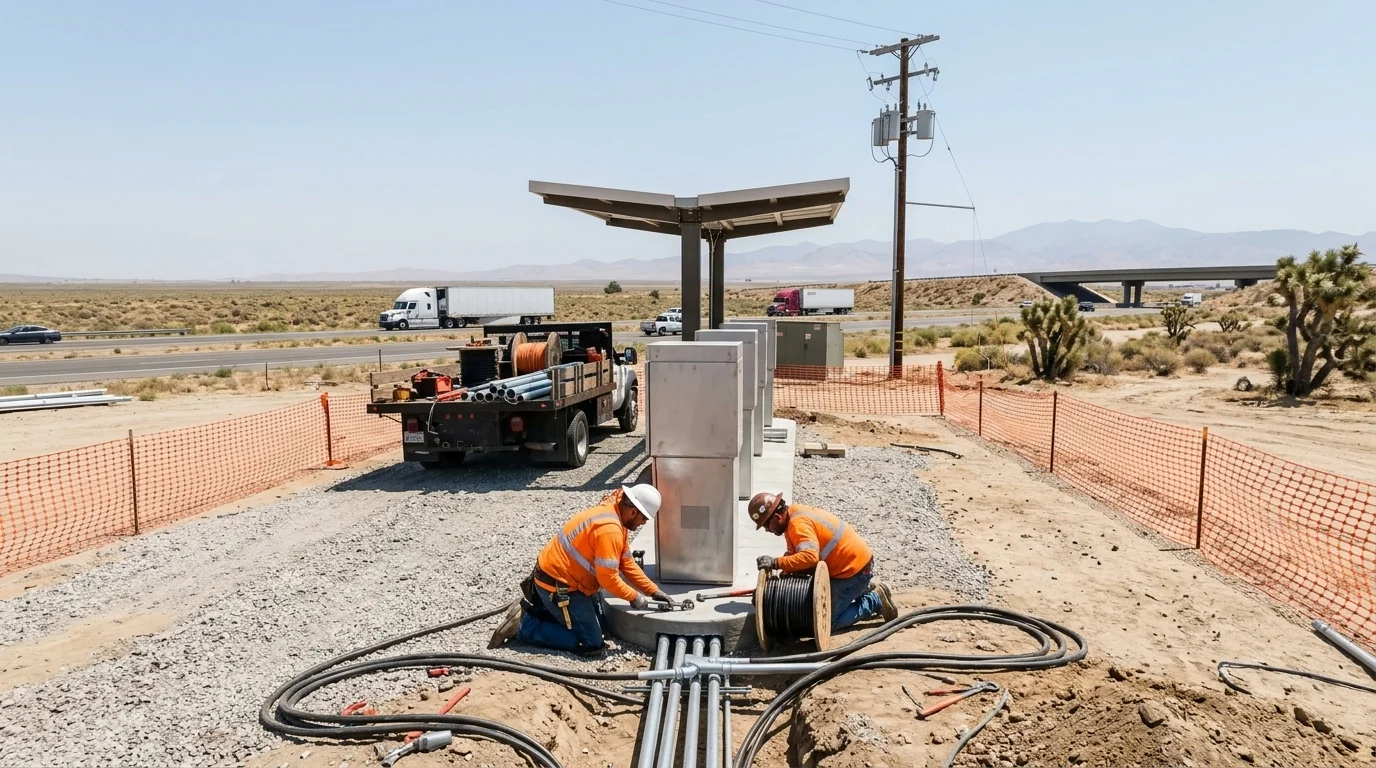
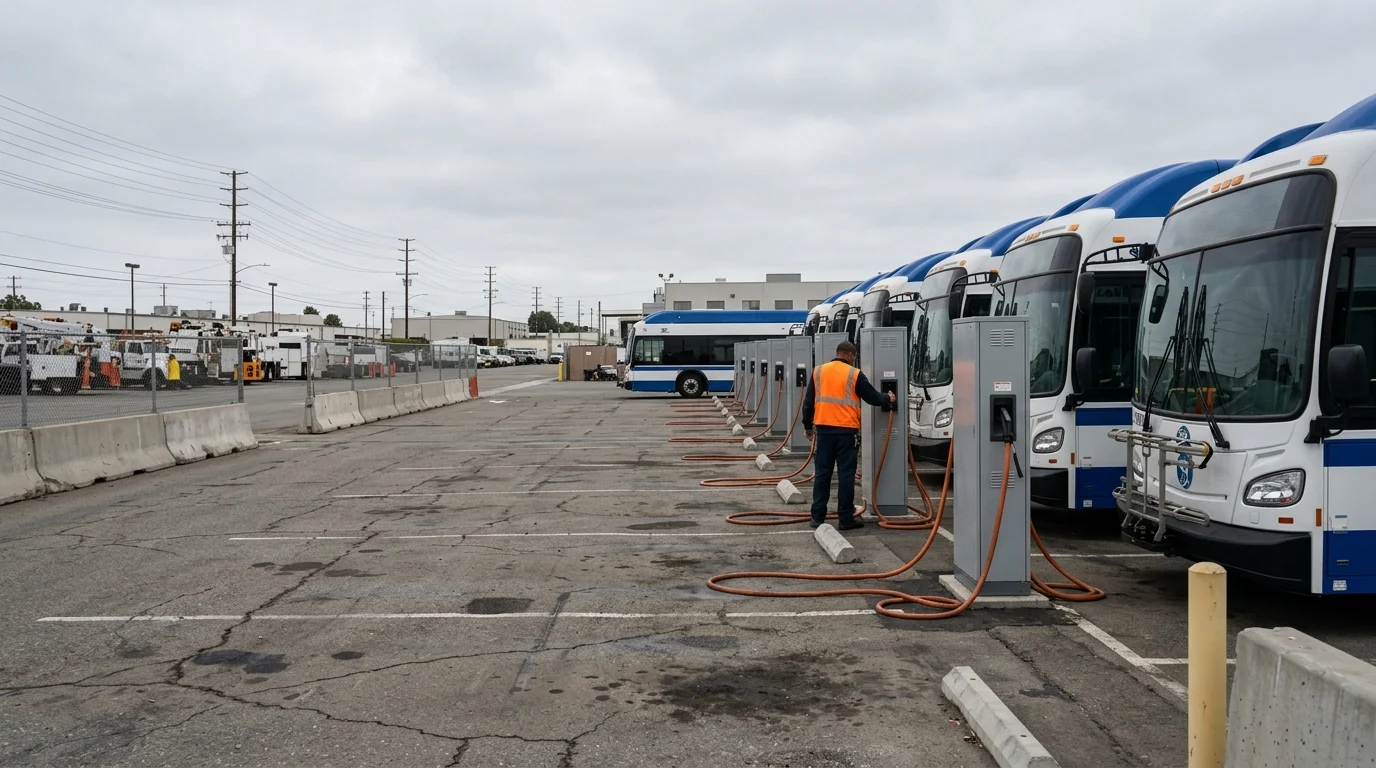
The cohort that re-entered the market this month is instructive precisely because it is not a cluster. East Palo Alto issued an RFP for EV charging infrastructure design. Sonoma County issued a charging station RFQ. Oceanside put out a charger installation bid. Twin Rivers Unified School District in Sacramento is buying two EV SUVs. Pasadena is procuring an EV SUV fleet. Hayward Unified and Woodlake round out the group. Some are building charging infrastructure; some are buying vehicles. Some are in Southern California, where federal rebates are directly available; others are not. The common thread is not geography or institution type, it is the gap. Each of these entities had been absent from EV procurement for at least 12 months, and each returned within the same 30-day window.
The irony in the timing is hard to miss. These agencies went quiet during the period when California's EV policy architecture was loudest, when ACF was finalized, when HVIP was being debated, when INVEST CLEAN was being stood up. They are returning to market precisely when the incentive money is most at risk of drying up. That is not a coincidence. It reflects how procurement actually works inside government: legal review cycles, budget approvals, and staff capacity mean that regulatory pressure takes 12 to 18 months to produce a solicitation. The agencies now issuing RFPs are responding to the policy environment of late 2023 and 2024. The agencies that haven't moved yet are the ones to watch.
For residents in these jurisdictions, the near-term effect is straightforward: local government fleets, school buses, and charging infrastructure are about to expand. For residents in jurisdictions that have not yet moved, the relevant signal is whether their city or county has begun procurement planning, because the HVIP voucher pool and the federal grant windows do not wait for internal approval processes to finish.
The next marker to watch is the HVIP tranche opening for FY2026-27. When CARB announces the voucher window, agencies that have completed their RFP processes will be positioned to claim funds; those still in procurement planning will not. After December 2026, the INVEST CLEAN and EPA Clean Heavy-Duty Vehicles programs close, and California's local governments will be left with the mandate and shrinking state budget resources to pay for it.