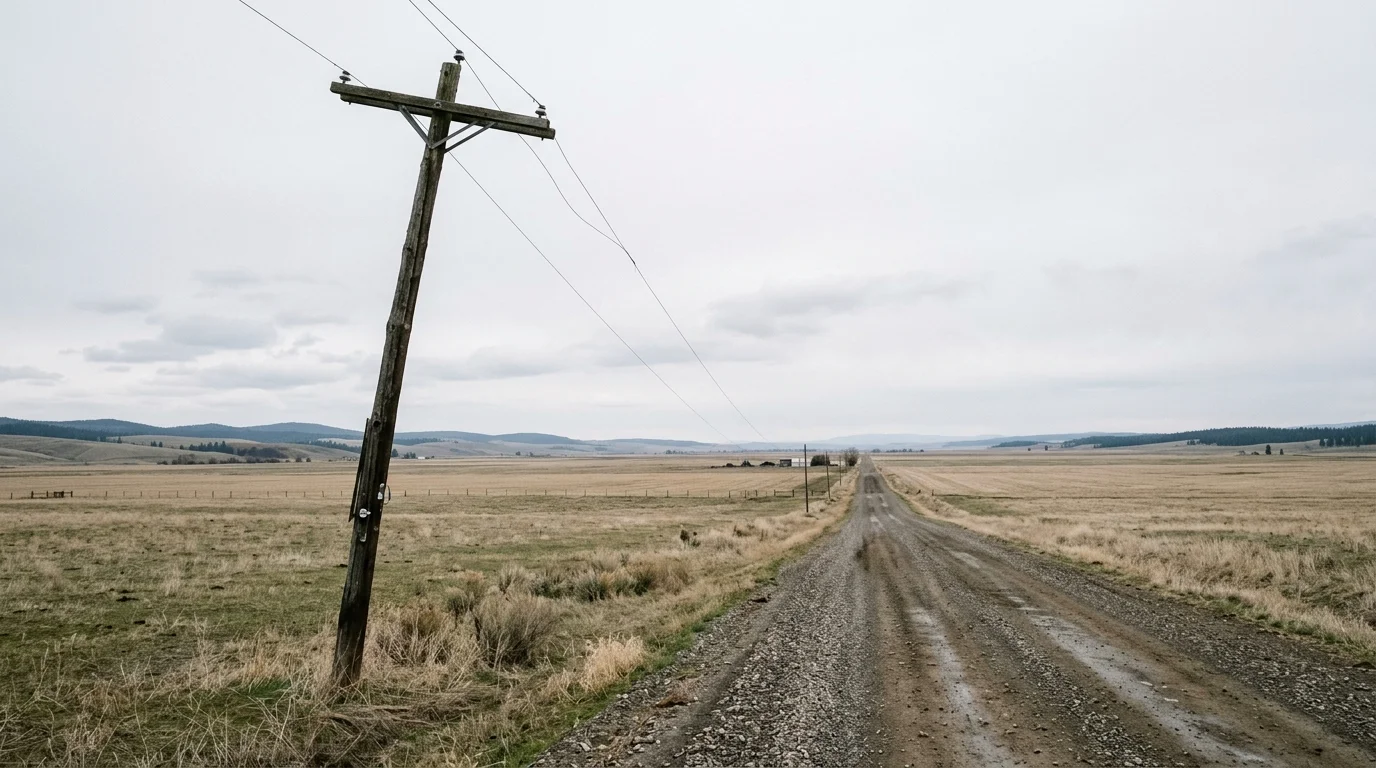
Nezperce, a farming community of roughly 450 people perched on the Camas Prairie in north-central Idaho, is on the verge of getting fiber-optic internet for the first time, as Idaho County moves to hire a contractor for a fiber-to-the-home buildout in one of the most connectivity-starved corners of the lower 48.
The project, designated DIGB2 Fiber, draws on state broadband grant funding that ultimately traces back to the $42.45 billion Broadband Equity, Access, and Deployment program Congress created in the 2021 Infrastructure Investment and Jobs Act. Idaho received roughly $583 million under that program. The county posted the bid solicitation on its public notices page as it works through its fiscal year 2026 budget commitments.
For residents of Nezperce, the upgrade would be a generational leap. Most of the community currently depends on aging DSL lines, satellite services like Starlink or HughesNet, or in some cases nothing at all. Fiber-to-the-home means symmetrical gigabit-capable speeds, a technology standard that urban Americans have taken for granted for years.
The reason Nezperce waited this long is simple math. Idaho County is the largest county in Idaho by land area, covering more than 8,500 square miles, but it holds only about 17,000 residents total. Mountains, canyons, and millions of acres of national forest make up most of that terrain. Private internet companies looked at the population density and the construction costs and walked away, year after year, going back to the early broadband era of the late 1990s.
The COVID-19 pandemic made the cost of that neglect impossible to ignore. When schools shifted to remote learning and rural clinics stood up telehealth programs almost overnight in 2020, families with no reliable connection were simply cut off. That visibility helped build the political momentum for the federal funding cascade that is now, several years later, reaching communities like Nezperce.
The timing also reflects shifting federal policy. The Trump administration restructured the BEAD program in mid-2025, removing some labor and climate conditions and emphasizing technology flexibility, changes that have reshuffled deployment timelines across many states. Idaho's broadband office appears to be pressing forward regardless, with counties like Idaho County now actively putting projects out to bid.
Specific contract amounts and a construction timeline were not included in the public notice. Bidders and residents looking for those details will need to pull the full RFP packet from the county. Once a contractor is selected and work begins, Nezperce would become one of the more concrete local tests of whether the largest rural broadband investment in American history can actually reach the communities it was designed for.