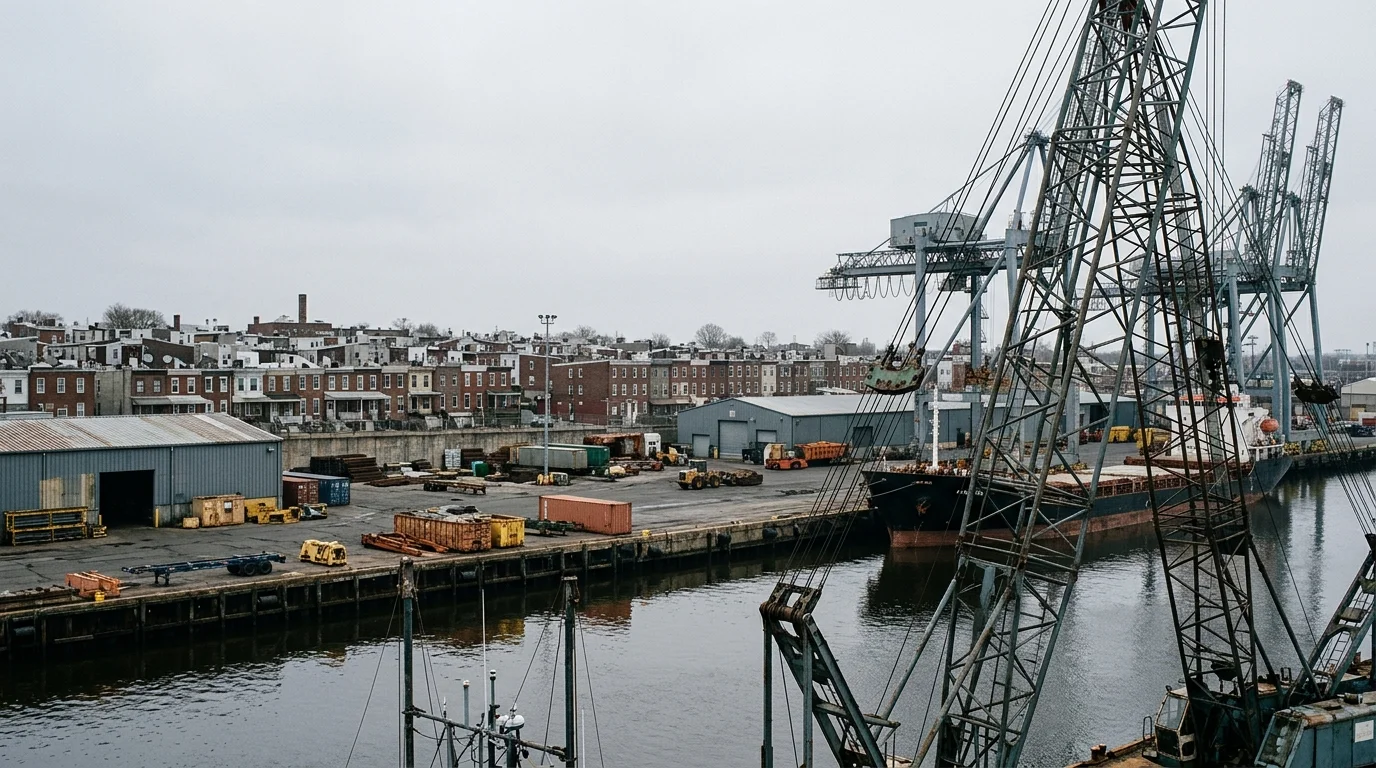
The Philadelphia Regional Port Authority is moving to rewire Tioga Marine Terminal for a zero-emission future, advancing a long-running push to replace diesel-powered cargo equipment with electric alternatives at one of North Philadelphia's largest industrial sites.
PhilaPort is seeking contractors to build out the electrical site infrastructure at Tioga, work that is expected to include substation upgrades, conduit, switchgear, and charging infrastructure to support electric cargo handling equipment. The effort is framed as part of a "Strategic Transition to Electrify" the terminal, language that signals a phased master plan rather than a single project.
Tioga sits along the Delaware River in a stretch of North Philadelphia bordered by Port Richmond, Kensington, and Bridesburg, neighborhoods where residents have documented elevated asthma and cancer rates tied in part to decades of diesel exhaust from port equipment, yard tractors and drayage trucks. Environmental groups including Clean Air Council and PennEnvironment have pushed for years for the port to electrify.
The timing reflects a broader shift in how ports are being financed. Federal climate legislation passed in 2021 and 2022 created billions in new funding for port electrification, including the EPA's $3 billion Clean Ports Program. PhilaPort has received multiple federal Port Infrastructure Development Program grants in recent years tied to terminal modernization.
PhilaPort has grown rapidly since the Delaware River shipping channel was deepened in 2019, and has since posted record container volumes. Tioga, which primarily handles breakbulk and forest products, is being repositioned for higher-value containerized cargo, a transition that requires shore power and electric equipment on the ground.
Project documents are available through PhilaPort's procurement portal at philaport.bonfirehub.com. How quickly the infrastructure buildout translates into actual reductions in diesel equipment on the terminal will depend on the pace of subsequent equipment procurement phases still to come.