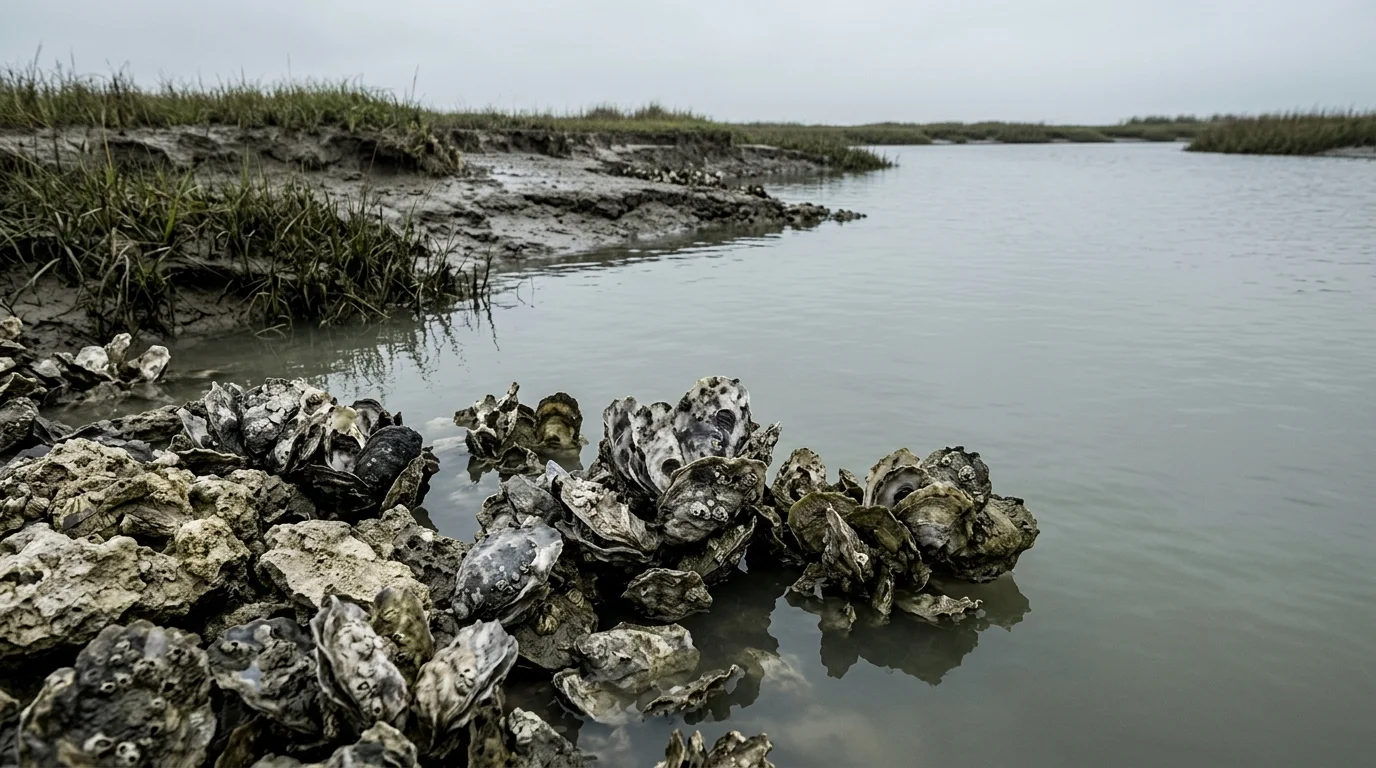
Manatee County, Florida is moving to rebuild its oyster reefs, betting that living shorelines can do what concrete walls cannot: absorb storm surge, filter polluted water, and repair themselves over time.
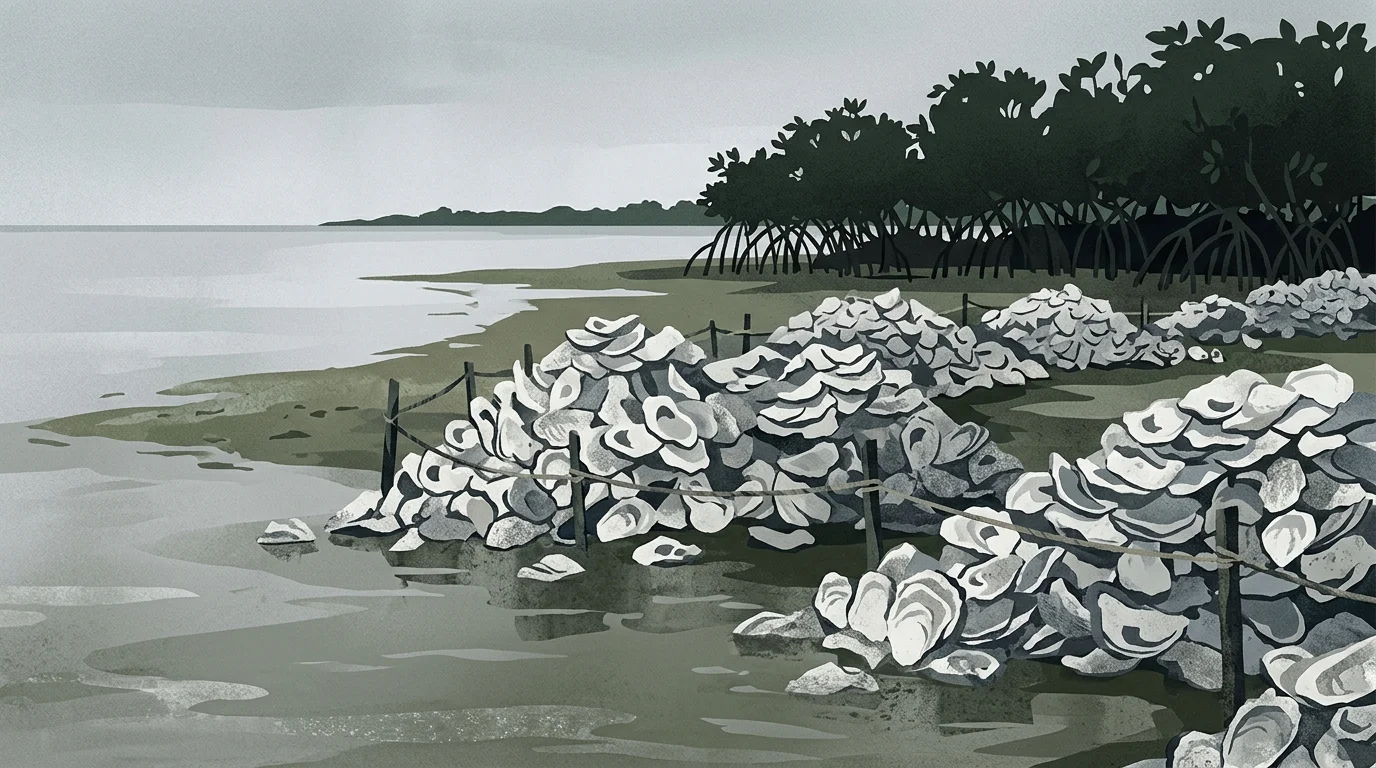
The county posted a request for contractors to carry out the oyster restoration project this month, though specific budget figures and target acreage were not disclosed in the posting. The work would likely involve deploying recycled shell, limestone, or concrete reef structures as substrate for oyster larvae to colonize across the county's estuaries, which include Tampa Bay, Sarasota Bay and the Manatee River.
The timing is hard to separate from the back-to-back hurricanes that hit the county in fall 2024. Helene struck in September, Milton followed weeks later in October, and together they caused widespread coastal flooding and erosion on Anna Maria Island and along the Manatee River shoreline. The storms sharpened a local debate that had been building for years: whether to keep hardening the coast with seawalls, or to invest in reefs and marsh that can dissipate wave energy naturally. Research suggests a single acre of oyster reef can dissipate up to 76% of incoming wave energy and filter millions of gallons of water each day.
The ecological backdrop adds urgency. Florida's wild oyster populations have fallen by an estimated 85% over the past century, lost to dredging, overharvesting, disease and pollution. The 2021 Piney Point disaster, in which a leaking phosphogypsum stack dumped 215 million gallons of contaminated water into Tampa Bay, gave local residents a vivid reminder of how fragile the county's waterways already are. Recurring red tide events compound the problem.
Manatee County is one of the fastest-growing counties in the country, with its population up roughly 25% since 2010, and that development pressure has squeezed its estuaries hard. But the political framing around oyster restoration has shifted: county officials and advocates increasingly pitch it as cost-effective property protection rather than environmental policy, a reframe that has eased support in a development-friendly community.
Federal money has made the math easier. NOAA's Transformational Habitat Restoration program, funded through the 2021 Bipartisan Infrastructure Law, and the RESTORE Act, which channels BP Deepwater Horizon settlement funds to Gulf states through 2032, have pushed substantial dollars toward exactly this kind of county-level reef work. Neighboring estuary programs, including the Tampa Bay Estuary Program and the Sarasota Bay Estuary Program, have spent years piloting small-scale oyster reef construction; this project appears to build on that groundwork.
Contractor selection is the next step, after which the county will need to finalize project sites and timelines before work can begin.