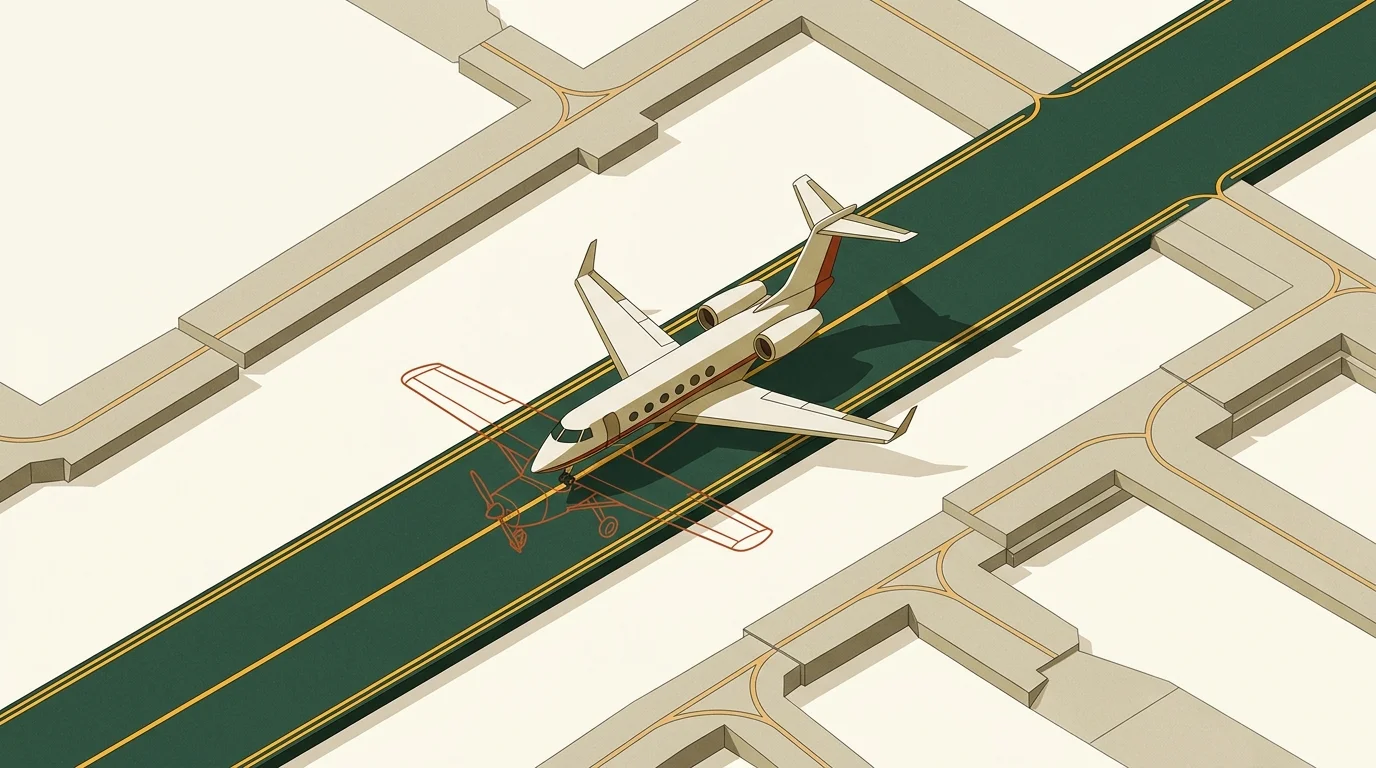
A Georgia airport is moving forward with plans to reconstruct and widen one of its taxilanes, a project that reflects a quiet crisis unfolding at smaller airports across the country: the planes have gotten bigger, but the pavement hasn't kept up.
The project targets Taxilane GA-5, which is being both rebuilt from the ground up and expanded beyond its current dimensions. The widening is the more telling detail. FAA design standards, updated regularly through guidelines like Advisory Circular 150/5300-13B, set minimum taxilane widths based on the size of aircraft expected to use them. When an airport's actual traffic outgrows what the original pavement was designed for, reconstruction becomes a safety and compliance issue, not just a maintenance one.
The timing fits a pattern playing out nationally. Business aviation surged after the COVID-19 pandemic, with flight operations at many general aviation airports running 15 to 25 percent above pre-pandemic levels. Larger business jets and regional turboprops that were once rare at smaller fields are now routine. Infrastructure built decades ago, often to older and narrower FAA standards, increasingly can't accommodate them.
Source: NationGraph.
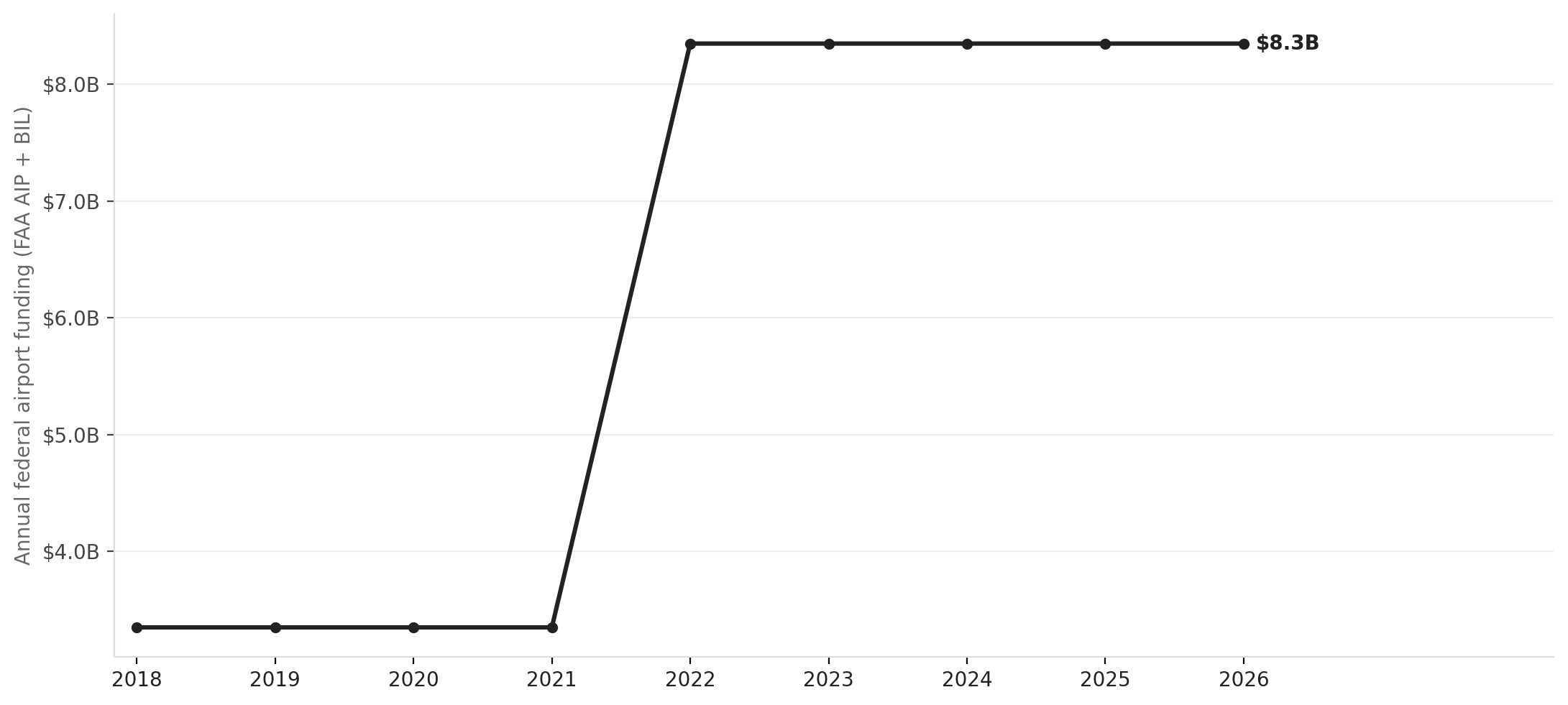
Federal money has helped accelerate the response. The 2021 Bipartisan Infrastructure Law directed $25 billion toward airports over five years, the largest federal airport investment in U.S. history, and the FAA's Airport Improvement Program has been distributing record funding since 2022. Projects like this one at non-primary airports typically receive FAA grants covering 90 percent of eligible costs, with state and local funds covering the rest.
Georgia operates one of the largest state airport systems in the Southeast, with more than 100 public-use airports beyond Hartsfield-Jackson Atlanta. Those smaller airports serve economic development, agricultural aviation, military operations, and emergency response across the state. The project was posted through Georgia's Department of Administrative Services procurement system on April 28, 2026, suggesting construction could begin later this year with completion likely in 2026 or 2027. The specific airport has not been publicly identified beyond the SAC project code.
Contractor selection is the immediate next step, after which a construction timeline will come into clearer focus.