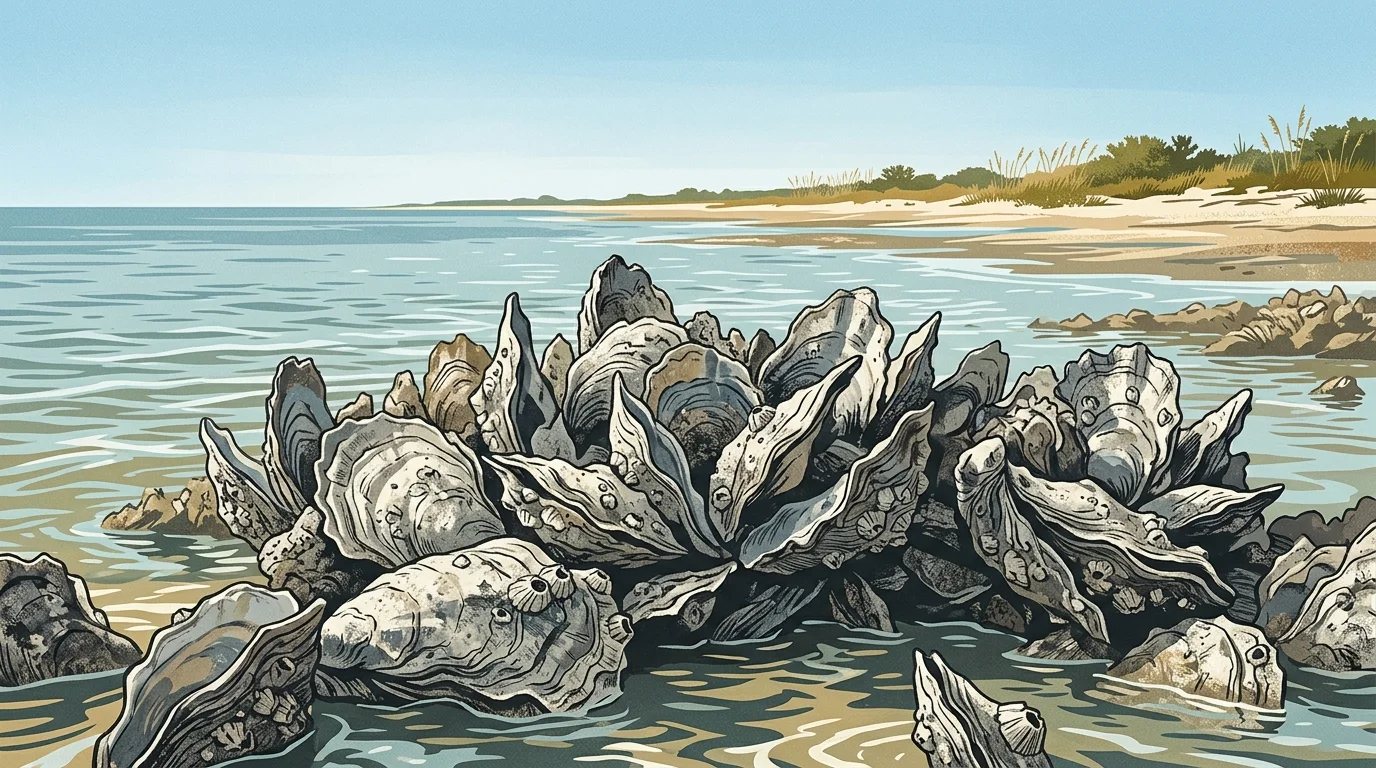
Manatee County, on Florida's central Gulf Coast, is moving to restore oyster reefs along its battered shoreline, betting on a living natural barrier to do what concrete seawalls have struggled to: absorb storm surge and filter the nutrient-laden water choking its bays.
The project comes less than two years after Hurricanes Helene and Milton tore through the county in fall 2024, sending storm surge across Anna Maria Island and Bradenton Beach and renewing urgent questions about how much natural protection the coast has left. The answer, scientists and local officials have acknowledged, is not much. Florida has lost an estimated 85% of its historic oyster habitat over the past century, stripped away by overharvesting, runoff, altered freshwater flows and warming waters. What remains along Tampa Bay and Sarasota Bay, both of which border the county, is a fraction of what once stood.
Oyster reefs do more than produce shellfish. A healthy reef dissipates wave energy, slows erosion and filters enormous volumes of water. Research increasingly shows that living shorelines outperform hardened ones in storm conditions, a finding that has gained political traction in Florida after repeated hurricane seasons exposed the gap.
Manatee County's effort fits into a broader Gulf Coast pivot toward this approach, fueled by federal dollars from the Bipartisan Infrastructure Law, NOAA restoration grants and RESTORE Act funds tied to the 2010 Deepwater Horizon settlement. The county has posted an RFP to find a contractor to carry the project out, though the full scope, specific locations and total budget have not yet been made public.
The timing also reflects a local ecological crisis that extends beyond storms. Manatee County's bays have suffered repeated red tide outbreaks and seagrass die-offs that have killed record numbers of manatees, the county's namesake, since 2021. Restoring reefs that help clear the water and stabilize sediment is one piece of a larger effort to reverse that decline.
A contractor selection will follow the RFP process, with the restoration work expected to get underway after that.