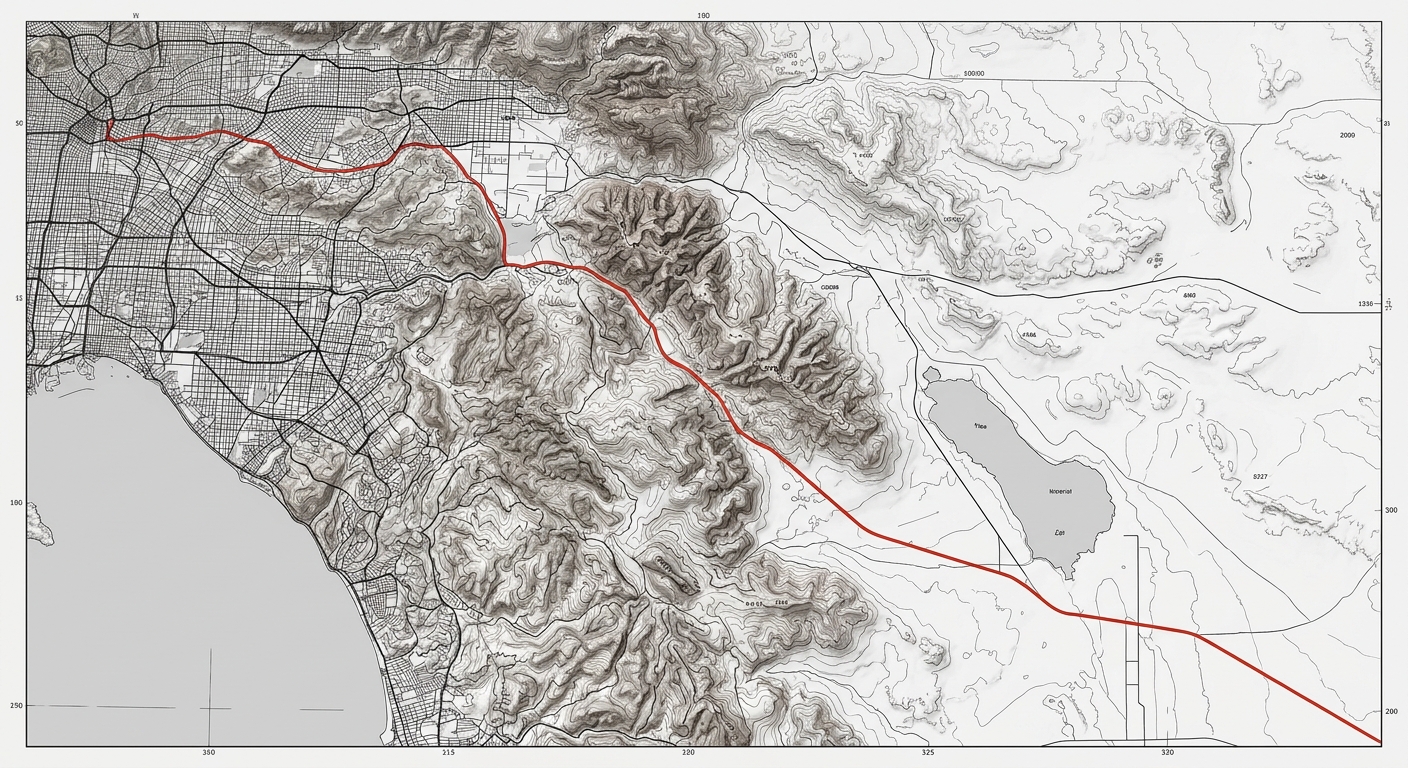
Los Angeles County is quietly laying the groundwork for what could be a significant investment in its waste-by-rail system, the infrastructure backbone that ships millions of tons of the region's trash roughly 200 miles by Union Pacific Railroad to a desert landfill near the Arizona border.
The Sanitation Districts of Los Angeles County recently posted a request for environmental and property surveys on the real estate tied to that rail system. The agency is seeking firms to conduct ALTA boundary surveys and Phase I Environmental Site Assessments on the waste-by-rail properties, the kind of due diligence that typically precedes a property acquisition, major financing, or capital expansion. The solicitation was posted April 14.
The timing matters. Southern California is running out of places to put its trash. The Puente Hills Landfill, once the largest active landfill in the United States, closed in 2013 after reaching capacity. The Chiquita Canyon Landfill in Castaic effectively ceased operations in early 2025 after an underground chemical reaction triggered a public health emergency in the Santa Clarita Valley and prompted a state emergency declaration from Governor Newsom. The Calabasas Landfill is nearing its own limits. What's left, increasingly, is the rail line to the Mesquite Regional Landfill in Imperial County.
The Sanitation Districts built that system precisely for this moment. They began operating the waste-by-rail service in 2010, containerizing municipal solid waste and shipping it east to Mesquite, a facility the agency developed as a long-term replacement for Puente Hills. Today the system serves as a critical disposal outlet for the roughly 5.6 million people across 78 cities and unincorporated areas that the Districts cover.
The arrangement has never been without controversy. Imperial County, where the Mesquite Landfill sits, has a median household income roughly half that of Los Angeles County and is more than 85 percent Hispanic and Latino. Environmental justice advocates have long criticized the practice of routing the region's waste to a lower-income community with limited political leverage to push back.
California's aggressive waste diversion mandates, including a 2022 requirement to cut organic waste disposal by 75 percent, have slowed the growth in landfill demand but haven't eliminated it. With tens of millions of residents still generating residual waste that can't be composted or recycled, the rail system to Mesquite remains indispensable.
What exactly the Districts are planning isn't spelled out in the survey request. ALTA surveys and environmental assessments are prerequisites for a range of actions, from straightforward refinancing to property acquisitions to capital construction. Whether this signals an expansion of transfer facilities, new rail infrastructure, or a financing transaction isn't yet public. The results of the surveys, once complete, will offer more clarity on the agency's next move.