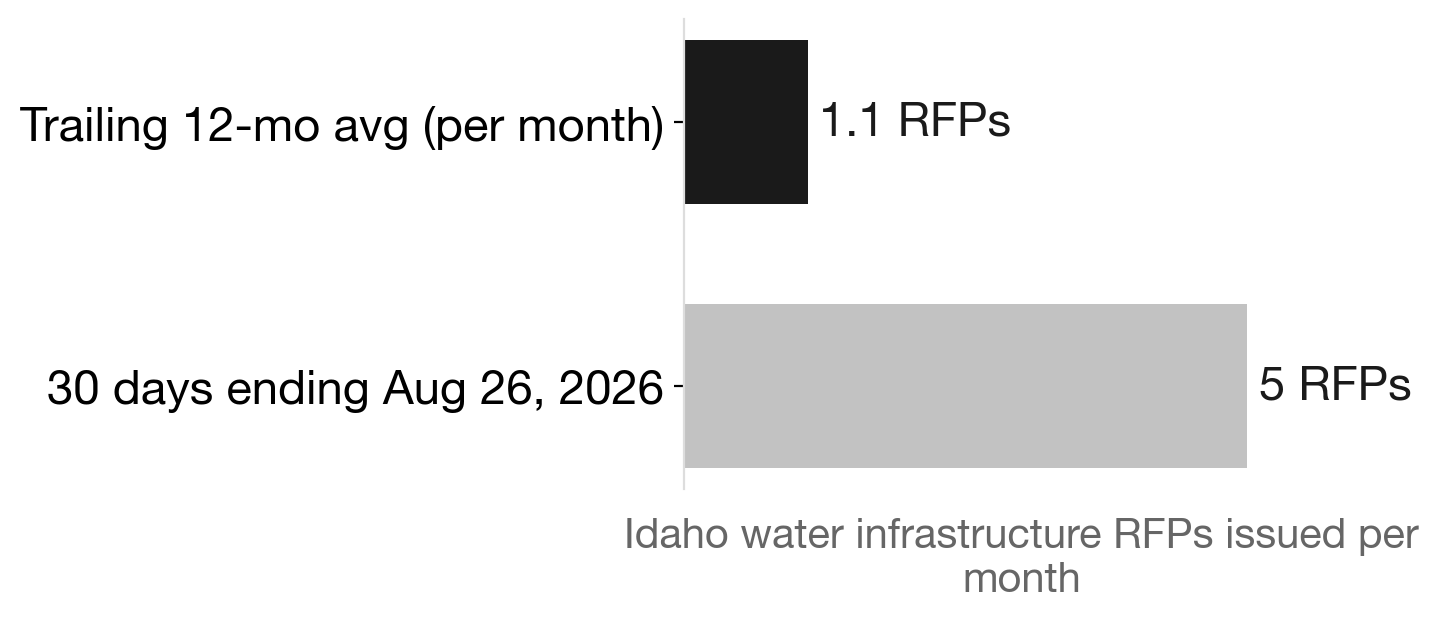
Idaho issued five water infrastructure RFPs in the 30 days ending August 26, 2026, 4.6 times the trailing 12-month average of roughly one per month. That is the sharpest proportional spike among any of Idaho's neighboring states. The cause is not a single budget windfall. It is three funding deadlines colliding in the same fiscal window, and agencies scrambling to obligate money before the clocks run out.
The most urgent deadline is federal. The Infrastructure Investment and Jobs Act's water infrastructure authorization expires September 30, 2026. Idaho DEQ currently holds an active portfolio of at least $175 million in EPA water grants, anchored by three IIJA-funded Drinking Water State Revolving Fund capitalization grants totaling approximately $61 million. Against that sum, barely $1 million has been outlayed. As cities across the country have been racing to lock in IIJA water commitments before authorization lapses, Idaho's procurement calendar is only now catching up.
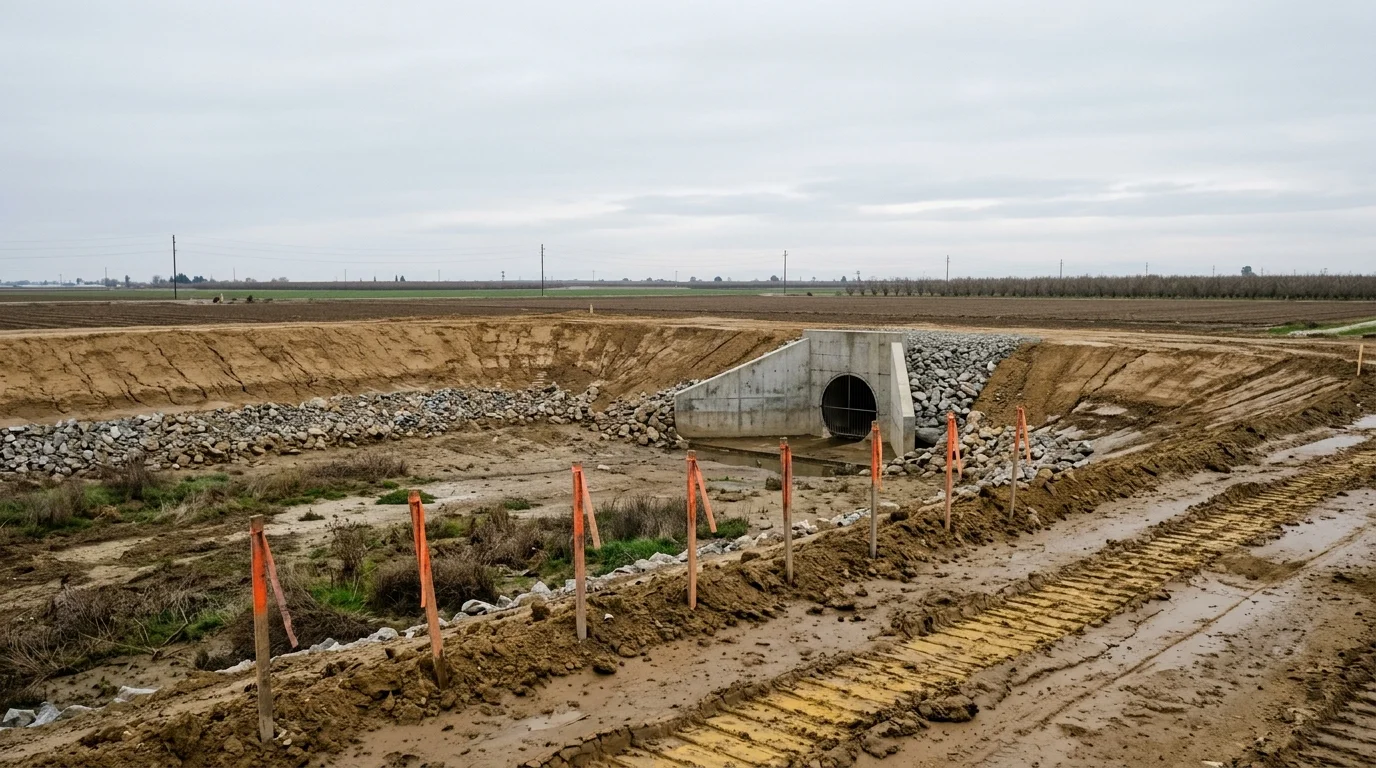
The second clock is the state's own. Idaho House Bill 445, signed in April 2025, appropriated $30 million to the Eastern Snake Plain Aquifer Water Sustainability Projects Program. Spending authority for fiscal year 2026 opened July 1, 2026. The Idaho Water Resource Board, which administers the program, has been moving quickly: on August 18, one week before this RFP surge was flagged, the board approved new ESPA recharge basin projects including an 85-acre infiltration basin at a former sugar factory site. That approval is the kind of board action that triggers downstream procurement.
Source: NationGraph.
The third clock is regulatory. Idaho's IDAPA 58.01.12 rules, which govern state revolving fund loan administration, were revised through negotiated rulemaking in 2025, adopted by the 2026 Legislature, and took effect July 1, 2026. Every new SRF assistance agreement is now subject to the updated framework. The practical effect: a new lending cycle opened on the same day the ESPA spending authority unlocked, giving agencies both the money and the legal machinery to move.
The RFPs themselves reflect the breadth of what Idaho is trying to build. The City of Post Falls is seeking a consultant for a wastewater reclamation facility evaluation. The City of Idaho Falls is evaluating automated meter infrastructure. The Idaho Army National Guard is soliciting installation of approximately 5,600 linear feet of dual water mains and SCADA controls at a cantonment site in Boise. Municipal utilities, state agencies, and the military are all pulling on the same procurement thread simultaneously.
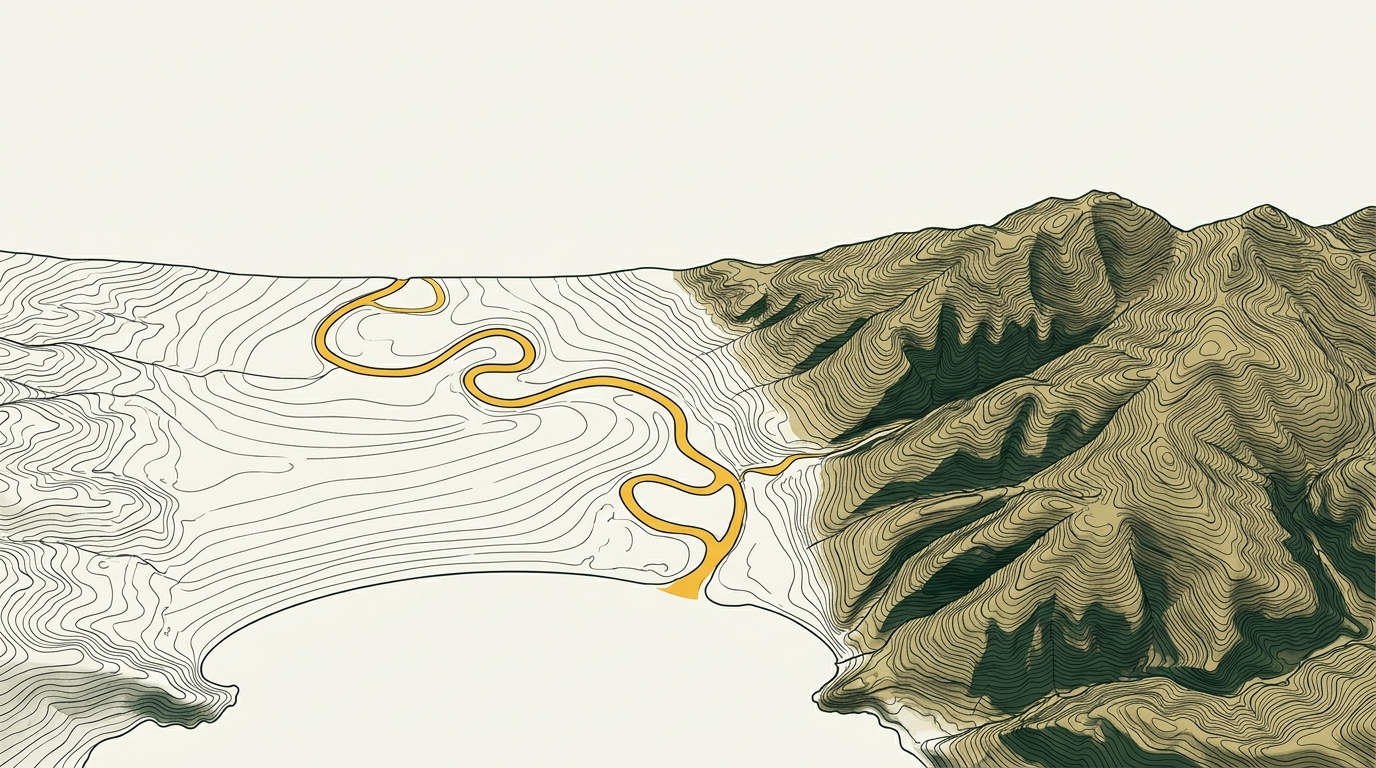
The aquifer context matters here. The Eastern Snake Plain Aquifer, the primary drinking water source for most of southern Idaho, has been in net decline since the 1950s. A 2024 water settlement agreement between surface-water and groundwater users formalized decades of legal conflict and created mandatory spending obligations the state must now execute. Senate Concurrent Resolution 110, passed in 2025, raised the ESPA's annual recharge target by 40 percent, from 250,000 to 350,000 acre-feet. IWRB Chairman Jeff Raybould has called that goal the board's top priority for 2026. The $30 million appropriated under HB 445 is split 50/50 between eastern Idaho and the Magic Valley, and Governor Little and Lt. Governor Bedke have both framed the program as foundational to agricultural and municipal water security alike.
For residents and ratepayers, what this means in the near term is a pipeline of construction contracts, engineering studies, and meter upgrades coming to award faster than normal. The five RFPs in 30 days is the visible leading edge; the actual contract awards and construction starts that follow will determine whether the money translates into physical infrastructure before fiscal year deadlines close the window.
The number to watch next is September 30. That is when IIJA authorization lapses, and any capitalization grant funds Idaho DEQ has not yet obligated face return pressure. The IWRB has two additional rounds of Aging Infrastructure Grants, totaling $40 million across FY2026 and FY2027, still to be awarded. Whether Idaho's procurement pace holds through October will signal how much of the federal allocation the state converted into signed contracts before the deadline, and how much it did not.