Five Massachusetts municipalities issued a stormwater management RFP for the first time in more than a year during the last 30 days, compared to zero in the same window a year ago. The towns: Wellfleet, Brewster, Duxbury, Longmeadow, and Ipswich. None has a population above 16,000. All of them are catching up to a procurement wave that larger municipalities rode earlier this year, and both are now running out of time to do it cheaply.
The timing is not coincidental. Two distinct policy pressures have converged on small-town New England this fall, and neither one waited for the other to resolve.
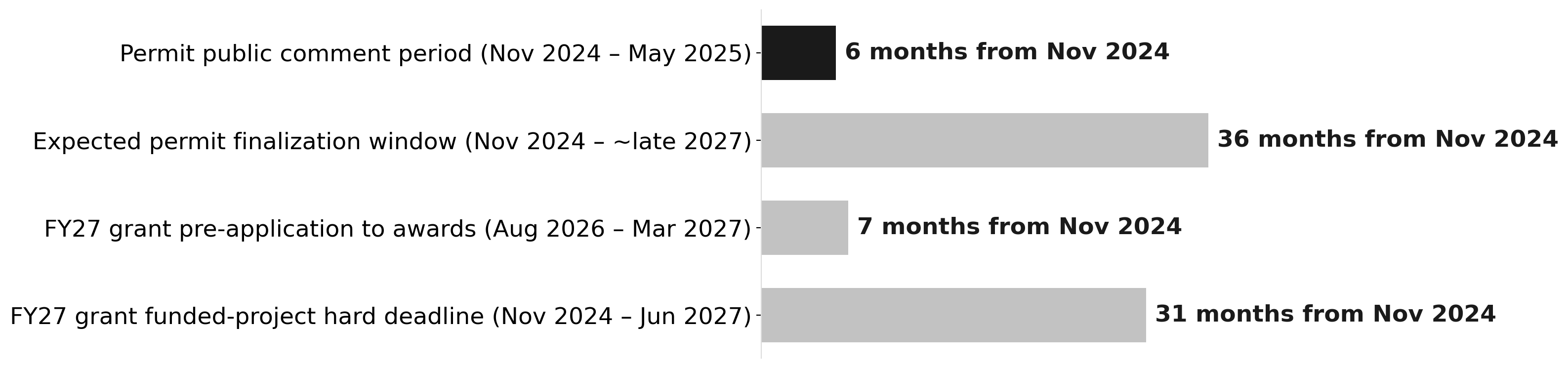
The first is federal. EPA released its 2024 Draft MS4 General Permit on November 22, 2024, covering more than 260 Massachusetts municipalities. When finalized, it will replace the 2016 permit and impose a new layer of technical obligations: integrated asset tracking systems for stormwater infrastructure, catch basin upgrades, nature-based street design standards, and, for towns discharging to nutrient-impaired waterbodies, mandatory installation of controls identified in Source Identification Reports. The comment period closed in May 2025. The permit is moving toward finalization, but no final effective date has been set. Towns are in a bind: the old rules still apply, the new rules are coming, and engineering firms are already booking up.
Source: NationGraph.
The second pressure is a state appropriation with a hard deadline. MassDEP's FY27 MS4 Municipal Assistance Grant program has $250,000 available for construction or planning projects that help municipalities meet MS4 permit requirements. That is not a large pool. MassDEP held a pre-application feedback session on August 11, 2026, where staff made the priorities explicit: the agency is shifting toward projects that either break ground or directly seed construction. Awards are expected in late winter 2026-27. Projects must be completed by June 30. A town that does not have a defined, scoped project in hand when that application window opens cannot compete. According to MassDEP's FY27 grant session materials, the agency explicitly cited 'increased pressure on municipalities to meet local funding needs with fewer state and federal resources' as part of its rationale for tightening the program's focus.
This is the squeeze. The EPA permit is not final, so towns cannot know exactly what they will be required to build. But the MassDEP grant cycle will not wait for finalization. To compete for state dollars, a town needs shovel-ready scope. To have shovel-ready scope, it needs an engineer under contract. So towns are procuring now, under regulatory uncertainty, because the alternative is losing both grant eligibility and compliance positioning simultaneously.
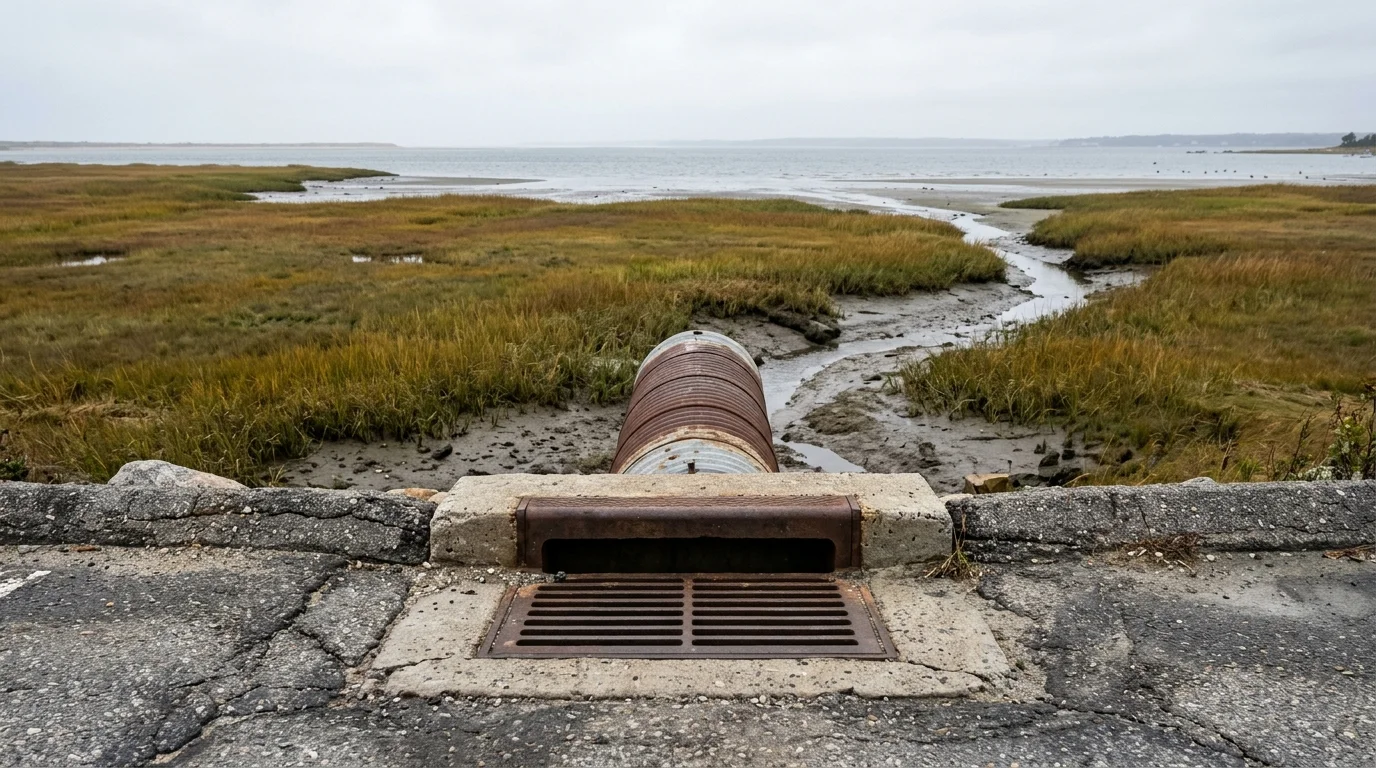
Wellfleet's RFP is the clearest illustration of this logic. The town is soliciting engineering services for the Powers Landing Stormwater Quality Improvement Project, a named capital improvement aimed at reducing nitrogen loading to coastal embayments, precisely the nutrient-impaired waterbody scenario the new EPA permit targets most aggressively. Brewster and Duxbury, both on Cape Cod and Plymouth Bay respectively, face similar estuarine water quality pressures. These are not towns procuring stormwater services as a matter of routine maintenance; they are towns that have been watching the regulatory horizon and have decided the horizon is now close enough to act.
The broader procurement picture reinforces this reading. Massachusetts stormwater RFP volume peaked at 24 to 26 issuances per month between February and May 2026, driven largely by larger municipalities and regional planning agencies moving early. That wave pulled back to roughly six per month by October. The five new first-time issuers in the trailing 30 days are the lagging tail of that surge: fiscally constrained small towns that hoped to wait for regulatory clarity and are now discovering that waiting has a cost.
Federal money is in the mix but unevenly distributed. Active EPA stormwater grants in Massachusetts include a $2.5 million congressionally mandated award to Somerville, $1.3 million to Medway, and a $587,000 Sewer Overflow and Stormwater Reuse grant to the Massachusetts Clean Water Trust, which passes funds through to municipalities on a project basis through 2029. Those earmarks went to named communities through congressional action, not a competitive process open to Wellfleet or Longmeadow. For small towns, the MassDEP grant is the realistic state funding option, which makes its $250,000 pool and June 30 completion deadline the operative constraint.
For residents in these towns, the near-term signal to watch is whether their municipality secures an engineering contract before MassDEP's application window closes. Towns that move in the next 60 to 90 days are positioned to compete for FY27 funds and to demonstrate project readiness if EPA finalizes the permit with an aggressive compliance schedule. Towns that don't will face those same compliance obligations without a funded plan in place.